

What Is Encapsulation Carpet Cleaning? A Homeowner’s Guide
Encapsulation carpet cleaning is defined as a low-moisture cleaning method that uses polymer-based detergents to surround, crystallize, and suspend soil particles so they can be removed by vacuuming. Unlike traditional wet methods, this process leaves carpets dry and walkable in as little as 30 to 60 minutes. The technique is widely used for maintenance cleaning between deep restorative treatments, and it relies on specialized chemistry rather than high water volume to do its work. If you’ve been wondering whether this method is right for your home, the answer depends on what your carpets actually need.
What is encapsulation carpet cleaning and how does it work?
The core cleaning mechanism is polymer chemistry. When an encapsulation detergent is applied to carpet fibers, its polymer molecules physically surround individual soil particles and displace the sticky bonds holding them to the fiber. As the solution dries, those polymers crystallize into a brittle residue that encases the dirt. Vacuuming then lifts the crystals and the trapped soil out of the carpet entirely.
This is fundamentally different from how traditional cleaning solutions work. Standard detergents dissolve soil and rely on water to rinse it away. Encapsulation detergents don’t rinse. They capture and hold. That distinction is what makes the process so fast and so low-moisture.
The mechanical side of the process matters just as much as the chemistry. Rotary brush machines agitate the detergent into the carpet pile, generating foam and working the polymer solution into contact with embedded soil. Without that agitation, the chemistry can’t do its job fully. The brushes loosen soil from fibers while the detergent surrounds it, setting up the crystallization that follows.
Here’s what the full encapsulation carpet cleaning process looks like step by step:
- Pre-vacuum the carpet to remove loose surface debris before applying any solution
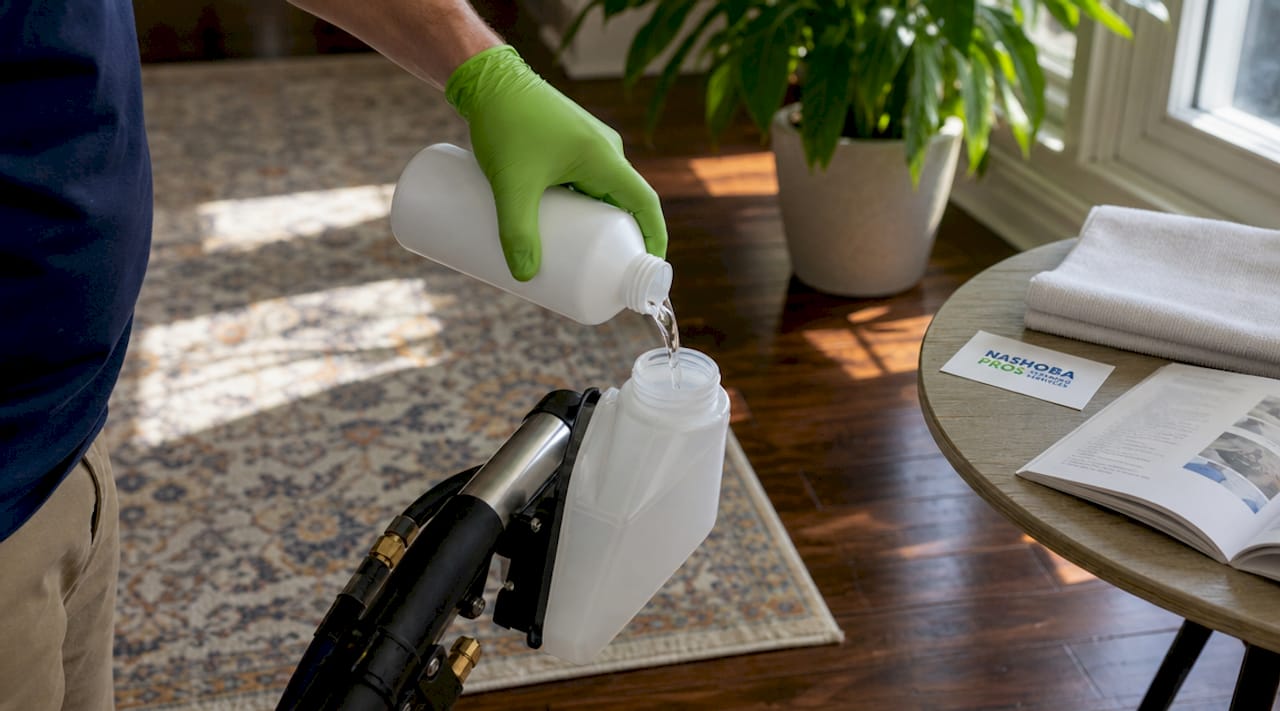
- Apply the encapsulation detergent evenly across the carpet using a sprayer or the machine’s built-in dispenser
- Agitate with a rotary brush machine to work the polymer solution deep into the pile and loosen embedded soil
- Allow the solution to dry completely, which typically takes 30 to 60 minutes depending on humidity and airflow
- Vacuum thoroughly to remove the crystallized polymer residue along with the soil it has captured
Pro Tip: Don’t skip the post-cleaning vacuum. The polymer crystals shear off gradually over several days with regular foot traffic and vacuuming, so running your vacuum daily for two to three days after a professional encapsulation clean maximizes soil removal.
Modern encapsulation products use advanced engineered polymers specifically designed to capture oily and sticky soils that older formulations struggled with. This makes today’s encapsulation cleaning noticeably more effective than what was available even a decade ago.
What are the main benefits of encapsulation carpet cleaning?
The most practical benefit for homeowners is speed. Carpets are dry and usable in 30 to 60 minutes after an encapsulation clean, compared to the several hours or even overnight drying times that hot water extraction can require. For households with kids, pets, or simply no patience for roped-off rooms, that difference is significant.
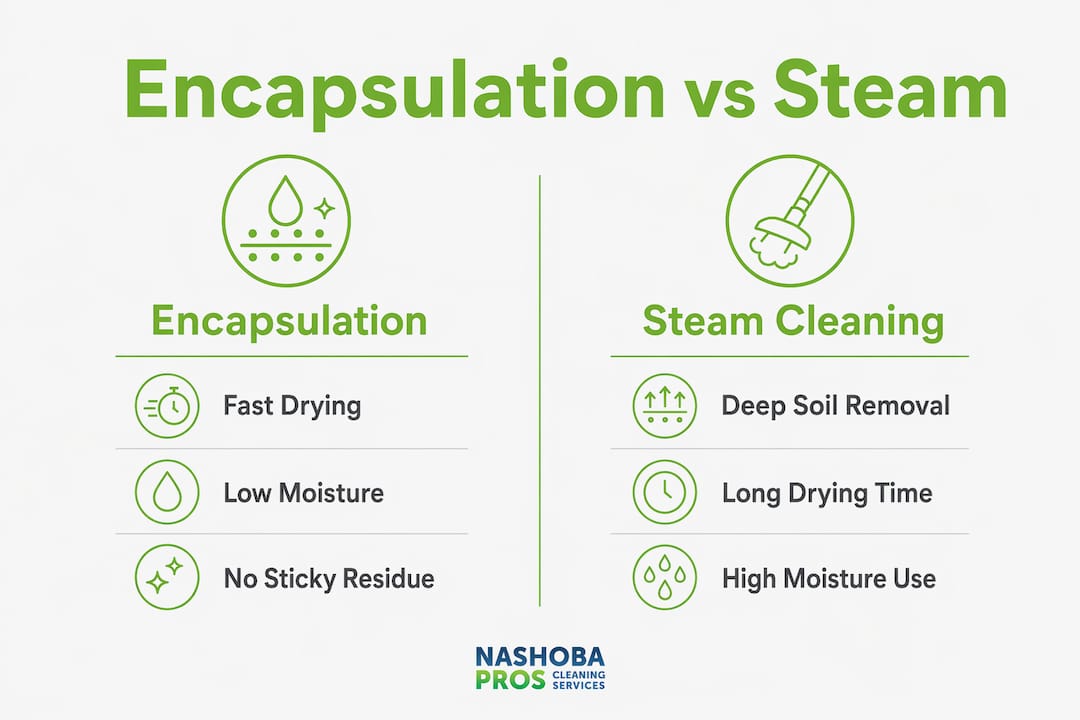
Moisture management is the second major advantage. Less water in the carpet means a lower risk of mold, mildew, and the musty odors that can develop when carpets stay wet too long. This is especially relevant in humid climates or in homes where airflow is limited. The moisture reduction benefit is not a minor convenience. It directly affects indoor air quality and carpet longevity.
Encapsulation also leaves no sticky residue behind. Traditional detergents that aren’t fully rinsed out can attract new soil, making carpets re-soil faster after cleaning. Encapsulation polymers dry to a brittle, non-sticky crystal that doesn’t hold onto new dirt. The result is a carpet that stays cleaner longer between treatments.
Here’s a direct comparison of the two most common residential carpet cleaning methods:
| Feature | Encapsulation | Steam cleaning (hot water extraction) |
|---|---|---|
| Drying time | 30 to 60 minutes | 4 to 12 hours |
| Soil removal rate | 65 to 70% | 90 to 95% |
| Best use case | Maintenance cleaning | Deep restorative cleaning |
| Moisture risk | Very low | Moderate to high |
| Re-soiling risk | Low (no sticky residue) | Higher if not fully rinsed |
| Frequency | Monthly or as needed | Quarterly to annually |
Encapsulation is particularly well suited to synthetic carpet fibers like nylon and polyester, which are the most common types found in residential homes. The process is gentle enough to preserve fiber structure while still delivering a visible improvement in appearance.
Encapsulation vs steam cleaning: which method does your carpet need?
Hot water extraction removes 90 to 95% of deep soil and allergens from carpet fibers. Encapsulation removes 65 to 70%. That gap tells you everything about when to use each method. Steam cleaning wins on depth. Encapsulation wins on speed and convenience.
The right choice depends on what your carpet actually needs at that moment. If your carpet has years of embedded grime, pet dander, or allergen buildup, encapsulation alone won’t fix it. Hot water extraction is the restorative tool for that job. But if your carpet looks dull and traffic-worn between professional deep cleans, encapsulation is exactly the right maintenance solution.
Encapsulation is best understood as an appearance management technique, not a deep flush. This distinction matters because homeowners sometimes expect encapsulation to replace steam cleaning entirely. It doesn’t. It complements it.
Pro Tip: The most effective carpet care program pairs monthly encapsulation maintenance with a quarterly or annual hot water extraction. This combination keeps carpets looking fresh year-round while periodically flushing out the deep soil that maintenance cleaning can’t reach.
Scheduling is another real-world factor. Steam cleaning requires planning around long drying times, which can mean keeping rooms out of use for half a day or more. Encapsulation fits into a normal afternoon. For busy households, that scheduling flexibility alone makes encapsulation the practical choice for routine upkeep.
How to integrate encapsulation cleaning into your carpet care routine
Building a carpet maintenance routine around encapsulation is straightforward once you understand the role each method plays. Follow these steps to get the most out of both approaches:
- Vacuum weekly at minimum. Regular vacuuming removes surface soil before it works deeper into the pile, reducing the load on any cleaning method you use.
- Schedule encapsulation cleaning every one to three months for high-traffic areas like hallways, living rooms, and stairs. Lower-traffic rooms can go longer between treatments.
- Prepare your home before a professional visit by clearing furniture from the area and doing a thorough pre-vacuum. Nashoba Pros has a detailed guide on preparing for a carpet cleaning visit that covers exactly what to do beforehand.
- Vacuum again 24 to 48 hours after encapsulation cleaning to remove the crystallized polymer residue and the soil it has captured. This step is where a significant portion of the cleaning result is actually delivered.
- Watch for signs that steam cleaning is overdue. If your carpet still looks dingy after an encapsulation clean, if odors persist, or if allergy symptoms are worsening, those are signals that embedded soil has built up beyond what maintenance cleaning can address.
- Schedule hot water extraction once or twice a year as a restorative reset, then return to encapsulation for ongoing maintenance. This combined approach, as outlined in the professional carpet cleaning guide from Nashoba Pros, extends carpet life and keeps replacement costs down.
The most common mistake homeowners make is treating carpet cleaning as a single annual event rather than an ongoing practice. Carpets that receive regular light maintenance last significantly longer and look better throughout their lifespan than carpets cleaned only when visibly dirty.
Key takeaways
Encapsulation carpet cleaning works because polymer chemistry captures and crystallizes soil, allowing vacuuming to remove it without the moisture and drying time that hot water extraction requires.
| Point | Details |
|---|---|
| Polymer chemistry drives results | Encapsulation detergents surround soil and crystallize it, making vacuuming the actual removal step. |
| Drying time is a real advantage | Carpets are walkable in 30 to 60 minutes, compared to hours for steam cleaning. |
| Soil removal has limits | Encapsulation removes 65 to 70% of soil; deep cleaning via hot water extraction removes 90 to 95%. |
| Post-cleaning vacuuming is required | Vacuuming daily for two to three days after treatment maximizes how much encapsulated soil is removed. |
| Combine both methods for best results | Monthly encapsulation plus periodic steam cleaning extends carpet life and maintains appearance year-round. |
What I’ve learned from 30 years of cleaning carpets in New England homes
Most homeowners I talk to have never heard of encapsulation before we explain it to them. They assume carpet cleaning means a truck with a big hose and a wet carpet for the rest of the day. When I tell them their carpet will be dry in under an hour, they’re skeptical. Then they see it.
The biggest misconception I run into is that encapsulation is somehow a lesser or cheaper shortcut compared to steam cleaning. It isn’t. It’s a different tool for a different job. A hammer isn’t inferior to a screwdriver. They just do different things. Encapsulation is the right tool for maintaining a carpet that’s in decent shape. Steam cleaning is the right tool for restoring a carpet that’s been neglected.
What I’ve also noticed is that homeowners who use encapsulation regularly between deep cleans end up needing fewer emergency deep cleans. Their carpets don’t get to the point of looking terrible because they never let soil build up that far. That’s the real value of building a maintenance routine around this method.
The one thing I wish more people understood is the vacuuming step after encapsulation. Skipping it or doing it only once is like washing your dishes and leaving them in the sink. The chemistry did its job. You still have to finish the process. Vacuum thoroughly, vacuum again the next day, and you’ll see a noticeably better result than if you vacuum once and call it done.
My honest recommendation for any homeowner with synthetic wall-to-wall carpet is to treat encapsulation as your regular maintenance tool and steam cleaning as your annual reset. That combination keeps carpets looking sharp, extends their lifespan, and keeps your home healthier without the disruption of a full wet clean every time.
— Jim
Professional encapsulation cleaning from Nashoba Pros
Nashoba Pros has been cleaning carpets in Westford, MA and the surrounding Nashoba Valley communities for over 30 years. We use pet-safe, family-safe encapsulation products and professional rotary equipment to deliver fast-drying results with no sticky residue left behind. Most jobs are scheduled quickly, and your carpet is back in use the same day.

If you’re in the greater Westford area and want to see what a proper maintenance clean looks like, our carpet cleaning service in Maynard is a great place to start. We also handle upholstery, tile and grout, oriental rugs, and water remediation. One call covers your whole home. Get a free quote online or by phone and have cleaner carpets as soon as tomorrow.
FAQ
What is encapsulation carpet cleaning in simple terms?
Encapsulation carpet cleaning is a method where polymer-based detergents coat soil particles and dry into a brittle crystal that vacuuming removes. It uses very little water and leaves carpets dry in 30 to 60 minutes.
Is encapsulation carpet cleaning as effective as steam cleaning?
Encapsulation removes 65 to 70% of soil and excels at appearance maintenance, while hot water extraction removes 90 to 95% of deep soil and allergens. For heavily soiled or allergen-laden carpets, steam cleaning is the more thorough option.
How often should encapsulation carpet cleaning be done?
High-traffic areas benefit from encapsulation cleaning every one to three months as part of a regular maintenance routine. Pairing this with annual hot water extraction delivers the best long-term results.
Does encapsulation carpet cleaning leave residue behind?
Encapsulation polymers dry to a brittle, non-sticky crystal that does not attract new soil. Thorough vacuuming after the clean removes both the crystal residue and the soil it has captured.
Can encapsulation carpet cleaning replace steam cleaning entirely?
No. Encapsulation is best used as an appearance management technique between restorative deep cleans, not as a replacement for them. Steam cleaning is still necessary periodically to flush out deep-seated soil and allergens that encapsulation cannot reach.