

Rug Dusting Process Explained for Homeowners
Rug dusting is defined as the mechanical removal of deeply embedded dry soil, dust, allergens, and grit from a rug’s fibers before any wet cleaning begins. This step is the foundation of the full rug cleaning process, and skipping it causes serious, preventable damage. A typical 9×12 oriental rug holds 8 to 25 pounds of embedded dry soil deep in its foundation. That weight is invisible to the eye, which is exactly why so many homeowners underestimate how dirty their rugs actually are. Understanding what is rug dusting process explained in full detail gives you the knowledge to protect your investment and make smarter decisions about rug care.
What is the rug dusting process and how does it work?
Rug dusting is not the same as vacuuming. Professional mechanical dusting uses vibration platforms, centrifugal systems, or air suction devices to dislodge and extract soil that has migrated deep into the rug’s foundation. These machines work by agitating the rug at a frequency that breaks the bond between grit particles and fibers, then capturing the loosened debris before it can resettle.
The results are measurable. Professional mechanical dusting removes 60% to 80% of dry contamination from a rug before washing even starts. That figure matters because dry soil left inside a rug during wet cleaning turns into a mud-like slurry that is nearly impossible to extract and causes long-term fiber damage.

Hand-beating is an older method that works on the same principle. A rug is hung and struck repeatedly to knock loose particles free. It is effective for lighter rugs but cannot match the consistency or depth of mechanical dusting for heavily soiled pieces. Professional facilities typically separate dusting, washing, and drying into distinct zones, which reflects how foundational the dusting step is to the entire rug cleaning process.
| Method | How it works | Best for |
|---|---|---|
| Vibration platform | Mechanical vibration dislodges deep grit | Heavily soiled, large rugs |
| Centrifugal system | Spinning force extracts embedded particles | Dense pile, wool rugs |
| Air suction dusting | Airflow pulls loosened soil away from fibers | Delicate and antique rugs |
| Hand-beating | Manual striking frees surface and mid-pile soil | Lighter, smaller rugs |
Pro Tip: Ask any professional cleaner whether they dust before washing. If they skip this step, the wet cleaning will be less effective and could leave your rug stiffer and duller than before.
Why vacuuming alone is not enough
Vacuuming removes surface debris. It does not reach the soil that has settled into the rug’s foundation over months or years. Vacuum beater bars abrade the pile cuticle and can damage fringe on delicate rugs, while still failing to extract the grit that causes the most harm.
Here is what happens when embedded soil goes untreated:
- Grit particles act like tiny blades, cutting wool and silk fibers with every footstep
- Pile loses its upright texture and begins to mat and flatten
- Colors appear dull and faded even though no fading has occurred
- The rug’s foundation weakens gradually, reducing its structural life
- Allergens and fine dust accumulate at levels that affect indoor air quality
Rugs may look clean on the surface while harboring enough embedded grit to cause serious fiber wear. Visual cleanliness is not the same as structural cleanliness. A rug that looks fine can be silently degrading from the inside out, and no amount of surface vacuuming will stop that process.
Wet washing a rug filled with dry soil causes that soil to form a mud-like slurry that embeds deeper into the fibers during the wash cycle. The result is a rug that comes out of cleaning feeling stiff, looking dull, and carrying more residue than it started with. Skipping dusting leads to mud formation, clogged equipment, and re-soiling, all of which shorten the rug’s usable life. Dusting is not a luxury step. It is what makes wet cleaning safe and effective.
Step-by-step: how professional rug dusting works
Knowing the full workflow helps you ask the right questions and prepare your rug properly before a professional visit.
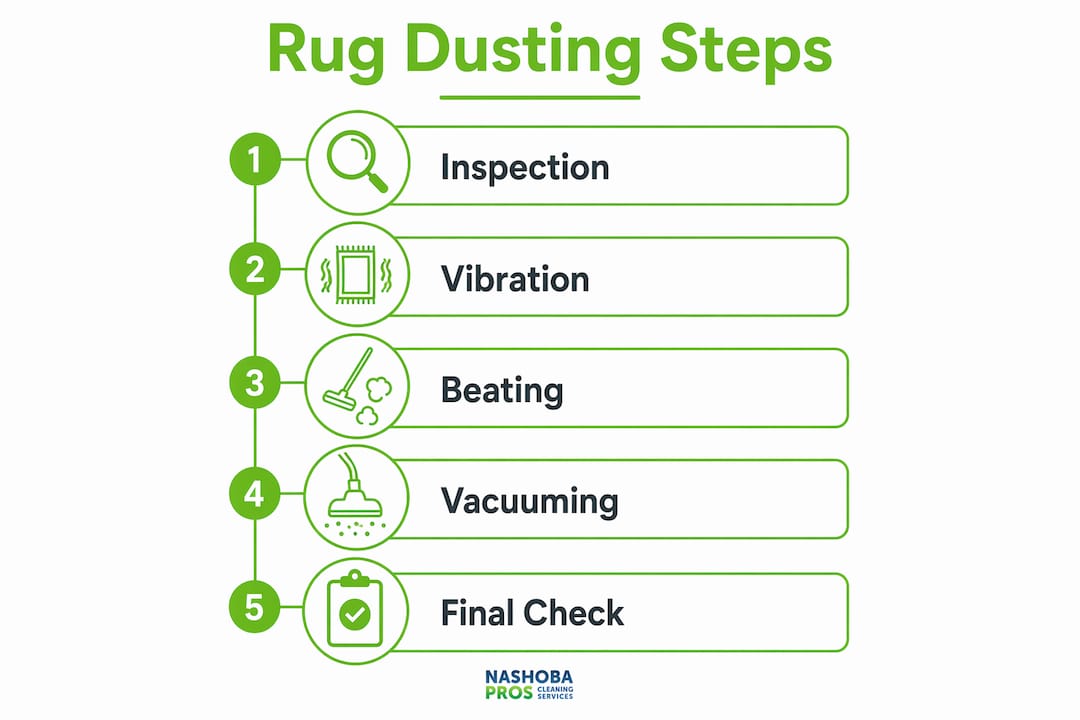
- Pre-inspection. The technician examines the rug for fiber type, construction, dye stability, and existing damage. Antique and handmade rugs require gentler settings on mechanical equipment.
- Pre-vacuuming. A low-suction vacuum pass removes loose surface debris from both sides of the rug. This is not the dusting step. It simply clears the way for deeper extraction.
- Mechanical dusting. The rug goes onto a vibration platform or through a centrifugal dusting system. The machine runs for several passes until the soil output drops significantly. Some facilities weigh the collected soil to document results.
- Soil collection and inspection. Technicians inspect the collected debris and check the rug’s pile and foundation for remaining grit. A second dusting pass may follow for heavily soiled pieces.
- Pre-treatment and washing. Only after dusting is complete does wet cleaning begin. This sequence prevents the mud-slurry problem described above.
- Drying and final inspection. The rug dries in a controlled environment, then receives a final grooming and quality check before return.
For delicate and valuable rugs, technicians reduce vibration intensity and increase inspection frequency. Antique pieces may receive hand-beating instead of mechanical dusting to avoid structural stress.
Turning a rug upside down and vacuuming can dislodge some grit from the foundation, but it risks structural damage and is not a substitute for professional dusting. Do it gently and infrequently if you try it at home.
Pro Tip: Before your professional appointment, vacuum both sides of the rug lightly with a suction-only setting. This removes loose surface debris and gives the technician a cleaner starting point for mechanical dusting.
Signs your rug needs dusting and tips to extend its life
Your rug tells you when it needs attention. You just need to know what to look for.
Signs that dusting is overdue:
- Dust visibly rises when you tap or walk on the rug
- Colors look dull or flat despite no sun exposure
- The pile feels stiff or crunchy underfoot
- The rug smells musty even after airing it out
- You notice increased allergy symptoms in the room
How often to dust:
Frequency depends on traffic, location, and rug type. High-traffic entryway rugs benefit from professional dusting once or twice a year. Living room rugs with moderate foot traffic typically need dusting annually. Rugs in low-traffic areas or guest rooms can go 18 months between professional dustings. Regular vacuuming combined with periodic professional dusting extends rug life by preventing the fiber abrasion that accumulates invisibly over time.
Maintenance tips between professional visits:
- Vacuum weekly with a suction-only setting, no beater bar
- Rotate the rug every six months to distribute foot traffic evenly
- Use a rug pad to reduce friction against the floor and prevent slipping
- Address spills immediately with a clean cloth and cold water, blotting rather than rubbing
- Keep the rug out of direct sunlight to prevent dye fading
For wool rug care, avoid steam cleaning at home. Heat damages wool fibers and can cause shrinkage. Professional cold-water washing after proper dusting is the correct approach for wool and handmade pieces.
Homeowners should not rely on visual cues alone. A rug can look perfectly clean while carrying enough embedded grit to accelerate fiber wear significantly. Scheduling professional dusting on a calendar rather than waiting for visible signs is the smarter approach to long-term rug preservation.
Key Takeaways
Rug dusting is the single most important step in the rug cleaning process because it removes 60% to 80% of dry contamination before wet cleaning begins, preventing fiber damage and mud formation.
| Point | Details |
|---|---|
| Dusting removes deep soil | Mechanical dusting extracts 60%–80% of dry contamination that vacuuming cannot reach. |
| Vacuuming has real limits | Beater bars damage delicate fibers; suction alone cannot reach soil in the rug’s foundation. |
| Skipping dusting causes damage | Wet cleaning without dusting creates mud-like slurry that stiffens fibers and dulls color. |
| Frequency matters | High-traffic rugs need professional dusting once or twice a year; low-traffic rugs annually. |
| Visual cleanliness is misleading | A rug can look clean while holding pounds of embedded grit that silently wears fibers down. |
What 30 years of rug cleaning taught me about dust
Most homeowners I talk to are genuinely surprised when they see what comes out of a rug during mechanical dusting. They walked on that rug every day. They vacuumed it regularly. They thought it was clean. Then the dusting machine runs, and a pile of gray, gritty debris fills the collection tray. That moment changes how people think about rug care.
The biggest misconception I see is that a clean-looking rug is a safe rug. It is not. The grit that damages fibers is invisible. It settles into the foundation over months, and every footstep grinds it against the wool or silk strands. By the time you notice the pile looking flat or the colors looking dull, the damage is already done. Dusting does not just clean a rug. It stops a slow, silent destruction process.
I also see homeowners who try to compensate with more frequent vacuuming. That is not a bad habit, but it addresses the wrong layer. Surface vacuuming is maintenance. Professional dusting is preservation. You need both, and they are not interchangeable.
My honest advice: treat professional dusting like a dental cleaning. You brush your teeth every day, but you still see the dentist twice a year because home care only goes so far. Your rug deserves the same logic. Schedule it, stick to it, and your rug will last decades longer than one that only gets vacuumed.
— Jim
Nashobapros handles the deep cleaning your rug actually needs
Nashobapros has served Westford, MA and the surrounding Nashoba Valley communities for over 30 years. The team uses mechanical dusting equipment designed to safely extract embedded soil from oriental rugs, wool rugs, and handmade pieces before any wet cleaning begins. Every product used is pet-safe and family-safe.

Whether your rug is a daily-use area rug or a valuable handmade piece, Nashobapros applies the right dusting method for the fiber type and construction. For homeowners who want to understand professional cleaning frequency or are ready to book a service, Nashobapros offers expert carpet and rug cleaning with a 100% satisfaction guarantee. Call or book online. Most appointments are available quickly.
FAQ
What is rug dusting in simple terms?
Rug dusting is the mechanical process of loosening and removing dry soil, grit, and allergens embedded deep in a rug’s fibers before wet cleaning. It uses vibration, centrifugal force, or air suction to extract particles that vacuuming cannot reach.
How is rug dusting different from vacuuming?
Vacuuming removes surface debris only, while professional dusting extracts soil from the rug’s foundation using mechanical vibration or suction systems. Vacuum beater bars can also damage delicate fibers, making professional dusting the safer option for wool and handmade rugs.
How often should a rug be professionally dusted?
High-traffic rugs benefit from professional dusting once or twice a year. Low-traffic rugs typically need dusting every 12 to 18 months. Regular vacuuming combined with professional dusting is the most effective maintenance routine for extending rug life.
What happens if you skip the dusting step before washing?
Skipping dusting causes dry soil to mix with water during washing, forming a mud-like slurry that embeds deeper into fibers and is difficult to extract. The result is a stiffer, duller rug that re-soils faster after cleaning.
Is rug dusting safe for antique or delicate rugs?
Professional dusting is safe for antique and delicate rugs when the technician adjusts equipment settings for the fiber type. Hand-beating or reduced-intensity vibration platforms are used for fragile pieces, and a pre-inspection always guides the method chosen.