

Types of Area Rugs Professionally Cleaned: A Homeowner’s Guide
Professional rug cleaning is a fiber-specific discipline. The types of area rugs professionally cleaned span silk, wool, Persian, Oriental, jute, sisal, synthetic, and washable constructions, and each one demands a different method. Use the wrong technique on a silk rug and you can cause permanent damage. Use too much moisture on jute and you get brown rings that never fully disappear. This guide breaks down every major rug category, the professional cleaning methods that work, and how often you should schedule service to protect your investment.
1. Types of area rugs professionally cleaned: why method matters
Professional rug cleaning is not a single process applied to every rug. Fiber type, construction, dye stability, and pile density all determine which cleaning method a technician should use. Hot water extraction works well for many synthetic and wool rugs but can destroy silk. Dry compound cleaning protects moisture-sensitive natural fibers but may not fully remove heavy soil from a thick wool pile. Matching the method to the rug is the single most important decision in the cleaning process. Getting it wrong can mean shrinkage, color bleed, pile distortion, or permanent staining.
2. Silk and delicate natural-fiber rugs
Silk rugs are the most fragile category a professional cleaner will handle. Silk fibers require gentle hand-washing with a neutral pH solution (pH 5.5–7) and cool water to avoid permanent damage from heat and agitation. High heat causes silk fibers to break down. Alkaline cleaning solutions strip the natural luster and weaken the pile structure. Agitation from machine scrubbing distorts the weave and flattens the pile.
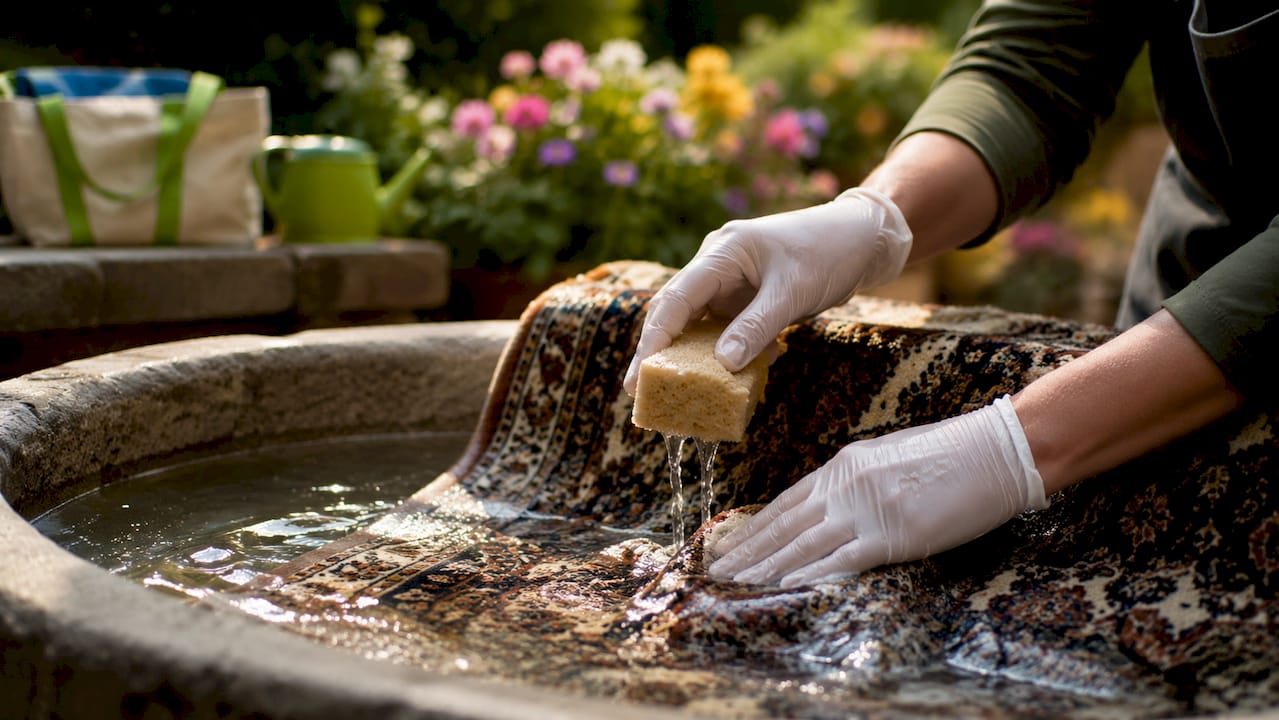
Professional cleaners who specialize in silk use controlled, low-pressure hand-washing in dedicated plant facilities with climate-controlled drying rooms. The rug is never wrung or machine-spun. Drying happens flat or on a frame to prevent stretching. This level of care is why silk rug cleaning costs more than standard carpet cleaning.
The most common homeowner mistake with silk rugs is applying general carpet cleaning methods involving heat and alkaline solutions. A standard hot water extraction truck mount will ruin a silk rug. Always confirm that a cleaner has specific experience with silk before handing over the rug.
Pro Tip: Genuine silk feels warm when held against your skin and self-extinguishes when a single fiber is burned. Viscose or art silk feels cooler and weakens significantly when wet. Knowing which fiber you have before calling a cleaner prevents a costly mistake.
3. Jute, sisal, seagrass, and coir rugs
Plant-based fiber rugs require low-moisture professional cleaning as a non-negotiable rule. Moisture is the primary enemy for natural fiber rugs. Overwetting jute causes permanent brown rings from cellulose browning, shrinkage, and mildew odor. The same risk applies to sisal, seagrass, and coir, though the degree of sensitivity varies slightly between them.
Dry compound cleaning is the standard professional method for this rug category. A technician works an absorbent compound into the pile, allows it to dwell, then vacuums it out. Minimal damp spotting is used only for localized stains, and the rug is dried quickly with air movers. Flood-washing or steam cleaning is never appropriate.
Key differences between plant fiber types:
- Jute is the most moisture-sensitive and browns fastest when wet
- Sisal is slightly more durable but still requires dry or low-moisture methods
- Seagrass has a natural waxy coating that resists some soiling but cannot tolerate saturation
- Coir (coconut fiber) is the coarsest and most durable but still risks mold if left damp
Pro Tip: Before any cleaning begins, ask your technician to confirm the fiber type in writing. Cellulose-based rugs that look like jute but are labeled as “natural fiber blends” may include synthetic backing that changes how moisture behaves during cleaning.
4. Wool, Persian, and Oriental rugs
Hand-knotted wool, Persian, and Oriental rugs represent the highest-value category most homeowners own. Professional cleaning every 2–3 years is the standard recommendation for these rugs, with adjustments based on foot traffic and household conditions. Antique or heirloom pieces should only be handled by specialists with documented experience in Oriental rug restoration.
Professional cleaning for wool rugs uses controlled pH solutions, careful pile brushing, centrifugal water extraction, and pile restoration after washing. Wool-safe detergents preserve the natural lanolin in the fiber, which keeps wool soft and resilient. Regular detergents strip lanolin, leaving the pile brittle and dull over time. This is why using a general carpet cleaner on a fine wool rug is a poor choice even when the rug looks clean afterward.
For more detail on caring for wool rugs professionally, the cleaning process involves pre-inspection, fringe protection, and a full pile-direction rinse before drying.
| Household condition | Recommended cleaning interval |
|---|---|
| Low traffic, no pets | Every 3 years |
| Moderate traffic | Every 2 years |
| High traffic or pets | Every 12–18 months |
| Antique or heirloom rug | Specialist assessment annually |
Home spot cleaning handles minor spills between professional visits. Professional deep cleaning removes embedded soil, allergens, and oils that spot cleaning cannot reach. The two approaches are not interchangeable.
5. Synthetic and washable area rugs
Synthetic rugs made from nylon, polyester, or polypropylene are the most forgiving category for professional cleaning. Most tolerate hot water extraction without risk of shrinkage or color bleed. Large or heavily soiled synthetic rugs benefit most from professional service because home washing machines cannot handle the size or soil load.
Machine-washable rugs made of synthetic fibers offer a convenient alternative for high-traffic households, but they still require checking care instructions before home washing. Not every washable rug tolerates a standard home machine. Some require a commercial-size washer to avoid bunching and uneven cleaning.
| Rug type | Home washing | Professional cleaning | Notes |
|---|---|---|---|
| Polypropylene | Sometimes | Recommended for large rugs | Check label for size limits |
| Nylon | Rarely | Yes, hot water extraction | Durable; handles extraction well |
| Polyester | Sometimes | Yes | Prone to oil-based stains |
| Washable cotton | Yes | Optional | Shrinkage risk; cold wash only |
Between professional cleanings, synthetic rugs benefit from weekly vacuuming and prompt spot treatment. Blot spills immediately with a clean white cloth. Avoid rubbing, which pushes soil deeper into the pile.
6. How to choose the right professional cleaning method
Selecting the right professional cleaning method starts with knowing your rug’s fiber and construction. If you do not have the original care label, a reputable cleaner will identify the fiber before quoting a method. Any cleaner who skips this step is a risk.
| Method | Best for | Avoid on |
|---|---|---|
| Hot water extraction | Wool, synthetic, nylon | Silk, jute, sisal, seagrass |
| Hand-washing | Silk, antique wool, Persian | Machine-made synthetics |
| Dry compound | Jute, sisal, seagrass, coir | Heavily soiled thick pile |
| Machine washing | Washable synthetics, cotton | Hand-knotted, natural fiber |
| Low-moisture encapsulation | Lightly soiled synthetic | Delicate or natural fiber |
Specialist rug cleaners differ from general carpet cleaners in one key way. Specialist facilities pick up the rug, clean it off-site in a controlled environment, and return it. General carpet cleaners clean in place. For silk, antique, and hand-knotted rugs, off-site specialist cleaning is the correct choice. For synthetic and washable rugs, in-home professional cleaning is usually sufficient.
Homes with pets or children should schedule professional cleaning more frequently because biological soils and allergens accumulate faster than visible dirt suggests.
Pro Tip: Ask any prospective cleaner two questions before booking: “What fiber is this rug?” and “What cleaning method will you use?” A confident, specific answer tells you they know what they are doing. A vague answer is a reason to call someone else.
Key takeaways
The best professional cleaning method for any area rug depends on its fiber type, construction, and soil level, not on a single universal process.
| Point | Details |
|---|---|
| Silk requires specialist care | Use only pH-neutral, cool-water hand-washing to prevent permanent fiber damage. |
| Natural fibers need low moisture | Jute, sisal, and seagrass brown and shrink when overwet; dry compound cleaning is safest. |
| Wool rugs need periodic deep cleaning | Professional cleaning every 2–3 years with wool-safe detergents preserves lanolin and pile structure. |
| Synthetic rugs tolerate more | Hot water extraction works well for nylon and polypropylene; always check care labels first. |
| Fiber ID comes before method | Ask your cleaner to identify the fiber before any cleaning begins to avoid irreversible damage. |
What 30 years of rug cleaning taught me about homeowner mistakes
The single most damaging thing I see homeowners do is assume that all rugs clean the same way. A silk rug and a polypropylene rug look similar in a living room. They do not clean the same way at all. Treating a silk rug with a standard hot water extraction machine is one of the fastest ways to destroy something worth thousands of dollars.
The second mistake is waiting too long. Homeowners often call after a rug has been soiled for months, sometimes years. Embedded soil acts like sandpaper on fiber. By the time a rug looks dirty, the damage to the pile is already underway. Cleaning it sooner, even when it looks acceptable, extends its life significantly.
Fiber identification is the step most general cleaners skip because it takes time and knowledge. A specialist will always identify the fiber first. If your cleaner does not ask what the rug is made of before quoting a method, that is a warning sign worth taking seriously.
Between professional visits, vacuum regularly, rotate the rug every six months to even out wear, and use a quality rug pad underneath. A rug pad reduces friction, prevents slipping, and protects the backing from hard floor abrasion. These small habits extend the time between professional cleanings and keep the rug looking better in between.
— Jim
Nashobapros handles every rug type with the right method
Nashobapros has been cleaning area rugs in Westford, MA and the surrounding Nashoba Valley communities for over 30 years. The team handles silk, wool, Persian, Oriental, natural fiber, and synthetic rugs with cleaning methods matched to each fiber type.

Every job starts with a fiber and construction assessment before any cleaning method is chosen. Products used are pet-safe and family-safe, and every job is backed by a 100% satisfaction guarantee. Whether you have a delicate hand-knotted Persian or a high-traffic synthetic runner, Nashobapros brings the right equipment and experience to protect it. Check the professional cleaning schedule that fits your household, or call to book a free quote. Most jobs in the Westford and Cambridge, MA area can be scheduled quickly.
FAQ
What types of rugs need professional cleaning most often?
Hand-knotted wool, Persian, and Oriental rugs need professional cleaning every 2–3 years. Silk rugs require specialist care at similar intervals, while synthetic rugs in high-traffic homes benefit from annual professional service.
Can I machine wash a jute or sisal rug at home?
No. Jute and sisal rugs cannot be machine washed or saturated with water. Excess moisture causes permanent browning, shrinkage, and odor. Dry compound cleaning by a professional is the correct method.
How do I know if my rug is genuine silk or viscose?
Genuine silk feels warm against your skin and a single fiber self-extinguishes when burned. Viscose feels cooler and weakens significantly when wet. A professional cleaner should confirm the fiber type before cleaning begins.
Is hot water extraction safe for all area rugs?
Hot water extraction is safe for most wool and synthetic rugs but should never be used on silk, jute, sisal, seagrass, or coir. These fibers are damaged by heat and excess moisture, requiring dry or low-moisture methods instead.
How often should area rugs be professionally cleaned?
Rugs in low-traffic areas benefit from professional cleaning every 2–3 years. High-traffic areas or homes with pets may require annual or semiannual cleaning to prevent embedded soil from degrading the fiber.