

Why Upholstery Fades After Cleaning: A Homeowner’s Guide
Upholstery fades after cleaning because the fabric’s dyes become unstable when exposed to moisture, cleaning chemicals, and friction. This is called dye instability, and it is the leading cause of color loss in cleaned furniture. The effect shows up clearly when you compare a freshly cleaned cushion face to the protected underside: the cleaned surface is noticeably paler. Understanding why upholstery fades after cleaning is the first step toward protecting your furniture and making smarter decisions about how it gets cleaned.
Why does upholstery fade after cleaning?
Fading after cleaning happens because a fabric’s dye is not stable when exposed to the chemistry and moisture involved in cleaning. Color changes can be triggered by light, oxidation, cleaning chemicals, or age. The telltale sign is paler areas on cleaned surfaces compared to protected folds or cushion undersides. That contrast reveals the dye was already weakened before cleaning began.
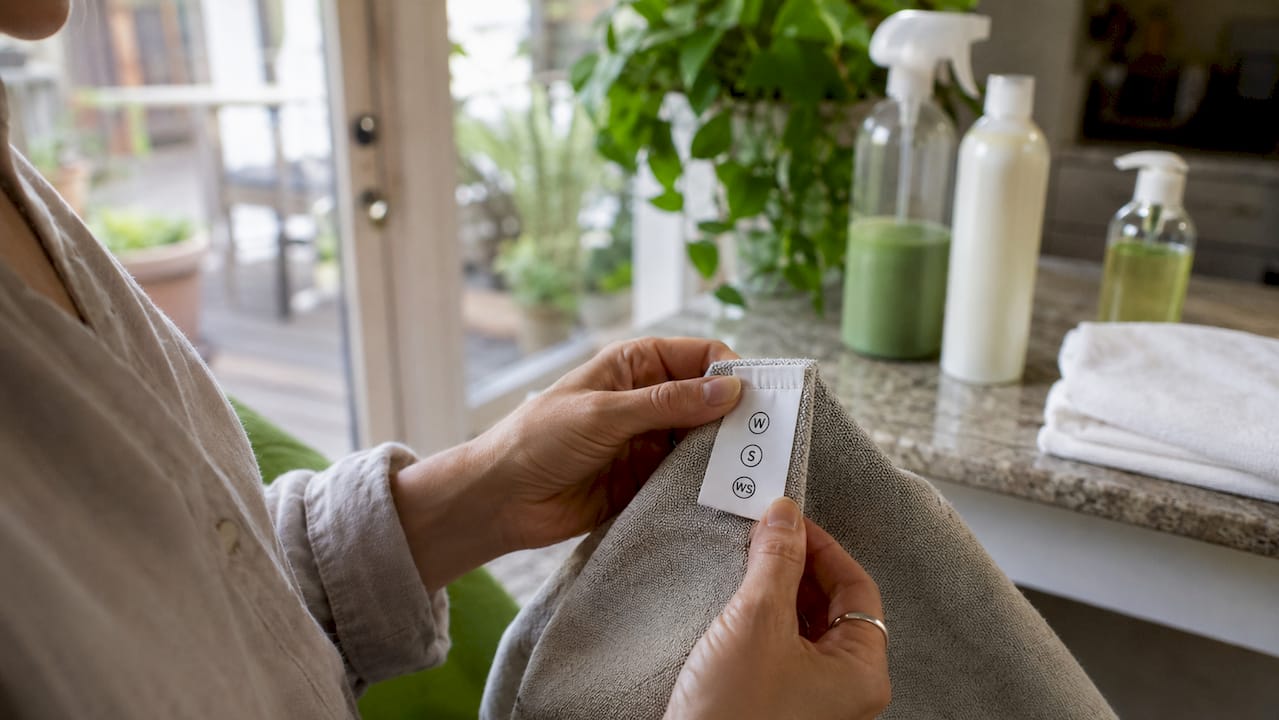
Cleaning codes, labeled W, S, WS, or X on furniture tags, tell you what cleaning method the manufacturer recommends. These codes matter, but they do not guarantee safety on their own. A fabric coded W for water-based cleaning can still fade if the wrong product or too much moisture is applied. Knowing the code is a starting point, not a complete answer.
Dye crocking is another pattern worth recognizing. Crocking means dye transfers off the fabric onto a cloth when rubbed. Testing with a white cloth on a hidden area, both dry and damp, reveals whether the dye moves under friction or moisture. If it does, full cleaning carries a real risk of visible color loss.
How do cleaning chemicals and moisture cause upholstery to fade?
The chemistry behind fading is straightforward. Surfactants and pH shifts in cleaning products strip the protective coatings on fabric fibers and bleach localized color permanently. Alkaline detergents are especially damaging to natural fiber dyes, which were often set at a neutral or slightly acidic pH during manufacturing. Once that balance is disrupted, the dye molecule breaks down and color is lost.
Moisture alone causes problems even without harsh chemicals. Water causes dye molecules to migrate within the fabric, spreading color unevenly as the fabric dries. Hard water minerals add another layer of damage by creating microabrasion on fiber surfaces, physically scraping away pigment particles during cleaning. The result looks like fading but is actually a combination of dye migration and surface erosion.
Here is what specifically happens during a typical cleaning session gone wrong:
- Alkaline detergents break down dye molecules in cotton, linen, and wool fibers.
- Oxidizing agents in stain removers bleach color from localized areas, creating uneven patches.
- Surfactants lift protective fabric coatings, leaving fibers exposed to further damage.
- Hard water minerals create microscopic abrasion that removes pigment from fiber surfaces.
- Excess moisture causes dye migration, where color spreads or pools as the fabric dries.
- Incomplete rinsing leaves residue that oxidizes over time, dulling the fabric’s appearance.
Pro Tip: Always check the pH of any cleaning product before applying it to upholstery. A pH-neutral cleaner, typically between 6 and 8, is the safest choice for most fabric types and minimizes the risk of dye breakdown.
Residue left behind after cleaning is often mistaken for fading. Excess moisture and incomplete rinsing cause soil or cleaning agents to migrate to the surface during drying, creating dull or white marks. These marks look like color loss but are actually surface deposits. Distinguishing between true dye loss and residue buildup changes the treatment approach entirely.
Why do different upholstery fabrics react differently to cleaning?
Not all fabrics carry the same fading risk. The fiber type, dye chemistry, and fabric construction all determine how a material responds to moisture and cleaning products.
| Fabric Type | Fading Risk | Key Reason |
|---|---|---|
| Cotton | High | Prone to dye bleeding when wet; reversal is difficult once it occurs |
| Linen | High | Natural fiber dyes are pH-sensitive and unstable under alkaline cleaners |
| Velvet / Chenille | High | Pile flattens under agitation, making color differences more visible |
| Polyester | Low | Synthetic dyes bond tightly to fibers and resist moisture-based migration |
| Nylon | Low to Medium | Durable dye bonding, but susceptible to bleaching agents |
| Wool | Medium | Natural fiber with some dye stability, but sensitive to heat and alkaline products |
Cotton upholstery is especially prone to dye bleeding when wet. A classic example is red dye bleeding into a cream-colored section of a sofa, creating a pink stain that is nearly impossible to reverse once dry. Low-moisture cleaning with controlled application and thorough extraction is the recommended approach for cotton.
Pile fabrics like velvet and chenille carry a different kind of risk. Aggressive cleaning permanently alters pile texture by flattening fibers. Flattened pile reflects light differently than upright pile, making the cleaned area look lighter or faded even if no dye was lost. The texture change is permanent, and it heightens the perception of color loss.
Pro Tip: For velvet or chenille, always brush the pile back into its natural direction immediately after cleaning and before the fabric dries. A soft-bristle upholstery brush works well. Letting pile dry flat locks in the flattened texture permanently.
Cleaning codes alone do not guarantee safety. Real-world factors like drying speed, residue formation, and ring marks only show up during actual testing. A professional hidden-area test accounts for all of these variables in a way that a tag label cannot.
What common cleaning mistakes lead to upholstery fading?
Most fading caused by cleaning is preventable. The mistakes below are the most common reasons homeowners end up with paler, duller furniture after a cleaning session.
- Using the wrong cleaning product. Harsh detergents, bleach-based sprays, and high-pH cleaners break down dye molecules on contact. Always match the product to the fabric’s cleaning code.
- Over-wetting the fabric. Applying too much liquid saturates the backing and padding, giving dye molecules time and space to migrate as the fabric dries. Use the minimum moisture needed.
- Skipping the spot test. Applying a product to the full surface without testing a hidden area first is the single fastest way to cause irreversible color damage.
- Scrubbing instead of blotting. Scrubbing creates friction that flattens pile, damages fiber surfaces, and spreads dye outward from the original stain. Always blot from the outside of a stain inward.
- Ignoring the cleaning code. A fabric tagged S requires solvent-based cleaning only. Using water on an S-coded fabric causes immediate dye bleeding and shrinkage in many cases.
- Poor drying management. Leaving fabric wet for too long allows residue to wick back to the surface during drying. This creates the white or dull marks that homeowners often mistake for fading.
Reading care instructions and spot testing before cleaning are the two most effective steps a homeowner can take to avoid unintentional color damage. These steps take less than five minutes and can prevent permanent results.
How can homeowners prevent fading when cleaning upholstery?
Preventing upholstery color fading starts before you pick up a cleaning product. These steps protect both the dye and the fiber structure of your furniture.
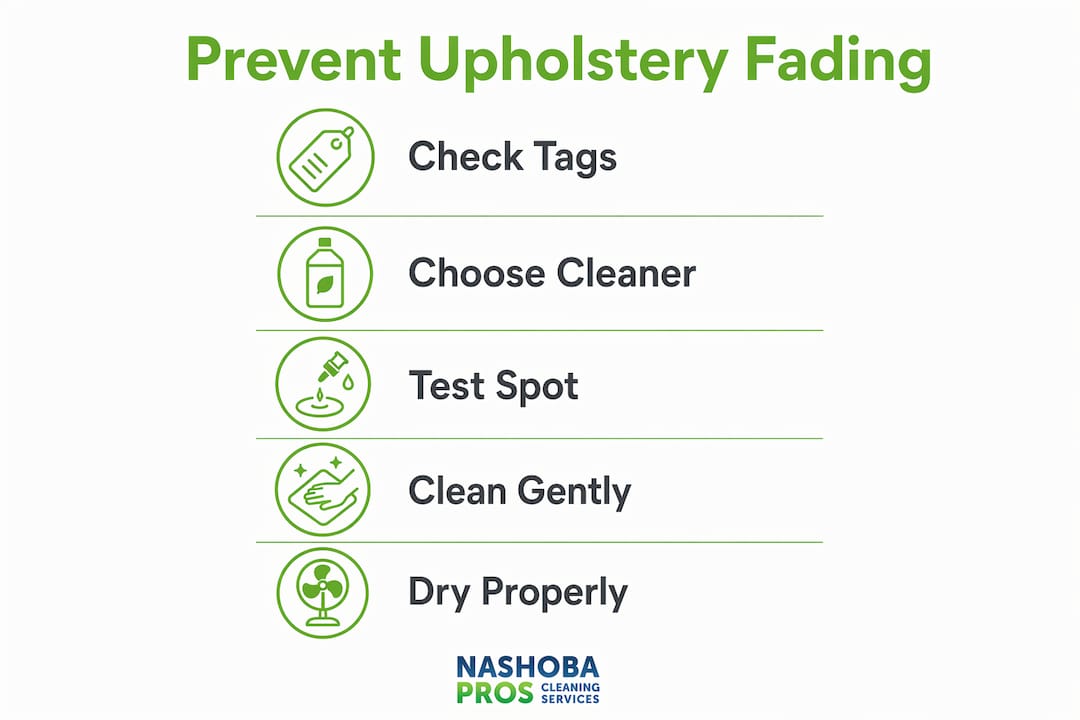
- Read the cleaning code first. The W, S, WS, or X tag on your furniture tells you exactly which cleaning methods are safe. Ignoring it is the most common cause of preventable damage.
- Spot test every product. Apply a small amount to a hidden area, such as the back of a cushion or the underside of a skirt, and let it dry completely before proceeding. Check for color transfer, ring formation, and texture change.
- Use pH-neutral, upholstery-specific cleaners. Products formulated for fabric care avoid the alkaline chemistry that breaks down dyes. Avoid all-purpose household cleaners on upholstery.
- Control moisture carefully. Apply cleaning solution sparingly and extract thoroughly. A wet-dry vacuum or upholstery extractor removes moisture before it has time to cause dye migration.
- Protect from direct sunlight. UV exposure degrades dyes over time, and fabrics already weakened by cleaning are especially vulnerable. Use curtains, blinds, or UV-filtering window film to reduce sun exposure on upholstered furniture.
- Rotate cushions regularly. Cushions exposed to light on one side fade faster than those rotated frequently. Rotating every few weeks keeps color wear even across the piece.
- Apply fabric protection after cleaning. Products like fabric protectors create a barrier that repels moisture and soil, reducing how often deep cleaning is needed and how aggressively it must be done.
- Call a professional for delicate fabrics. Silk, velvet, antique textiles, and heavily dyed natural fibers carry a high risk of irreversible damage from DIY cleaning. A professional with upholstery fabric expertise uses fabric-specific methods and proper extraction equipment.
Pro Tip: After cleaning, place a fan nearby to speed drying without applying heat. Heat from a hair dryer or direct sunlight during drying accelerates dye degradation and can set residue stains permanently.
Key takeaways
Upholstery fades after cleaning because dye instability, moisture, and cleaning chemistry combine to break down color in ways that are often irreversible without professional intervention.
| Point | Details |
|---|---|
| Dye instability is the root cause | Fading happens when fabric dyes react to moisture, pH shifts, or oxidizing agents during cleaning. |
| Fabric type determines fading risk | Cotton, linen, and pile fabrics like velvet face the highest risk of color loss after cleaning. |
| Common mistakes accelerate fading | Over-wetting, scrubbing, and skipping spot tests are the leading causes of preventable color damage. |
| Prevention starts before cleaning | Always check the cleaning code, spot test, and use pH-neutral products before treating any upholstery. |
| Some fading is permanent | Cleaning cannot restore lost dye; stronger cleaning exposes more color loss rather than fixing it. |
What 30 years of cleaning furniture taught me about fading
The most important thing I have learned about upholstery fading is this: cleaning rarely causes fading from scratch. What cleaning does is remove the soil that was hiding how much the dye had already weakened. The fading was already there. The cleaning just made it visible.
That distinction matters because homeowners often blame the cleaning process when the real issue is a fabric that was already at the end of its dye life. I have seen this pattern repeatedly on older sofas and chairs where one cushion face looks dramatically paler after cleaning than the rest of the piece. The dye on that face had degraded from years of UV exposure and body contact. Cleaning removed the grime that was masking it.
The staged testing approach is something I rely on every time before touching a piece I am not certain about. You start with a dry friction test using a white cloth. If no dye transfers, you move to a damp test. Documenting dwell time, agitation, and drying during that test tells you exactly what to expect on the full piece. Skipping this step is how professionals cause damage they cannot explain afterward.
The hardest conversation to have with a homeowner is the one where I explain that missing dye and bleached spots are limitations of cleaning, not failures of technique. Cleaning cannot put dye back into a fiber. When a fabric has reached that point, the honest options are acceptance, reupholstering, or professional fabric dyeing. Cleaning harder will only expose more of what was already lost.
— Jim
Nashobapros protects your upholstery color from the start
Upholstery cleaning done wrong leaves furniture looking worse than before. Nashobapros has spent over 30 years serving homeowners in Westford, MA and the Nashoba Valley with cleaning methods built around fabric safety, not speed.

Every job starts with a hidden-area test that checks for dye transfer, pile change, residue, and ring formation before any product touches the main surface. Nashobapros uses pH-neutral, family-safe products matched to each fabric’s cleaning code, and professional extraction equipment that removes moisture before dye migration can begin. For delicate or fine fabrics, the team follows fine upholstery cleaning protocols that most general cleaners skip entirely. Get a free quote and protect your furniture before the next cleaning causes damage that cannot be undone. Visit the upholstery cleaning guide to learn more or book your service today.
FAQ
Why does upholstery look paler after cleaning?
Cleaning removes soil that was masking pre-existing dye degradation, making color loss visible for the first time. The paler cleaned surface compared to protected areas like cushion undersides is the clearest sign of dye instability.
Can faded upholstery be restored after cleaning?
Cleaning cannot restore lost dye. Once dye molecules have broken down or bled, the options are professional fabric dyeing, reupholstering, or accepting the change.
What cleaning products are safest for upholstery color?
pH-neutral, upholstery-specific cleaners are the safest choice. Avoid alkaline detergents, bleach-based sprays, and all-purpose household cleaners, which strip protective coatings and break down dye molecules.
Does cotton upholstery fade more than synthetic fabric?
Yes. Cotton is prone to dye bleeding when wet, and the damage is difficult to reverse once the fabric dries. Synthetic fabrics like polyester hold dye more securely and resist moisture-based color migration.
How do I know if my upholstery is safe to clean at home?
Check the cleaning code tag on your furniture and perform a spot test on a hidden area before cleaning the full surface. Spot testing and reading care instructions are the two most reliable steps for avoiding unintentional color damage.