

How to Deep Clean Staircase Carpet Steps Effectively
Deep cleaning carpeted staircase steps is defined as a multi-stage process combining dry vacuuming, targeted prespraying, mechanical agitation, methodical extraction, and rapid drying to remove embedded soil and restore fiber integrity. Stairs are not flat carpets. Staircase carpets endure up to 5 times the friction of flat carpeted surfaces, which means standard cleaning methods fall short fast. The geometry of treads, risers, and bullnose edges creates soil traps that a quick vacuum pass simply cannot address. Industry standards recommend professional deep cleaning every 12–18 months, but the right DIY technique between those visits makes a real difference in how long your stair carpet lasts.
What tools and preparations do you need to deep clean staircase carpet steps?
The right equipment is not optional on stairs. It is the difference between a safe, effective clean and a wet, slippery hazard. Every tool you bring to this job should be chosen for the confined geometry of a staircase, not borrowed from your living room routine.
Must-have tools for stair carpet cleaning:
- HEPA-filtered vacuum with a crevice tool. A HEPA vacuum removes up to 79% of embedded dry particulate before any moisture touches the carpet. That number matters because wet cleaning pushes loose soil deeper into fibers if you skip this step. Learn more about HEPA filtration benefits before you start.
- Stair hand tool with spray jet and vacuum slot. Dedicated stair hand tools give you simultaneous spray and extraction in a compact head sized for treads and risers. Full-sized wands are too wide and too heavy for safe stair use.
- Portable extraction machine with a long hose. A 20–25 foot hose lets you park the machine on the landing or floor below, keeping heavy equipment off the stairs entirely. This single practice eliminates the most common fall hazard in stair cleaning.
- Appropriate cleaning solution. Use a low-moisture, pH-balanced prespray formulated for residential carpet. Avoid heavy-foam products that leave residue.
- Knee pads and a stair barrier. Knee pads protect you during the extended kneeling this work requires. A barrier at the top and bottom of the staircase keeps children and pets off wet steps.
- Air mover. Place one at the top or bottom of the flight after extraction to accelerate drying.
| Tool | Purpose |
|---|---|
| HEPA vacuum with crevice tool | Removes up to 79% of dry particulate before wet cleaning |
| Stair hand tool | Controls moisture and extracts soil on treads, risers, and bullnose |
| Portable machine with long hose | Keeps heavy equipment off stairs to prevent falls |
| pH-balanced prespray | Breaks down soil without over-wetting fibers |
| Knee pads and barrier | Protects joints and blocks staircase access during wet cleaning |
| Air mover | Reduces drying time to 2–4 hours and prevents moisture wicking |
Pro Tip: Keep your hose along the wall side of each step, not across the tread. A hose crossing a wet tread is a trip hazard for anyone who enters the staircase unexpectedly.
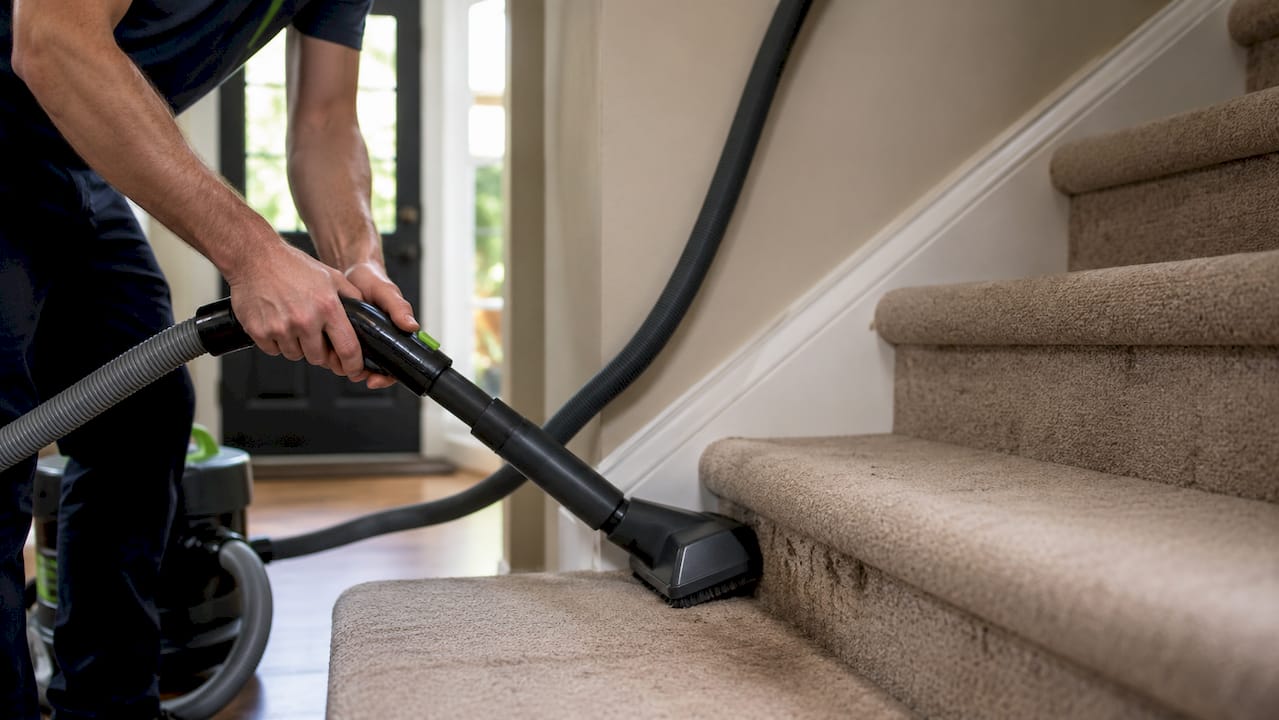
Step-by-step process to deep clean carpet stairs
A methodical sequence protects your carpet and keeps you safe. Skipping steps or reversing the order creates more work and can damage the carpet backing or the wood structure underneath.
-
Block the staircase. Place barriers at the top and bottom before you bring any equipment near the stairs.
-
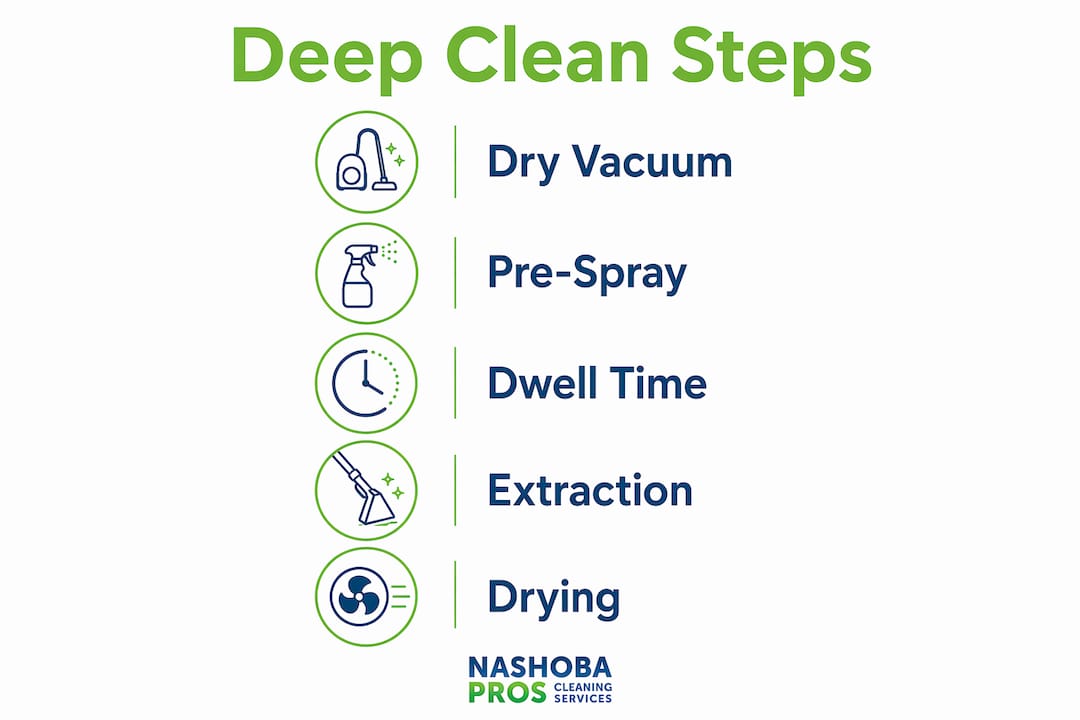
Dry vacuum from top to bottom. Start at the highest step and work down. Use the crevice tool along every edge and the full head across each tread. Top-down cleaning prevents dirty water from running onto already-cleaned steps below. This pass is not optional. Skipping it means your prespray will mix with loose soil and push it deeper into the pile.
-
Apply prespray lightly and evenly. Mist the tread center and the bullnose with a thin, even coat. The bullnose, the rounded front edge of each tread, receives 45% more wear and holds the highest concentration of soil. Give it extra attention without soaking it.
-
Allow dwell time. Let the chemistry work for 3–5 minutes. This is when the cleaning solution breaks down grease and ground-in soil. Rushing this step means the extraction pass does less work.
-
Agitate with a stair brush. Use a short-bristle brush or a rotary stair tool to work the prespray into the fiber. Focus on the bullnose and the center of each tread where foot traffic concentrates. Bullnose cleaning demands special agitation because the curved edge traps soil in ways a flat tread does not.
-
Extract in order: tread, bullnose, riser, edges. Work your stair hand tool across the tread first, then pull it over the bullnose, then down the riser face, then along the side edges. A consistent tread-to-edge extraction routine protects fibers and prevents browning or moisture wicking.
-
Run multiple dry suction passes. After the wet extraction pass, go over each step two or three more times with the vacuum slot only, no spray. This pulls residual moisture out of the pile and significantly reduces drying time.
-
Move to the next step down and repeat. Complete every step in sequence before moving equipment.
-
Place air movers. Air movers positioned at the top or bottom of the flight reduce drying time to 2–4 hours. Do not let anyone use the stairs until they are fully dry.
| Technique feature | Why it matters |
|---|---|
| Top-down extraction order | Prevents re-soiling cleaned steps below |
| Bullnose-focused agitation | Addresses the highest-wear zone on each step |
| Multiple dry suction passes | Reduces moisture and cuts drying time |
| Air mover placement | Brings drying time down to 2–4 hours |
| Machine parked off stairs | Eliminates the primary fall hazard |
Pro Tip: Work from a kneeling position with knee pads and keep your body weight on the step above the one you are cleaning. This gives you better control of the hand tool and keeps you stable if the carpet is damp.
Common mistakes to avoid when cleaning stair carpets
Most stair carpet damage comes from two sources: too much water and the wrong equipment. Both are easy to avoid once you know what to watch for.
-
Over-saturating the carpet. Over-wetting stairs leads to mildew, wood damage, and slow drying. The fix is simple: mist, do not soak. If you press a dry cloth to the carpet after extraction and it comes away soaking wet, you used too much moisture.
-
Using a full-sized wand on stairs. Full-sized wands are built for open floor areas. On stairs, they are too heavy to control safely, too wide for the tread geometry, and they deposit far more water than a stair hand tool. Over-wetting from full-sized wands also creates fall hazards on wet steps.
-
Ignoring the bullnose and edges. Most homeowners run a tool across the flat tread and call it done. The bullnose and side edges are where soil concentrates most. Skipping them means the dirtiest parts of each step stay dirty.
-
Skipping dry suction passes. One wet extraction pass is not enough. Without multiple dry passes, moisture stays in the pile longer, increasing the risk of browning, wicking, and mildew. It also leaves the steps slippery longer.
-
Cleaning bottom-up. Working from the bottom of the staircase up means dirty rinse water runs down onto steps you already cleaned. Always start at the top.
-
Using rental machines without checking extraction power. DIY rental machines leave more moisture and have weaker extraction than professional equipment. On stairs, that extra moisture is a real problem. If you are renting, read about why rental machines leave residue before committing to that approach.
Pro Tip: After the job is done, place a dry white towel on the dampest-looking step and stand on it for 10 seconds. If the towel shows significant moisture transfer, run another dry suction pass before placing your air mover.
How often should you deep clean carpeted staircase steps?
Cleaning frequency depends on how hard your stairs work. A single adult in a quiet home has very different needs than a family with two dogs and three kids.
Recommended cleaning intervals:
- Every 12–18 months for most households. This is the standard professional recommendation for maintaining carpet health and warranty requirements in average-traffic homes.
- Every 6–9 months for homes with pets, young children, or heavy daily foot traffic. Pet dander, tracked-in soil, and food debris accumulate faster on stairs than anywhere else in the home.
- Weekly dry vacuuming between deep cleans. A crevice tool pass on each step once a week removes the loose soil before it gets ground into the fiber. This single habit extends the time between deep cleans significantly.
- After high-dust seasons. Late winter and early spring bring tracked-in salt, sand, and grit from outside. A deep clean after these periods prevents abrasive particles from cutting carpet fibers over time.
Carpet manufacturers often tie warranty coverage to documented cleaning schedules. Skipping professional cleaning at the recommended interval can void coverage on fiber damage claims. Stairs, because they take so much more abuse than flat carpet, should be at the front of your maintenance calendar, not an afterthought.
Key Takeaways
The most effective way to deep clean staircase carpet steps combines a HEPA dry vacuum pass, light prespray with dwell time, targeted bullnose agitation, top-down extraction, and multiple dry suction passes before air mover drying.
| Point | Details |
|---|---|
| Dry vacuum first | A HEPA vacuum removes up to 79% of dry particulate before wet cleaning begins. |
| Bullnose needs extra attention | The rounded front edge of each tread sees 45% more wear and the highest soil load. |
| Keep machines off the stairs | A 20–25 foot hose lets you park the extractor on the landing, eliminating fall risk. |
| Multiple dry passes cut drying time | Repeated dry suction after extraction brings drying down to 2–4 hours with an air mover. |
| Clean every 12–18 months minimum | More frequent cleaning (every 6–9 months) is needed for pets, kids, or heavy traffic. |
What I have learned after years of stair carpet cleaning
Stair carpet cleaning is the job that separates careful technicians from careless ones. I have seen homeowners rent a large machine, drag it onto the stairs, soak every tread, and then wonder why the carpet smells musty for two weeks. The machine was not the problem. The approach was.
The single biggest misconception I run into is that more water means a deeper clean. On flat carpet, you can get away with heavier moisture because the subfloor is forgiving and airflow is good. On stairs, the wood structure underneath absorbs moisture fast. Once that wood gets wet repeatedly, you are looking at warping, mold, and a carpet that lifts at the edges. Light application and aggressive extraction is the only approach that works long term.
The second thing I tell every homeowner is this: the bullnose is where your stairs actually age. If you clean the flat tread and ignore the curved front edge, you are leaving the dirtiest, most worn part of each step untouched. Over time, that neglect shows up as fraying, color loss, and fiber breakdown right where everyone’s foot lands first.
Safety is not a secondary concern on stairs. A wet tread is a genuine fall hazard. Keeping the machine on the landing, running dry passes, and using an air mover before anyone walks on the steps are not optional extras. They are the baseline for doing this job responsibly.
— Jim
Nashobapros handles stair carpet cleaning the right way
Stairs are one of the hardest areas in any home to clean well. Nashobapros has been doing this work in Westford, MA and the surrounding Nashoba Valley communities for over 30 years, and stair carpets are a job we take seriously.

Every job uses HEPA-filtered vacuums, dedicated stair hand tools, and low-moisture extraction methods that protect your carpet and the structure underneath. All products are pet-safe and family-safe. If your stair carpet is overdue for a real clean, our professional carpet cleaning services cover the full process from dry vacuuming to air mover drying. Get a free quote and most jobs can be scheduled quickly.
FAQ
How often should stair carpet be professionally cleaned?
Professional deep cleaning is recommended every 12–18 months for most households. Homes with pets or children should schedule cleaning every 6–9 months to prevent fiber damage and maintain indoor air quality.
What is the best carpet cleaner for stairs?
A portable extraction machine with a dedicated stair hand tool combining a spray jet and vacuum slot is the best setup for stairs. Full-sized wands are too wide and heavy for safe, effective use on stair treads.
Why does stair carpet wear out faster than flat carpet?
Staircase carpets endure up to 5 times the friction of flat carpeted areas because every foot strike lands on the same narrow tread and bullnose edge repeatedly. That concentrated wear breaks down fibers faster than distributed foot traffic on open floors.
How long does stair carpet take to dry after deep cleaning?
With multiple dry suction passes and an air mover placed at the top or bottom of the flight, stair carpet typically dries in 2–4 hours. Skipping dry passes or air movers can extend drying to 12 hours or more, increasing mildew risk.
Can I use a rental carpet cleaner on stairs?
Rental machines generally lack the extraction power of professional equipment and leave more moisture behind. On stairs, that excess moisture increases drying time and the risk of mold. A portable professional-grade machine with a long hose and stair hand tool produces far better results.