

How Professional Upholstery Cleaning Works for Homeowners
Professional upholstery cleaning is a multi-step, fabric-sensitive process that combines specialized vacuuming, targeted pre-treatment, method-matched cleaning, thorough extraction, and controlled drying to restore furniture without causing damage. Unlike a quick wipe-down, the upholstery cleaning process begins before a single drop of solution touches your sofa. Technicians read fabric codes, assess soil levels, and select tools accordingly. Understanding how this works helps you make smarter decisions about scheduling, fabric care, and what to expect when a professional team walks through your door.
What are upholstery cleaning codes and why do they matter?
Fabric cleaning codes are the foundation of every professional upholstery inspection. These single-letter codes, printed on a tag typically found under cushions or on the furniture frame, tell technicians exactly which cleaning method is safe for that fabric. Using the wrong method can cause permanent damage, and that is not an exaggeration.
The four codes every homeowner should know:
- W (Water-based): Safe for water-based cleaning solutions and steam. Common on synthetic fabrics like polyester and nylon.
- S (Solvent-based): Requires dry solvent cleaners only. Water causes damage on S-coded fabrics, including permanent rings, spots, or shrinkage.
- WS (Water or Solvent): The most flexible code. Professionals can use either water-based or solvent-based products depending on the stain type.
- X (Vacuum only): No liquid of any kind. Cleaning is limited to dry vacuuming or light brushing.
Ignoring these codes is the single most common cause of upholstery damage during cleaning. A W-coded microfiber sofa and an S-coded silk accent chair require completely different tools, solutions, and techniques. Fabric codes prevent water spots on S-coded pieces and protect X-coded fabrics from liquid damage entirely. This is why professional upholstery inspection always starts here, not with the cleaning equipment.
Pro Tip: Check your furniture tag before calling any cleaning service. If the tag is missing or unreadable, a professional technician should perform a spot test on a hidden area before proceeding with any solution.
Spot testing is standard practice for experienced technicians. Pre-testing on hidden areas confirms colorfastness and fabric tolerance before the full cleaning begins. This step alone prevents discoloration, texture changes, and fabric bleed that would otherwise ruin a piece of furniture.
How does the step-by-step upholstery cleaning process work?
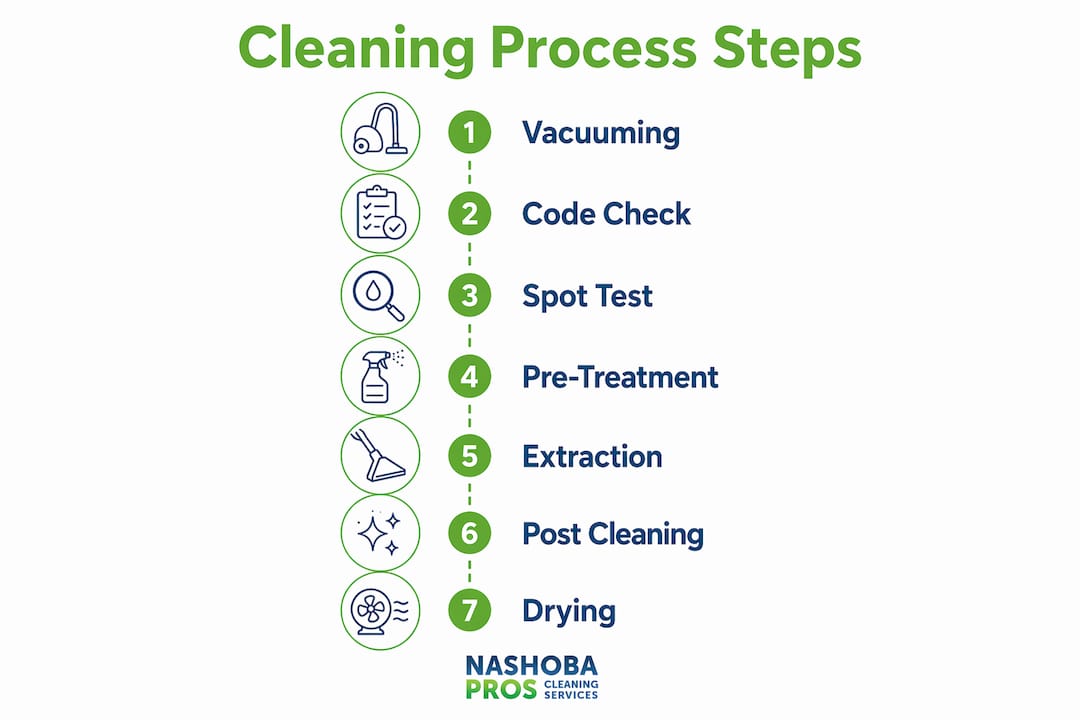
Professional upholstery services follow a consistent sequence. Each stage builds on the last, and skipping any step reduces the quality of the final result.
-
Dry vacuuming and debris removal. Technicians start with a thorough dry vacuum pass using turbo upholstery nozzles and pre-treatment brushes. Turbo nozzle vacuuming lifts ingrained dirt and pet hair from fabric fibers, improving the effectiveness of every subsequent step. This also prevents loose soil from turning into mud when wet solutions are applied.
-
Fabric code verification and spot testing. After vacuuming, the technician confirms the cleaning code and tests the chosen solution on an inconspicuous area. This is not optional on quality jobs.
-
Pre-treatment of stains and heavily soiled areas. Targeted pre-treatment solutions are applied to stains, high-traffic zones, and areas with visible soil buildup. These solutions begin breaking down oils, proteins, and embedded grime before the main cleaning phase starts.
-
Method-matched cleaning. The technician applies the appropriate cleaning method based on the fabric code. W-coded fabrics may receive hot-water extraction or foam cleaning. S-coded fabrics receive dry solvent treatment. WS-coded fabrics give the technician flexibility to choose based on the stain type and soil level.
-
Thorough extraction with repeated passes. This step separates a professional result from a mediocre one. Multiple extraction passes continue until the water and foam being extracted run completely clear. Residual detergent left in the fabric attracts new dirt faster than the original soil did, so complete extraction is non-negotiable.
-
Sanitizing spray application. After extraction, many technicians apply a fabric sanitizing spray to eliminate lingering bacteria and odors. This step improves hygiene and extends the freshness of the clean.
-
Fabric grooming. The final step involves brushing or grooming the fabric nap back into its natural direction. This restores texture, prevents matting, and gives the piece a finished appearance.
Pro Tip: Ask your technician how many extraction passes they plan to make. A professional who cannot answer that question specifically is worth questioning further.
For homeowners curious about how this compares to carpet care, the sequencing mirrors how professional carpet cleaning works, with the key difference being that upholstery requires far more fabric-specific decision-making at each stage.

How drying methods impact upholstery cleaning results and longevity
Drying is where many cleaning jobs succeed or fail after the technician leaves. Uneven or prolonged drying causes mold growth, musty odors, and fabric distortion. Managing moisture after cleaning is as important as the cleaning itself.
The drying time depends heavily on the method used and the fabric type. Here is a practical reference:
| Cleaning method | Typical drying time | Key risk if rushed |
|---|---|---|
| Hot-water extraction / steam | 4 to 24 hours | Mold, odor, fabric distortion |
| Foam cleaning | 2 to 6 hours | Residue buildup if not fully dried |
| Dry solvent cleaning | 1 to 3 hours | Minimal risk; fastest method |
| Low-moisture encapsulation | 1 to 3 hours | Residue if over-applied |
Wet cleaning methods like steam and hot-water extraction require the longest drying windows, sometimes up to 24 hours depending on fabric density and room humidity. That extended window is the trade-off for deeper soil removal. Dry solvent methods dry in one to three hours, which makes them the preferred choice for delicate or S-coded fabrics where speed and safety both matter.
Professionals manage drying by keeping fabric damp rather than saturated. Controlled moisture application combined with enhanced airflow, using fans or dehumidifiers, shortens drying time and reduces the risk of damage. Leaving windows open and running ceiling fans after a cleaning appointment is not just helpful. It actively protects your furniture.
For pieces in humid rooms or basements, professionals may recommend a dehumidifier run for several hours post-cleaning. This is especially true for thick velvet or chenille fabrics that hold moisture deep in the pile.
Comparing common professional upholstery cleaning techniques
Not every method works for every fabric. Here is how the four primary techniques compare across the factors that matter most to homeowners:
| Technique | Best fabric types | Soil removal depth | Drying time | Ideal use case |
|---|---|---|---|---|
| Hot-water extraction | W and WS coded synthetics | Deep | 4 to 24 hours | Heavy soiling, allergen removal |
| Steam cleaning | W-coded cotton, polyester | Deep | 4 to 8 hours | General refresh, bacteria removal |
| Dry solvent cleaning | S-coded silk, rayon, wool | Moderate | 1 to 3 hours | Delicate fabrics, light soiling |
| Dry foam cleaning | WS-coded mixed fabrics | Moderate to deep | 2 to 6 hours | Balanced clean with lower moisture |
Steam cleaning penetrates fabric fibers with hot vapor, releasing embedded soil and killing bacteria effectively. The trade-off is moisture. Fabrics cleaned with steam need adequate drying time and airflow to avoid the problems described above.
Dry solvent cleaning trades depth for speed and safety. Solvents evaporate quickly, which makes this method the right call for antique pieces, fine upholstery, and any fabric that cannot tolerate water. For a deeper look at how fabric type shapes method selection, the upholstery fabric types guide from Nashobapros covers this in detail.
Hot-water extraction, the same core method used in professional carpet cleaning, delivers the deepest clean on compatible fabrics. It is the preferred method for households with pets, allergies, or heavily used furniture. The extended drying time is the only real drawback, and proper airflow management minimizes it significantly.
Key takeaways
Professional upholstery cleaning works by combining fabric code assessment, method-matched cleaning, thorough extraction, and controlled drying to restore furniture safely and effectively.
| Point | Details |
|---|---|
| Fabric codes drive every decision | Always identify the W, S, WS, or X code before selecting any cleaning method or solution. |
| Extraction quality defines the result | Multiple passes until fluid runs clear prevent residue buildup and faster re-soiling. |
| Drying time varies by method | Wet methods need 4 to 24 hours; dry solvent methods dry in 1 to 3 hours with minimal risk. |
| Spot testing prevents damage | Testing on a hidden area before full cleaning confirms colorfastness and fabric tolerance. |
| Airflow accelerates safe drying | Fans and dehumidifiers after cleaning protect fabric integrity and prevent mold or odor. |
What 30 years of upholstery cleaning taught me about what actually matters
Most homeowners focus on the cleaning solution. After three decades in this business, I can tell you the solution is almost the last thing that matters. What actually determines the outcome is what happens before any product touches the fabric.
The fabric code check and the spot test are the two steps that separate a professional job from a disaster. I have seen well-meaning people ruin a $2,000 silk sofa with a water-based cleaner because they skipped the tag. The damage is permanent. No amount of re-cleaning fixes water rings on S-coded fabric.
The other thing I tell every homeowner: extraction is where the real work happens. Applying solution is easy. Pulling it back out completely, pass after pass until the water runs clear, is what takes skill and patience. Residue left in the fabric does not just look bad. It acts like a magnet for new dirt, and your sofa looks worse within weeks than it did before the cleaning.
Between professional visits, vacuum your upholstery weekly with an upholstery attachment. Treat spills immediately by blotting, never rubbing, and always check the fabric code before applying anything from a store shelf. For cleaning delicate fabric sofas at home, use the gentlest method the code allows and test first.
The homeowners who get the longest life from their furniture are not the ones who clean most aggressively. They are the ones who clean correctly and consistently.
— Jim
Get professional upholstery cleaning from Nashobapros
Nashobapros has been cleaning upholstery in Westford, MA and the surrounding Nashoba Valley communities for over 30 years. Every job starts with a proper fabric code inspection and spot test, uses pet-safe and family-safe products, and finishes with thorough extraction and controlled drying. No shortcuts, no residue, no surprises.
Whether you have a heavily soiled sectional, a delicate accent chair, or anything in between, the team at Nashobapros has the equipment and experience to handle it correctly. Flexible scheduling means most jobs can be booked quickly. If you are ready for furniture that looks and smells genuinely clean, explore upholstery cleaning in Beverly or West Newbury upholstery services and get a free quote today.
FAQ
What does the upholstery cleaning process involve?
Professional upholstery cleaning follows seven steps: dry vacuuming, fabric code verification, spot testing, pre-treatment, method-matched cleaning, thorough extraction, and fabric grooming. Each step protects the fabric while removing soil, bacteria, and odors.
How long does upholstery take to dry after professional cleaning?
Drying time depends on the method used. Wet methods like hot-water extraction take 4 to 24 hours, while dry solvent cleaning dries in 1 to 3 hours. Running fans or a dehumidifier after cleaning speeds up the process safely.
What do upholstery cleaning codes W, S, WS, and X mean?
W means water-based cleaners are safe. S means solvent-only cleaning is required. WS allows either method. X means vacuuming only, with no liquids of any kind. Using the wrong method based on the code is the leading cause of upholstery damage during cleaning.
How often should upholstery be professionally cleaned?
Most upholstery benefits from professional cleaning every 12 to 24 months, depending on household traffic, pets, and fabric type. High-use pieces in homes with children or pets may need attention annually or more frequently.
Can professionals remove pet odors from upholstery?
Yes. After extraction, technicians apply fabric sanitizing sprays that eliminate bacteria and neutralize odors at the source. For deep pet odor issues, a pre-treatment enzyme solution is typically applied before the main cleaning phase begins.