

Compare Carpet Cleaning Methods: Steam vs the Rest
When you compare carpet cleaning methods, steam cleaning stands out as the most effective option for removing deep-seated dirt, allergens, and stubborn stains from carpet fibers. What most people call “steam cleaning” is actually hot water extraction (HWE), a process that injects hot water and solution under pressure and immediately vacuums it back out. The term “steam cleaning” is widely used in marketing, but understanding the real process helps you make a smarter choice for your home. Other methods, including dry cleaning, shampooing, bonnet cleaning, and encapsulation, each have distinct trade-offs in cost, drying time, and cleaning depth. Knowing those differences is what separates a carpet that looks clean from one that actually is.
How steam cleaning works: process, tools, and results
Hot water extraction is a two-stage process. First, a machine injects a heated water and cleaning solution mixture deep into the carpet pile at high pressure. Then, a powerful vacuum immediately extracts that water along with loosened soil, bacteria, and allergens. The result is a carpet cleaned from the fiber base up, not just at the surface.
The equipment you use makes a significant difference. Professional truck-mounted systems generate far more heat and suction than any portable or rental machine. DIY machines typically leave more moisture and residue behind because their extraction power is weaker. That leftover moisture is not just inconvenient. It creates conditions for mold growth and odor if the carpet does not dry properly.
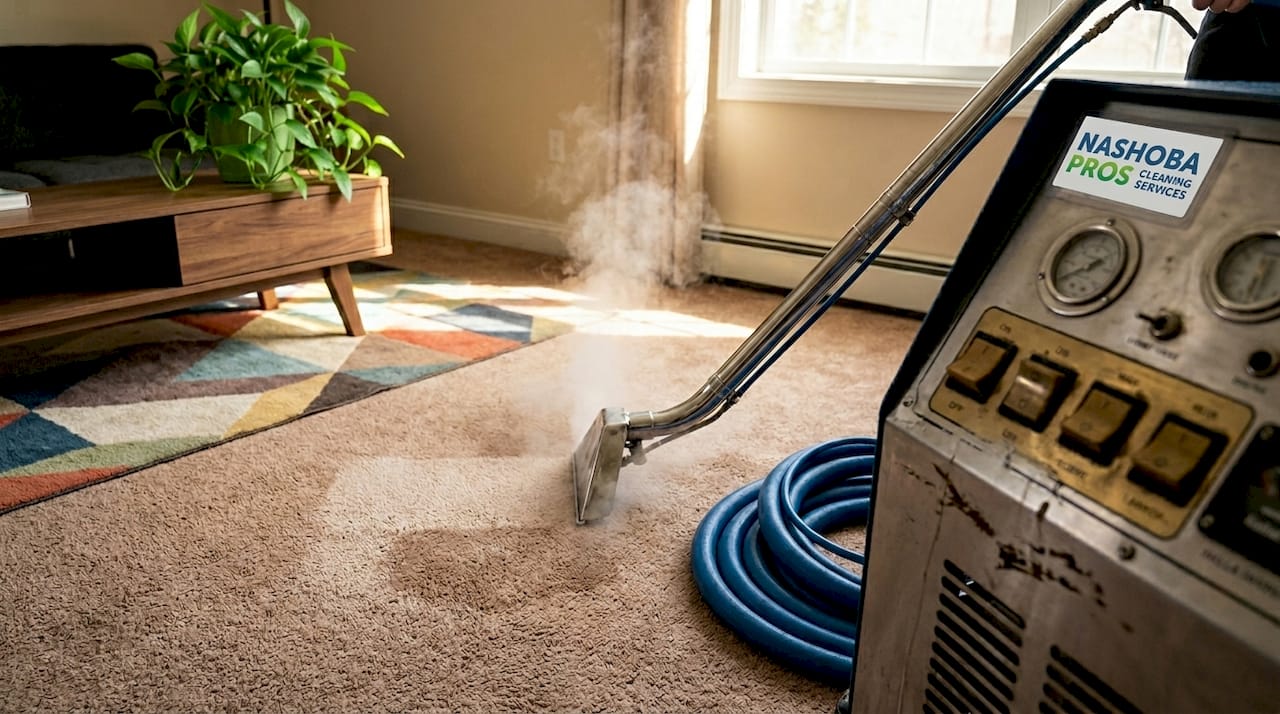
Drying time after hot water extraction ranges from 6 to 12 hours or more, depending on several factors. Carpet fiber type, pile height, humidity, and airflow all influence how quickly your carpet dries. A thick wool rug in a humid basement will take much longer than a low-pile synthetic carpet with fans running. Planning your cleaning around a day when you can open windows and run air circulation makes a real difference.
One common misconception is that a handheld steam vapor device and a hot water extraction machine are the same thing. They are not. Steam vapor devices use dry heat for surface sanitization but cannot remove embedded soil the way extraction machines do. If you are dealing with ground-in dirt or pet stains, a vapor steamer will not get the job done.
- Pre-treat stains and high-traffic areas with a suitable solution before the main cleaning pass.
- Run the extraction machine in slow, overlapping passes to maximize soil removal.
- Make a dry pass with the machine (no water, just suction) to pull out extra moisture.
- Run fans or open windows immediately after cleaning to speed drying.
- Avoid walking on the carpet until it is fully dry to prevent re-soiling.
Pro Tip: After hot water extraction, place aluminum foil squares under furniture legs before moving them back. This prevents rust or dye from transferring onto your damp carpet.
How does steam cleaning compare to dry carpet cleaning?
Dry carpet cleaning uses absorbent compounds or low-moisture chemical solutions applied to the carpet surface. A machine works the compound into the fibers, and then it is vacuumed up along with the dirt it has absorbed. The biggest advantage is speed. Dry cleaning leaves carpet usable in as little as 30 minutes to one hour, compared to the 6 to 12 hours needed after hot water extraction.
That speed comes with trade-offs. Here is how the two methods stack up directly:
| Factor | Hot water extraction (steam) | Dry cleaning |
|---|---|---|
| Cleaning depth | Deep, fiber-level extraction | Surface and upper fiber layer |
| Drying time | 6 to 12+ hours | 30 minutes to 1 hour |
| Stain removal | Superior for set-in stains | Better for light, recent soiling |
| Cost | Higher (equipment and labor) | Lower for routine maintenance |
| Chemical residue | Minimal when properly rinsed | Possible buildup with repeated use |
| Environmental impact | Lower (primarily water-based) | Higher (chemical compounds required) |
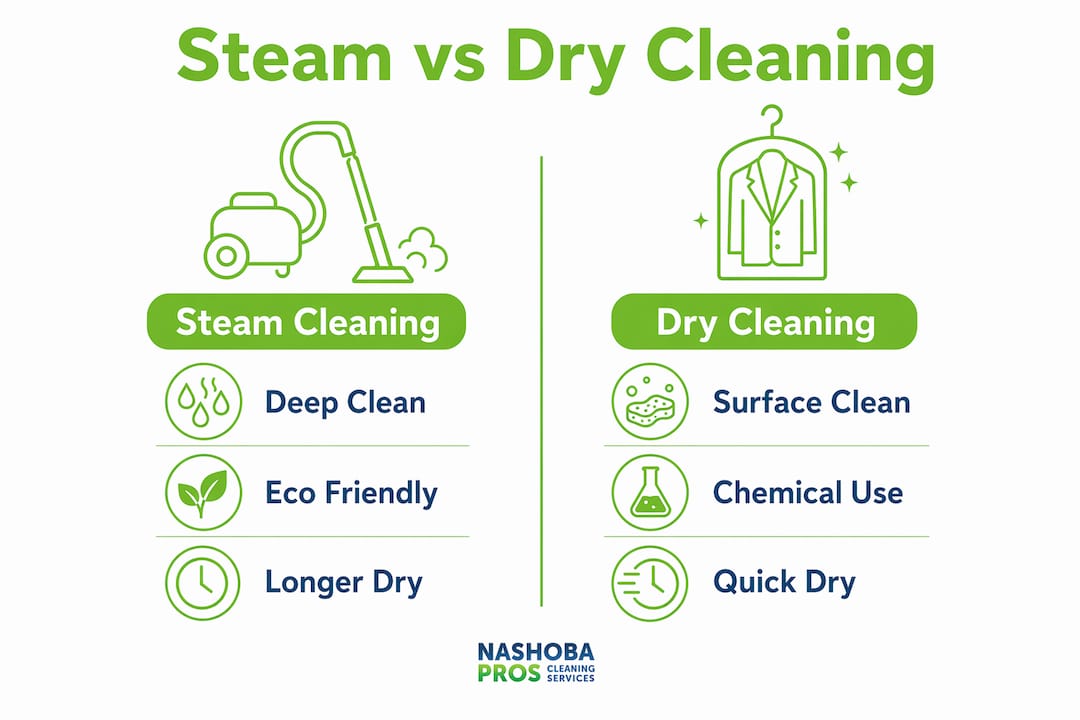
Steam cleaning uses high heat and water that penetrates fibers to break up set-in stains, making it the stronger choice for deep restoration. Dry cleaning excels at quick-turnaround maintenance between deeper cleans. The two methods are not competitors so much as complements.
There are situations where dry cleaning is clearly the better call:
- You need the room back in use within an hour or two.
- The carpet has only light surface soiling from regular foot traffic.
- You are doing routine maintenance between annual professional cleanings.
- The carpet fiber or backing is moisture-sensitive (some natural fiber rugs fall into this category).
Repeated dry cleaning does carry a risk. Continuous dry carpet cleaning can degrade carpet fibers over time due to chemical exposure. Rotating between dry maintenance and periodic hot water extraction gives you the best of both worlds without accelerating wear.
Steam cleaning is also more eco-friendly than dry cleaning because it relies primarily on water and heat rather than chemical compounds that leave residues in your carpet and home environment.
How do other carpet cleaning methods compare with steam?
Beyond steam and dry cleaning, homeowners encounter several other methods. Each has a specific use case, and none of them match hot water extraction for deep cleaning.
Carpet shampooing was the dominant method before HWE became widespread. A foamy detergent is worked into the carpet with a rotary machine, then vacuumed up after drying. The problem is residue. Shampooing can leave chemical residues that attract new dirt quickly, meaning your carpet looks dirty again faster than it should. Shampooing is rarely recommended as a standalone method today.
Bonnet cleaning uses a rotating pad soaked in cleaning solution to absorb surface dirt. Hotels use it frequently because it is fast and keeps carpets looking presentable between deep cleans. The limitation is obvious: bonnet cleaning focuses on surface soil without flushing anything out of the deeper pile. It is cosmetic maintenance, not restoration.
Encapsulation cleaning is a newer low-moisture method where a polymer solution surrounds soil particles and crystallizes as it dries. The crystals are then vacuumed up. It leaves less residue than shampooing and dries faster than HWE. Many commercial cleaning companies use it for regular maintenance. For residential use, it works well on lightly soiled carpets but will not address deeply embedded grime or pet odors.
DIY rental machines sit in a category of their own. They use the hot water extraction principle, but the results are inconsistent. DIY machines usually have lower suction and leave more moisture behind, which increases the risk of odor and re-soiling. If your carpet has not been professionally cleaned in over a year, a rental machine is unlikely to restore it fully. You can learn more about what professional cleaning actually involves in this deep cleaning methods guide from Nashoba Pros.
How to choose the right carpet cleaning method for your home
The right method depends on four factors: carpet type, soil level, drying time you can allow, and whether pets or allergy sufferers live in the home.
- Assess your carpet fiber. Wool, silk, and natural fiber rugs are moisture-sensitive. Low-moisture methods like encapsulation or dry cleaning are safer for these materials. Synthetic fibers like nylon and polyester handle hot water extraction well.
- Gauge the soil level. Carpets uncleaned for 12 to 18 months typically need professional extraction to restore them. Light, recent soiling responds well to dry or encapsulation methods.
- Factor in drying time. If you have young children, pets, or a household that cannot stay off the carpet for half a day, dry cleaning or encapsulation is the practical choice for routine maintenance.
- Consider allergens and pets. Hot water extraction removes allergens, bacteria, and pet dander at the fiber level in a way that surface methods cannot match. If someone in your home has allergies or asthma, periodic professional HWE is worth scheduling.
The most common mistake homeowners make is overwetting the carpet with a rental machine and then not extracting enough moisture. This leads to the odor problems that follow cleaning and can cause mold in the carpet backing. Proper extraction is not optional. It is the difference between a clean carpet and a damaged one.
Pro Tip: Before any full cleaning, test your chosen method on a hidden area of carpet, such as inside a closet. This confirms the carpet handles the moisture level and chemistry without color bleeding or fiber distortion.
Proper drying after cleaning is as important as the cleaning itself. Run ceiling fans, open windows, and consider a dehumidifier in humid months. Professional services with truck-mounted equipment extract significantly more water upfront, which cuts drying time considerably compared to rental machines.
Key takeaways
Hot water extraction is the most effective carpet cleaning method for deep soil removal, allergen elimination, and stain treatment, but the right choice depends on your carpet type, soil level, and schedule.
| Point | Details |
|---|---|
| Steam cleaning is HWE | “Steam cleaning” means hot water extraction, not vapor. It injects and extracts water for deep fiber cleaning. |
| Dry cleaning suits quick turnarounds | Carpets are usable in 30 to 60 minutes, making it ideal for maintenance between deep cleans. |
| Shampooing and bonnet cleaning are surface methods | Neither method flushes embedded soil, making them poor substitutes for periodic hot water extraction. |
| DIY machines underperform professionals | Rental machines leave more moisture and residue due to weaker suction, increasing re-soiling risk. |
| Carpet type drives method choice | Natural fiber rugs need low-moisture methods; synthetic carpets handle hot water extraction well. |
What 30 years of cleaning carpets taught me about method choice
Most homeowners I talk to have been sold on one method and stick with it regardless of what their carpet actually needs. That is the real problem. The carpet cleaning technique comparison that matters is not steam versus dry in the abstract. It is which method fits this carpet, this household, and this level of soil right now.
My honest observation after years in this business: the homeowners who get the longest life out of their carpets use hot water extraction once or twice a year and do low-moisture maintenance in between. They are not loyal to one method. They use the right tool for the job.
The other thing I see constantly is people underestimating how much drying matters. A professional truck-mounted system extracts so much more water than a rental machine that the carpet is often dry in three to four hours instead of twelve. That difference is not just convenience. Less moisture in the carpet means less risk of odor, mold, and re-soiling. When clients ask me why their carpet smelled after a DIY clean, the answer is almost always incomplete extraction.
One more thing worth saying plainly: if your carpet has not had a professional extraction in more than 18 months, no surface method will restore it. Encapsulation and dry cleaning maintain a clean carpet. They do not rehabilitate a neglected one. Know which situation you are in before you choose your method.
— Jim
Get your carpets professionally cleaned by Nashoba Pros
Nashoba Pros has been delivering professional carpet cleaning in Maynard, MA and across the Nashoba Valley for over 30 years. The team uses truck-mounted hot water extraction equipment that outperforms any rental machine on the market, combined with pet-safe, family-safe cleaning solutions that leave no harmful residue behind. Whether you are dealing with set-in stains, pet odors, or carpets that simply need a deep reset, Nashoba Pros handles it with equipment and experience that get real results. Most jobs can be scheduled quickly, and every service is backed by a 100% satisfaction guarantee. Call or book online today for a free quote.
FAQ
What is the difference between steam cleaning and hot water extraction?
Hot water extraction (HWE) injects heated water and solution into carpet fibers and immediately vacuums it out. True steam cleaning uses only vapor heat for surface sanitization and does not extract embedded soil the way HWE does.
How long does carpet take to dry after steam cleaning?
Drying time after hot water extraction typically ranges from 6 to 12 hours. Factors like carpet pile height, fiber type, room humidity, and airflow all affect how quickly the carpet dries.
Is dry cleaning or steam cleaning better for carpets with pets?
Hot water extraction is the stronger choice for pet households because it removes allergens, bacteria, and dander deep in the carpet fibers. Dry cleaning is useful for quick maintenance but does not address embedded pet odors or deep contamination.
Can I use a rental machine instead of hiring a professional?
Rental machines use the hot water extraction principle but have significantly weaker suction than professional truck-mounted systems. They leave more moisture and residue behind, which increases the risk of odor and re-soiling, especially on heavily soiled carpets.
How often should carpets be professionally cleaned?
Most carpets benefit from professional hot water extraction once or twice a year, depending on foot traffic, pets, and allergy concerns. Carpets that have gone 12 to 18 months without a deep clean typically need professional extraction to restore them fully.