

What Causes Carpet Stain Bleaching: Homeowner’s Guide
Carpet stain bleaching is a chemical reaction where sodium hypochlorite destroys dye molecules in carpet fibers, producing permanent white or yellow patches that no amount of scrubbing will fix. Unlike a coffee spill or muddy footprint, what causes carpet stain bleaching is not surface contamination. It is oxidation at the molecular level, stripping color from the fiber itself. Household bleach contains 3 to 8% sodium hypochlorite, a concentration strong enough to break apart chromophores, the chemical structures responsible for color, on contact. The damage is instant, irreversible through standard cleaning, and far more common in homes than most people realize.
What chemical processes cause carpet stain bleaching
Sodium hypochlorite is a powerful oxidizing agent. When it contacts carpet fibers, it attacks the chromophore groups within dye molecules, breaking the chemical bonds that give those dyes their color. The result is a lighter or completely white patch rather than a removable surface stain. This is the core chemistry behind dye molecule destruction and why the damage looks so different from a typical spill.
The oxidation process does not stop at color loss. Bleach can also degrade polymer chains in synthetic carpet fibers, making the affected area brittle and more prone to fraying under foot traffic. A spot that looks like a minor discoloration today can become a structurally weak patch within weeks if the bleach residue is not neutralized.
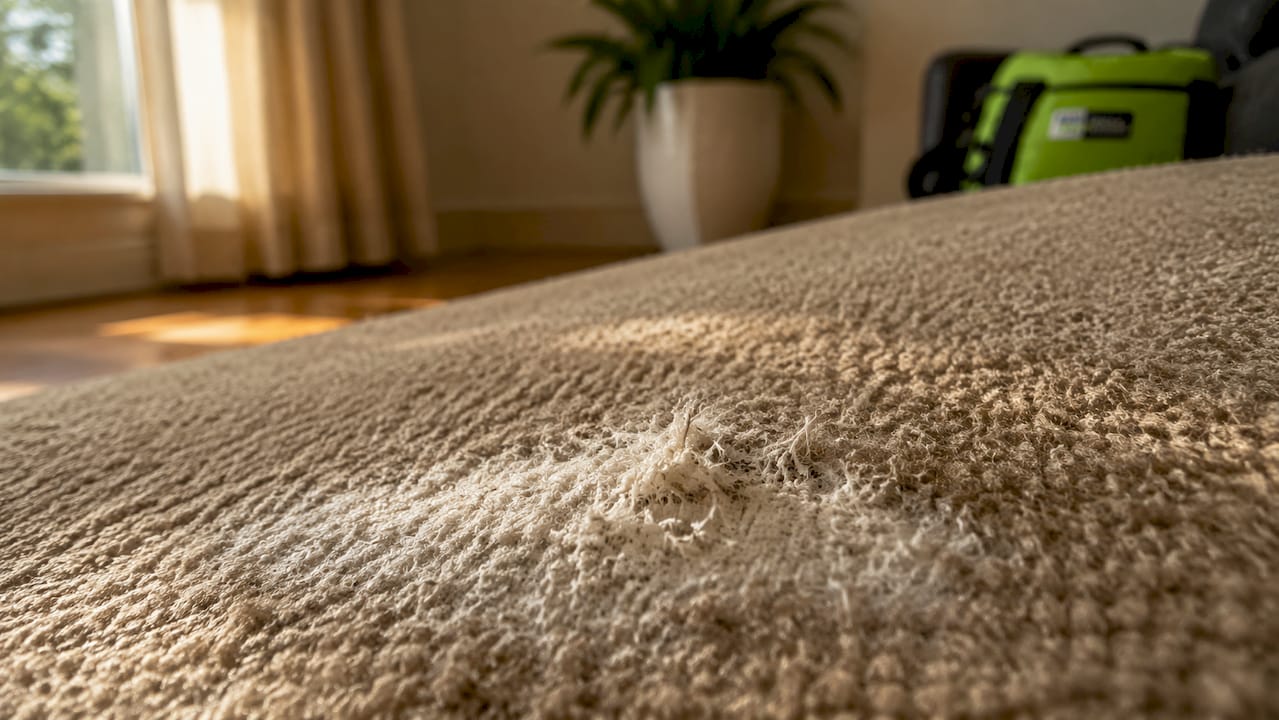
Fiber type determines how severe the visual and structural damage appears. Nylon and polyester carpets show rapid color loss and fiber brittleness, while wool reacts differently due to its protein-based structure. Dark or patterned carpets highlight bleach spots more dramatically because the contrast between the stripped area and the surrounding dye is stark.
The timing of bleach contact matters enormously. Bleach damage sets instantly upon contact and worsens with every additional second of exposure. A drop of undiluted bleach left unaddressed for five minutes causes significantly more color loss than one blotted up within thirty seconds.
- Sodium hypochlorite breaks chromophore bonds, removing color rather than depositing a stain
- Oxidation continues as long as bleach residue remains active in the fiber
- Synthetic fibers like nylon and polyester lose color faster than wool
- Fiber brittleness develops alongside color loss, weakening the carpet structure
- Dark carpets make even small bleach spots highly visible
Pro Tip: If you suspect fresh bleach contact, apply a solution of one tablespoon of white vinegar mixed with two cups of water immediately. The mild acid helps neutralize the alkaline bleach and slows ongoing oxidation before professional treatment.
Common household triggers of carpet bleach stains
Most bleach stains in homes do not come from deliberate carpet cleaning attempts. They come from careless moments during routine disinfecting, laundry work, or bathroom cleaning. Recognizing the typical triggers is the first step toward avoiding them.
- Undiluted bleach spills during cleaning. Pouring or carrying open bleach containers near carpeted areas is the most direct cause. Undiluted bleach application causes immediate and severe color loss, often producing sharp splash marks that are unmistakable.
- Bleach-based cleaning sprays used near carpet edges. Many bathroom and kitchen disinfectants contain sodium hypochlorite. Overspray or drips onto adjacent carpet, especially at doorways and transitions, creates small but visible spots.
- Cross-contamination from cleaning cloths or mops. A cloth used to wipe a bleach solution and then set down on carpet transfers enough oxidizer to strip dye from the fibers beneath it.
- Spot-cleaning attempts with the wrong product. Homeowners reaching for a strong cleaner to tackle a tough stain sometimes grab a bleach-based product without reading the label. The original stain may lift, but the carpet color goes with it.
- Liquid bleach wicking deeper into the backing. Over-wetting or residue in backing causes stain reappearance as moisture redistributes during drying. A spill that looks contained at the surface can spread through capillary action and reappear as a larger discolored area once the carpet dries.
- Oxidizing products beyond standard bleach. Hydrogen peroxide-based cleaners, some mold removers, and certain laundry boosters contain oxidizers that cause the same dye destruction as chlorine bleach, just more slowly.
A helpful resource for building safer cleaning habits at home is this routine cleaning checklist, which covers product placement and handling practices that reduce the risk of accidental carpet damage.
Why bleach stains cannot be removed with normal cleaning
The fundamental reason standard carpet stain removal techniques fail on bleach damage is that there is no stain to remove. Bleach does not deposit a foreign substance onto the carpet. It removes the color that was already there. Shampooing, steam cleaning, and enzyme-based spot treatments are all designed to lift contaminants from fibers. None of them can reintroduce dye molecules that oxidation has already destroyed.
Continued scrubbing after a bleach spill makes the situation worse in two ways. It spreads the active bleach further into surrounding fibers, enlarging the damaged area. It also causes mechanical abrasion on fibers that oxidation has already weakened, accelerating fraying. Bleach damage requires re-dyeing or repair, not cleaning.
| Situation | What it means for your carpet |
|---|---|
| Light patch after recent bleach contact | True chemical bleaching. Color is permanently gone. Cleaning will not restore it. |
| Light patch with no known bleach contact | Possibly moisture wicking or residue discoloration. May respond to thorough cleaning. |
| Sharp-edged white or yellow spot | Strong indicator of bleach damage. Boundaries reflect the exact splash or drip pattern. |
| Gradual fading across a large area | More likely sun exposure or foot traffic wear, not bleach. |
Diagnosing the cause correctly before attempting any treatment saves time and prevents additional damage. Sharp boundaries after bleach contact help distinguish true chemical bleaching from moisture wicking or residue discoloration, which can look similar to the untrained eye.
Pro Tip: After blotting up as much bleach as possible, rinse the area with cold water and blot again. Do not apply heat. Heat accelerates oxidation and locks in fiber damage before neutralization can occur.
How to prevent carpet bleach stains and safer cleaning alternatives
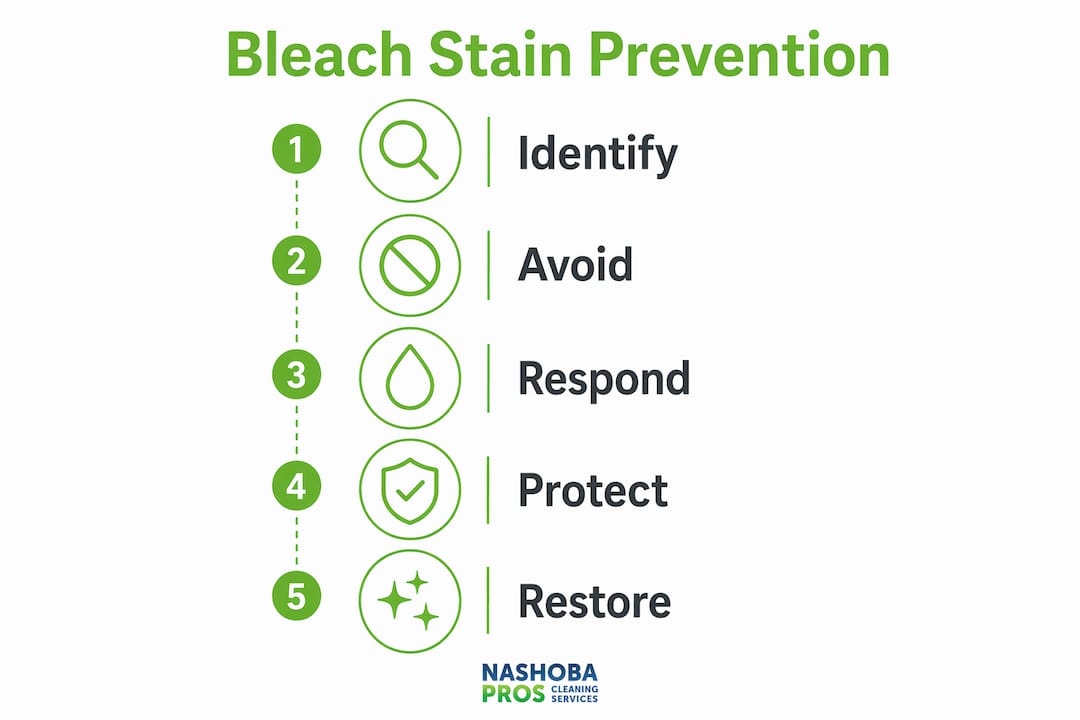
Prevention is the only fully reliable strategy because bleach damage cannot be undone. The good news is that most accidental bleach stains are avoidable with a few consistent habits.
- Keep bleach products away from carpeted areas entirely. Store and use chlorine bleach only in tiled rooms like bathrooms, kitchens, and laundry areas. Never carry open containers across carpeted hallways.
- Switch to non-oxidizing carpet-safe cleaners. Products formulated specifically for carpet use, such as those labeled pH-neutral or enzyme-based, clean effectively without the oxidation risk. Reading labels for the words “sodium hypochlorite,” “hydrogen peroxide,” or “chlorine” before using any cleaner near carpet is a reliable safeguard.
- Blot immediately if bleach contact occurs. Blotting lifts liquid and prevents deeper penetration through capillary action. Work from the outside of the spill inward to avoid spreading it.
- Use entry mats and area rugs in high-risk zones. Placing washable mats at bathroom and kitchen doorways creates a physical barrier between bleach-use areas and your main carpet.
- Vacuum regularly to maintain fiber health. Clean, well-maintained fibers are slightly more resistant to surface penetration. Regular vacuuming also removes grit that can grind bleach residue deeper into the pile during foot traffic.
- Review your cleaning product inventory. Even products marketed as carpet-safe can cause bleach spotting if they contain oxidizers. Checking ingredient lists once a year as part of a home cleaning review is a practical habit.
For guidance on preparing your home for a thorough clean without risking carpet damage, the Nashobapros article on non-toxic carpet cleaning covers safer product choices in detail.
What are the real options for repairing bleach-damaged carpet?
Once bleach has stripped color from carpet fibers, the repair path depends on the size of the damaged area, the carpet type, and how well the original color can be matched.
- Professional carpet dyeing is the most effective solution for restoring color to bleach-damaged areas. Technicians use color-matched dyes applied directly to the affected fibers, blending the repair into the surrounding carpet. Nashobapros offers professional carpet dyeing with over 30 years of color-matching experience in the Westford, MA area.
- DIY dye kits are available for small spots, but results vary significantly. Matching the exact original dye shade is difficult without professional equipment, and uneven application can make the repair more visible than the original damage.
- Neutralizing residue before any repair is non-negotiable. Dye re-introduction must be preceded by neutralizing bleach residue to prevent repair failure. Applying dye over active bleach causes the new color to fade or shift within days.
- Partial carpet replacement makes sense when the damaged area is large, the carpet is older, or the color match cannot be achieved reliably. A skilled installer can replace a section and blend the seam, though a visible line may remain on patterned carpets.
- Full replacement becomes the practical choice when bleach damage covers a significant portion of the room or when fiber brittleness has compromised the carpet’s structural integrity.
| Repair option | Best suited for |
|---|---|
| Professional dyeing | Small to medium spots on carpets with intact fibers |
| DIY dye kit | Very small spots where color match is approximate |
| Partial replacement | Large damaged sections or heavily frayed areas |
| Full replacement | Extensive damage or end-of-life carpet |
Key takeaways
Carpet bleach stains are permanent color removal events caused by oxidation, and the only effective responses are immediate neutralization, prevention, or professional color restoration.
| Point | Details |
|---|---|
| Bleach destroys dye, not deposits stains | Standard cleaning cannot restore color once oxidation has broken dye molecules. |
| Damage is instant and worsens with time | Neutralize bleach contact immediately to limit the size and depth of color loss. |
| Fiber type changes severity | Nylon and polyester show faster color loss and brittleness than wool-based carpets. |
| Prevention beats repair | Keeping bleach away from carpeted areas and using pH-neutral cleaners eliminates most risk. |
| Professional dyeing restores color | Color-matched re-dyeing by a trained technician is the most reliable repair for bleach spots. |
What 30 years of bleach stain calls taught me
I have seen hundreds of bleach-damaged carpets over the years, and the pattern is almost always the same. A homeowner grabs a strong cleaner, something spills or splashes, and by the time they call us the spot has been scrubbed three times and is twice the size it started. The scrubbing is the part that really hurts. People instinctively treat bleach damage like a dirt stain, and that instinct makes things worse every time.
The chemistry here is not complicated once you understand it. Bleach does not leave something behind. It takes something away. No cleaner on the market puts dye back into a fiber. That single fact, if homeowners understood it before reaching for the scrub brush, would save a lot of carpets.
What I tell people is this: if you know bleach touched your carpet, stop, blot, and rinse with cold water. Do not scrub. Do not apply heat. Do not try a second cleaner on top of the first. Then call a professional to assess whether dyeing is viable. Early action consistently produces better repair outcomes than waiting to see if the spot fades on its own. It will not fade. It will stay exactly as light as it is, or get lighter if residue continues oxidizing.
The other thing worth saying plainly is that not every light patch is bleach damage. Moisture wicking, sun fading, and foot traffic wear all produce discoloration that looks similar. A professional can tell the difference quickly, and that diagnosis matters before any repair work begins.
— Jim
Restore your carpet’s color with Nashobapros
If you are dealing with a bleach spot that cleaning has not touched, the next step is professional color restoration, not another cleaning product.

Nashobapros has been restoring carpets in Westford, MA and the surrounding Nashoba Valley communities for over 30 years. The team handles everything from carpet cleaning in Maynard to full color restoration through professional carpet dyeing in Salem. Every job starts with an honest assessment of whether dyeing, repair, or replacement makes the most sense for your specific carpet and budget. All products used are pet-safe and family-safe. Call or book online for a free quote. Most jobs can be scheduled quickly.
FAQ
What causes carpet stain bleaching in the first place?
Carpet stain bleaching is caused by sodium hypochlorite or other oxidizing agents breaking apart the dye molecules in carpet fibers. The result is permanent color loss, not a surface stain that can be cleaned away.
Can regular carpet cleaning remove a bleach stain?
No. Shampooing, steam cleaning, and enzyme cleaners are designed to lift contaminants from fibers. Since bleach removes existing dye rather than depositing a foreign substance, no cleaning method can restore the lost color.
How do I know if a light patch is bleach damage or something else?
True bleach damage typically has sharp, well-defined edges that match a splash or drip pattern and appears after a known bleach contact event. Gradual fading across a large area is more likely sun exposure or foot traffic wear.
Does bleach damage carpet fibers as well as color?
Yes. Oxidation from bleach degrades polymer chains in synthetic fibers like nylon and polyester, making the affected area brittle and prone to fraying over time, beyond the visible color loss.
What is the best way to repair a bleach spot on carpet?
Professional carpet dyeing is the most reliable repair for bleach-damaged areas. A technician neutralizes any remaining bleach residue first, then applies color-matched dye to blend the repair into the surrounding carpet.