

Carpet Cleaning Water Temperature Explained for Homeowners
For most synthetic carpets, hot-water extraction delivers the best results when the water temperature at the carpet surface is maintained within an effective range suitable for these fibers. Wool and delicate natural fibers require considerably less heat, generally kept low at the surface, following manufacturer or WoolSafe guidance. Those numbers matter, but they only tell part of the story. Temperature is an enhancer, not the whole job. Proper preconditioning, dwell time, and strong extraction do more work than cranking up the heat alone, a principle the Carpet and Rug Institute and IICRC both emphasize. Before anything else: check your carpet’s care label, test a small hidden patch, and ask any pro whether they measure temperature at the wand tip, not just at the machine.
Table of Contents
- How does water temperature actually affect carpet cleaning chemistry?
- What temperatures do professional machines actually run?
- Which carpet fibers tolerate heat, and which ones don’t?
- What should you do before DIY cleaning or hiring a pro?
- How long does carpet take to dry, and what speeds it up?
- When should you hire a professional instead of doing it yourself?
- Key Takeaways
- The case for letting a pro own the temperature dial
- Nashobapros handles the temperature decisions so you don’t have to
- Useful sources for further reading
How does water temperature actually affect carpet cleaning chemistry?
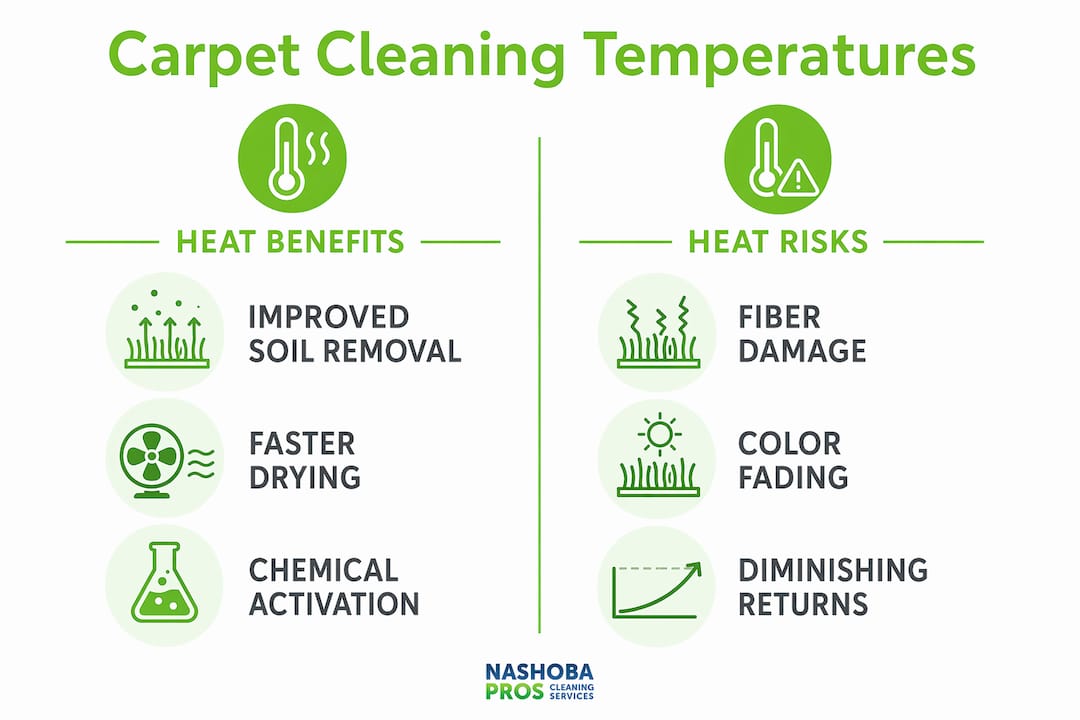
Heat does two things well: it lowers water’s surface tension and speeds up chemical reactions, similar to concepts explained in upholstery shampoo chemistry for soft textiles. That second point follows what chemists call Arrhenius behavior, where reaction rates increase with temperature. In carpet cleaning, that means your pre-spray detergent breaks down oily soils faster and suspends them more completely when heat is present. Industry sources confirm this pattern, describing how chemical cleaning action increases with temperature when combined with proper dwell time and agitation.
The cleaning cycle has three distinct steps, and temperature belongs to only one of them:
- Pre-spray (preconditioning): A chemical solution is applied and allowed to dwell, loosening oils and breaking down soil bonds.
- Heat-assisted rinse: Hot water activates the detergent chemistry and helps suspend loosened soil.
- Extraction: Strong vacuum suction pulls the water, detergent, and suspended soil out of the pile.
Heat improves several things within that cycle:
- Solubility of oily and greasy soils
- Speed of detergent activation
- Microbial reduction at higher temperature ranges
- Overall soil suspension efficiency
What heat alone cannot fix: oxidized, deeply embedded oils that never received adequate dwell time or agitation. Skipping the pre-spray and hoping a hotter rinse compensates is a common mistake. CRI data shows preconditioning increases soil removal compared with rinse-only approaches, regardless of temperature.
Pro Tip: Raising water temperature past the recommended range gives diminishing returns once your pre-spray and extraction are dialed in. Fix those two first before touching the heat setting.
What temperatures do professional machines actually run?
The boiler temperature on a professional carpet cleaning machine and the temperature at the carpet surface are not the same number. That gap matters more than most homeowners realize.
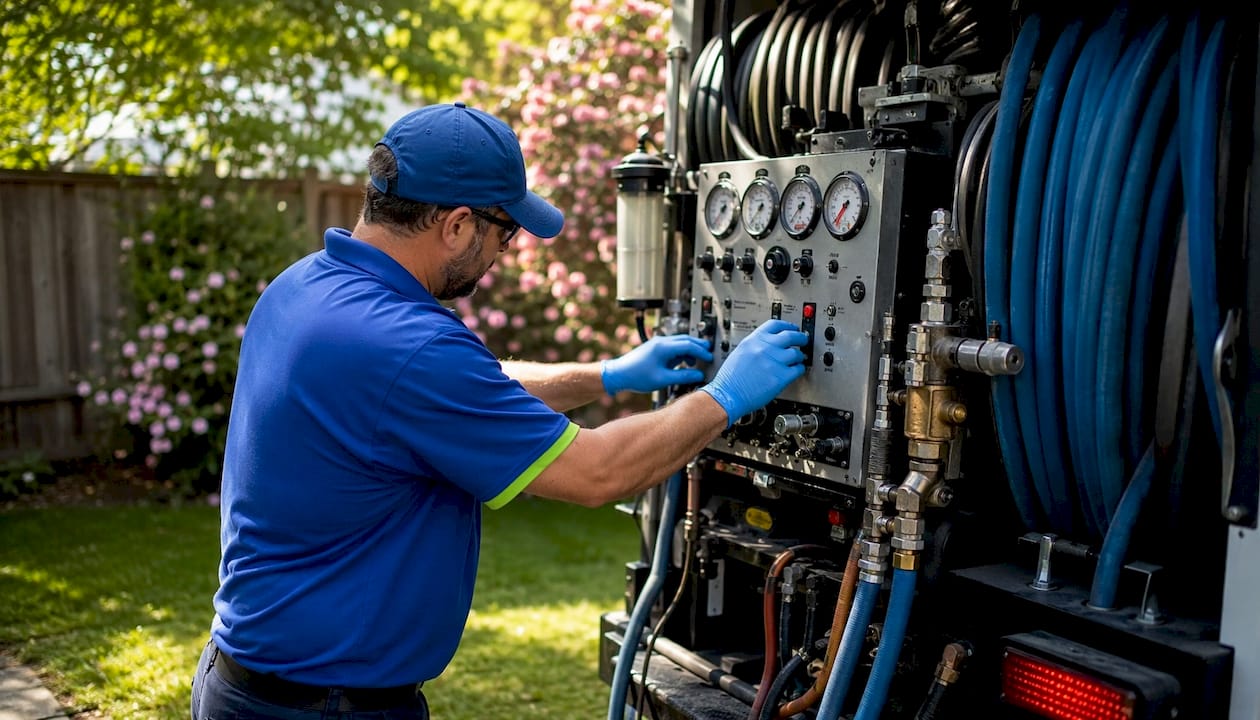
Truck-mounted systems typically run boiler temperatures that are commonly reported near the upper range of professional cleaning machines, while portable units generally operate at substantially lower temperatures at the machine. By the time water travels through hoses and reaches the wand tip, the temperature drops, and portable systems can lose a meaningful amount of heat across longer hose runs. That temperature loss also correlates with reduced vacuum lift, which affects how thoroughly the machine extracts soil and moisture.
| Feature | Truck-mounted | Portable unit |
|---|---|---|
| Typical boiler temp | higher temperature range typical for truck-mounted units | lower temperature range typical for portable units |
| Typical wand/face temp at carpet | temperature range typical for truck-mounted units | temperature range typical for portable units |
| Relative extraction power | Higher vacuum lift | Lower vacuum lift |
| Typical drying time | shorter end of drying time spectrum with truck-mounted systems | longer end of drying time spectrum with portable systems |
One term worth clearing up: “steam cleaning” is almost always a misnomer. True steam uses vapor above 212°F. Professional hot water extraction uses hot liquid water, not vapor, and the rinse-and-extract cycle is what removes soil. Steam-only methods can loosen soil without fully removing it if there is no extraction step. The National Carpet Cleaning Authority notes that professionals use hot water extraction as the standard restorative method precisely because it rinses and pulls soil out rather than just heating it.
Hot water extraction is classified as a restorative cleaning method in professional standards. The temperature at the carpet surface, not the boiler, is the number that determines both cleaning effectiveness and fiber safety.
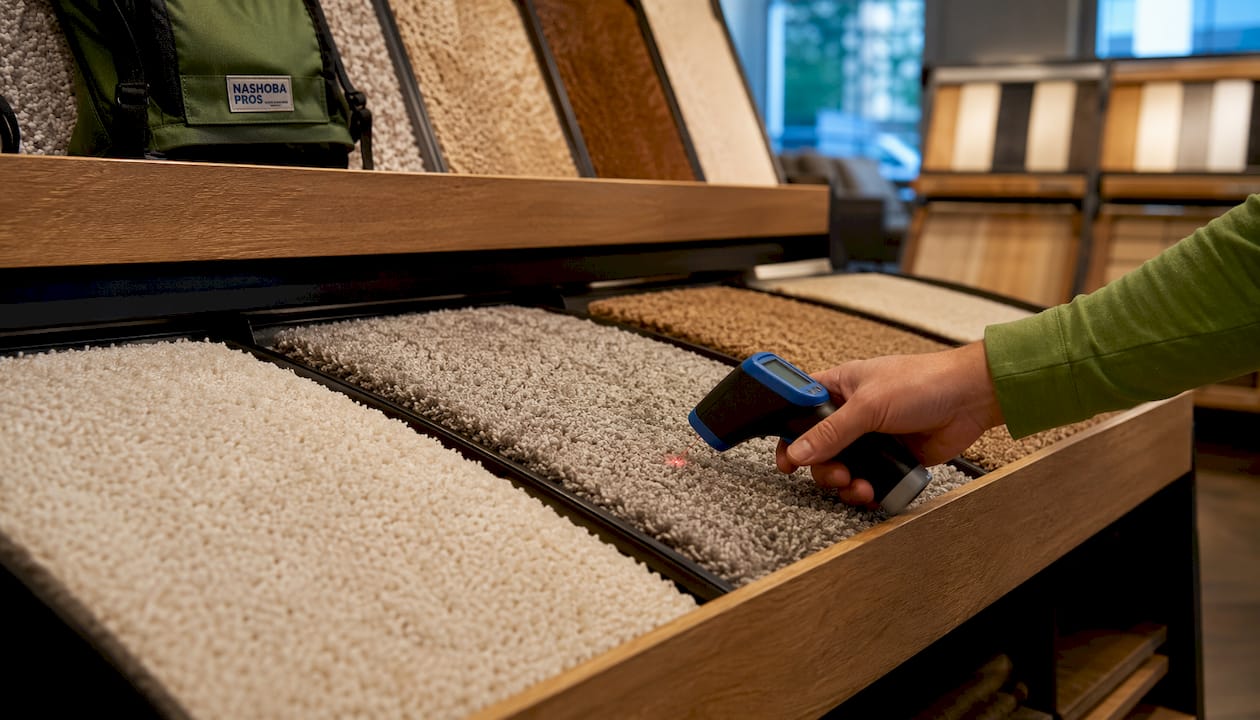
Asking a cleaner “what’s your boiler temp?” is less useful than asking “what temperature do you measure at the wand?” The second question tells you what your carpet actually experiences.
Which carpet fibers tolerate heat, and which ones don’t?
Different fibers have very different heat tolerances, and the damage from getting it wrong is usually permanent. Synthetics generally handle higher temperatures than natural fibers, but even within synthetics there are meaningful differences.
| Fiber type | Recommended max surface temp | Primary damage risk | Homeowner risk level |
|---|---|---|---|
| Nylon | Up to 140°F (60°C) at the carpet surface | Minimal damage risk under normal cleaning practices | Low risk level |
| Polyester (PET) | Up to 140°F (60°C) at the carpet surface | Potential for wrinkling or shrinkage if exposed to excessive heat | Low to moderate risk level |
| Olefin/Polypropylene | Kept below 140°F (60°C) to avoid damage | Risk of softening, matting, or color shift at higher temps | Moderate risk level |
| Wool / natural blends | Surface temperature kept below 122–140°F (50–60°C) to preserve fiber integrity | Risk of shrinkage, distortion, or weakening if overheated | Higher risk among fibers |
| Glued/secondary backing | Temperatures controlled to avoid adhesive separation | Risk of delamination if exposed to excessive heat | Higher risk category |
Wool deserves special attention. Wool fibers begin to weaken at temperatures above roughly 122°F–140°F (50°C–60°C) at the surface and risk shrinkage or distortion beyond that. WoolSafe-approved products and conservative wand temperatures are non-negotiable for wool and most natural blends. The same caution applies to silk and any fiber labeled “dry clean only.”
Backing adhesives are a separate concern. Older carpets or those with glued secondary backing can delaminate before the face fibers show any visible damage. A technician who skips the test patch on an aging installation is taking a real risk.
Warning: Excessive heat on older carpets with glued backing can separate the backing layers permanently. No amount of re-stretching fixes delamination once it happens.
Before cleaning any carpet you are unsure about, run through this checklist:
- Identify the fiber type from the manufacturer label or a flooring retailer.
- Pick an inconspicuous area (inside a closet or under furniture).
- Apply pre-spray at the intended concentration and temperature.
- Allow it to dry completely, then check for color change, distortion, or pile damage.
- If the test area looks fine after drying, proceed with the full clean.
For fiber-specific care details, the carpet fiber cleaning guide at Nashobapros covers manufacturer recommendations by fiber category.
What should you do before DIY cleaning or hiring a pro?
Start with the basics before any water touches your carpet. Vacuum thoroughly to remove dry soil first. Dry soil that gets wet becomes mud, and mud is harder to extract than loose grit. Move small furniture, secure pets, and photograph any existing stains or problem areas so you have a before-and-after reference.
Your homeowner prep checklist:
- Read the carpet manufacturer’s care label for temperature and chemical restrictions.
- Vacuum the entire area at least twice, including edges.
- Move small items and note any existing damage.
- Photograph stains and discoloration.
- Test a hidden patch with your intended method and temperature before proceeding.
When hiring a pro, ask these questions directly:
- “What method will you use, hot water extraction or something else?”
- “What temperature do you measure at the wand tip, not the machine?”
- “Do you perform a test patch on wool or sensitive fibers?”
- “What drying time should I expect, and what do you recommend for ventilation?”
Asking about wand-tip temperature and drying time is more useful than asking about boiler temperature. The boiler number tells you about the machine; the wand number tells you what your carpet actually receives. Water pressure in carpet cleaning interacts with temperature in ways that affect both cleaning depth and drying speed, so a good technician will discuss both.
How long does carpet take to dry, and what speeds it up?
After professional hot water extraction, typical drying time runs 4–12 hours depending on equipment quality, ventilation, humidity, and pile depth. Truck-mounted systems with strong vacuum lift tend to land in the 4–8 hour range. Portables with lower extraction power often push toward the longer end.
Steps that speed drying:
- Open windows and doors to create cross-ventilation.
- Run ceiling fans and HVAC on a low fan setting.
- Place area fans directed across the carpet surface.
- Use a dehumidifier in humid conditions or finished basements.
- Avoid heavy foot traffic until the carpet is fully dry.
Closed rooms, high humidity, thick padding, and layered area rugs all slow drying. Slow drying is not just inconvenient. Moisture trapped in the pile or backing for more than 24 hours creates conditions for mildew growth and musty odors. It also accelerates re-soiling because detergent residue left in damp fibers acts like a magnet for new dirt. If you notice a smell after cleaning, this resource on post-clean odors explains the most common causes.
Pro Tip: Ask your cleaner whether they bring commercial air movers or a dehumidifier. A crew that plans for drying, not just cleaning, is a crew that understands the full job.
When should you hire a professional instead of doing it yourself?
DIY hot water extraction is reasonable for small synthetic-fiber areas with light soil and good ventilation. A renter dealing with a single room of nylon carpet and moderate traffic is a fair candidate for a quality rental machine. The calculus changes fast once any of these conditions apply:
- The carpet is wool, silk, or a natural blend.
- Soiling is heavy, oxidized, or includes pet urine that has reached the backing.
- There are seam concerns or visible backing issues.
- The area is large enough that a portable rental unit will lose significant heat and extraction power before finishing.
- You are dealing with a water event that requires rapid, controlled drying.
Professionals manage temperature by identifying the fiber first, running a test patch, adjusting wand temperature and dwell time accordingly, and using proper rinse chemistry. That sequence is what the IICRC S100 standard describes as restorative cleaning: fiber-specific adjustments, not a single high-heat setting applied to everything.
When booking a pro, use this short script:
- “Do you perform hot water extraction?”
- “What wand temperature do you measure at the carpet surface?”
- “Do you do a test patch on sensitive fibers before starting?”
- “What drying time should I expect, and do you use air movers?”
Asking whether a technician holds IICRC certification is a reasonable trust check. The IICRC S100 standard requires technicians to adjust temperature, dwell, and agitation per fiber type rather than rely on a single high-heat approach.
Key Takeaways
Professional carpet cleaning works best when temperature, preconditioning, and extraction are all calibrated together, with fiber type setting the upper limit on safe heat.
| Point | Details |
|---|---|
| Synthetic fiber temp range | 140°F (60°C) at the carpet surface covers most nylon and polyester safely. |
| Wool and natural fibers | Keep wand temperatures below 122–140°F (50–60°C); use WoolSafe-approved products. |
| Always precondition first | Pre-spray and dwell time drive soil removal more than heat alone (CRI guidance). |
| Ask for wand-tip temp | Boiler temperature is not what your carpet experiences; wand temp is the number that matters. |
| Nashobapros for complex jobs | For wool, heavy soiling, or water events in the Westford, MA area, Nashobapros measures wand temperature and backs every job with a satisfaction guarantee. |
The case for letting a pro own the temperature dial
The conventional advice on carpet cleaning temperature tends to focus on a single number, as if dialing in 160°F solves the problem. It doesn’t. Temperature is the third variable in a three-part equation, and it only pays off when the first two, preconditioning and extraction, are already correct. A technician who runs a hot machine but skips the pre-spray or rushes the extraction pass will leave more soil behind than one who runs cooler but works the chemistry properly.
Where DIY makes sense: a small synthetic-fiber room, light soil, good ventilation, and a homeowner willing to run multiple dry extraction passes. Where it stops making sense: wool, mixed fibers, heavy oxidation, pet contamination that has reached the padding, or any situation where a wrong temperature call causes permanent shrinkage or backing delamination. The cost of a professional job is almost always less than the cost of replacing a damaged carpet.
The other thing worth saying plainly: most homeowners have no way to measure wand-tip temperature with a rental machine. They are guessing. A professional with calibrated equipment and fiber-specific training is not guessing, and that difference shows up in the result.
Nashobapros handles the temperature decisions so you don’t have to
Carpet cleaning done right means measured wand temperatures, fiber-specific preconditioning, and extraction strong enough to pull soil and moisture out completely. That is exactly what Nashobapros delivers to homeowners in Westford, MA and the surrounding Nashoba Valley communities.

Nashobapros uses truck-mounted hot water extraction for large jobs, with portable solutions available for upper floors and tight spaces. Every job includes WoolSafe-compatible treatment options for delicate fibers, pet-safe and family-safe products throughout, and a post-clean drying strategy using commercial air movers and dehumidifiers when needed. HEPA filtration options are available for households with allergy or air quality concerns. Every job is backed by a 100% satisfaction guarantee.
Ready to skip the guesswork? Request a free estimate or book an inspection online. Most jobs in the Westford area can be scheduled quickly.
Useful sources for further reading
- Carpet and Rug Institute: Carpet Preconditioning and Cleaning — CRI’s technical paper on how preconditioning affects soil removal; the primary source for understanding why heat alone is insufficient.
- CRI 205 Residential Carpet Standard for Maintenance and Cleaning — The residential standard covering HWE methods, equipment types, and manufacturer-label guidance.
- IICRC Standards — The IICRC S100 standard defines hot water extraction as a restorative method and requires fiber-specific temperature adjustments; useful for verifying a technician’s credentials.
- Hot Water Extraction vs. Steam Cleaning (Stain Kings) — A practical explanation of why “steam cleaning” is a misnomer and how HWE differs from vapor-only methods.
- Hot Water Extraction Carpet Cleaning Explained (Nashobapros) — Nashobapros’s homeowner-facing guide to HWE, equipment choices, and what to expect from a professional cleaning appointment.