

Hot Water Extraction Carpet Cleaning Explained
Hot water extraction carpet cleaning is defined as a deep-cleaning process that injects pressurized hot water and cleaning agents into carpet fibers, then uses powerful suction to pull out dissolved dirt, bacteria, and allergens. The industry term is “hot water extraction” (HWE), though most homeowners know it by the marketing label “steam cleaning.” That label is inaccurate. HWE uses liquid water, not steam vapor, and the distinction matters for understanding what you are actually getting. The IICRC (Institute of Inspection, Cleaning and Restoration Certification) recognizes HWE as the gold standard for residential carpet cleaning. Major carpet manufacturers, including Shaw and Mohawk, require it to maintain warranty coverage.
What is hot water extraction carpet cleaning?
Hot water extraction is a multi-step process that removes over 90% of embedded soil, bacteria, and allergens from carpet fibers using water heated to 120°F–220°F at pressures of 400–600 PSI. That combination of heat and pressure is what separates HWE from surface-level cleaning methods. Vacuuming pulls up loose debris. HWE flushes out what vacuuming leaves behind.
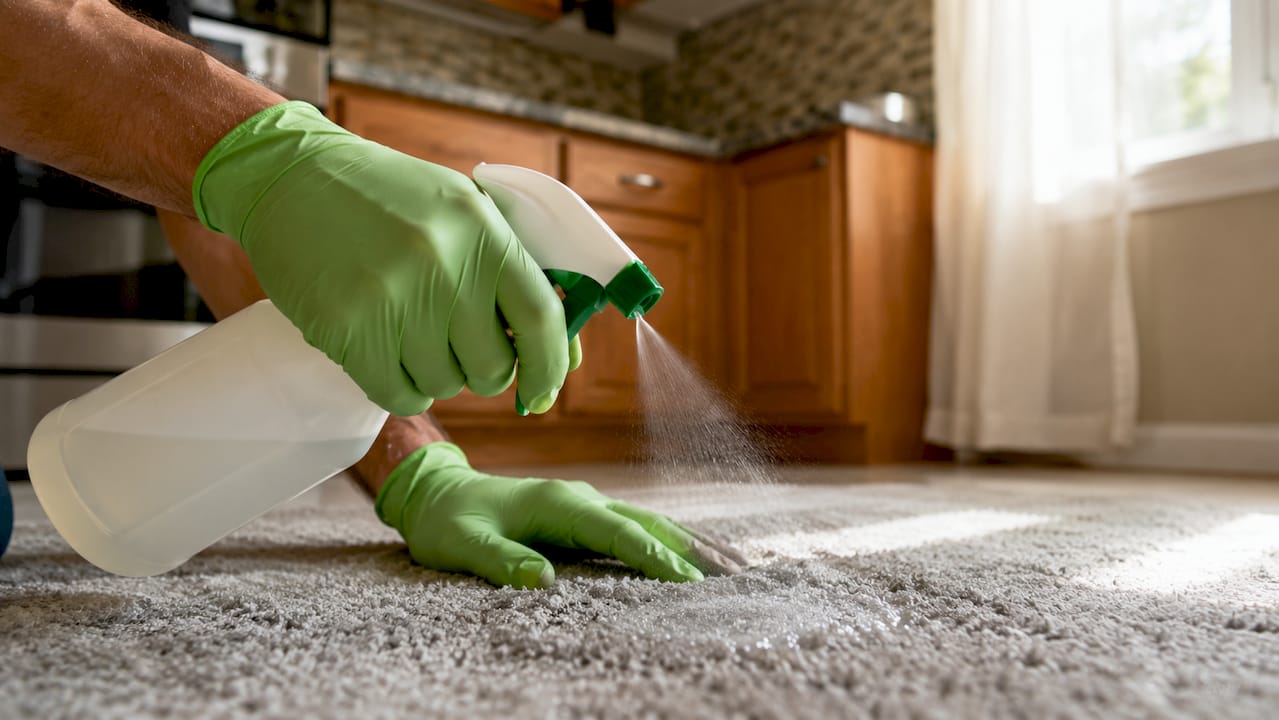
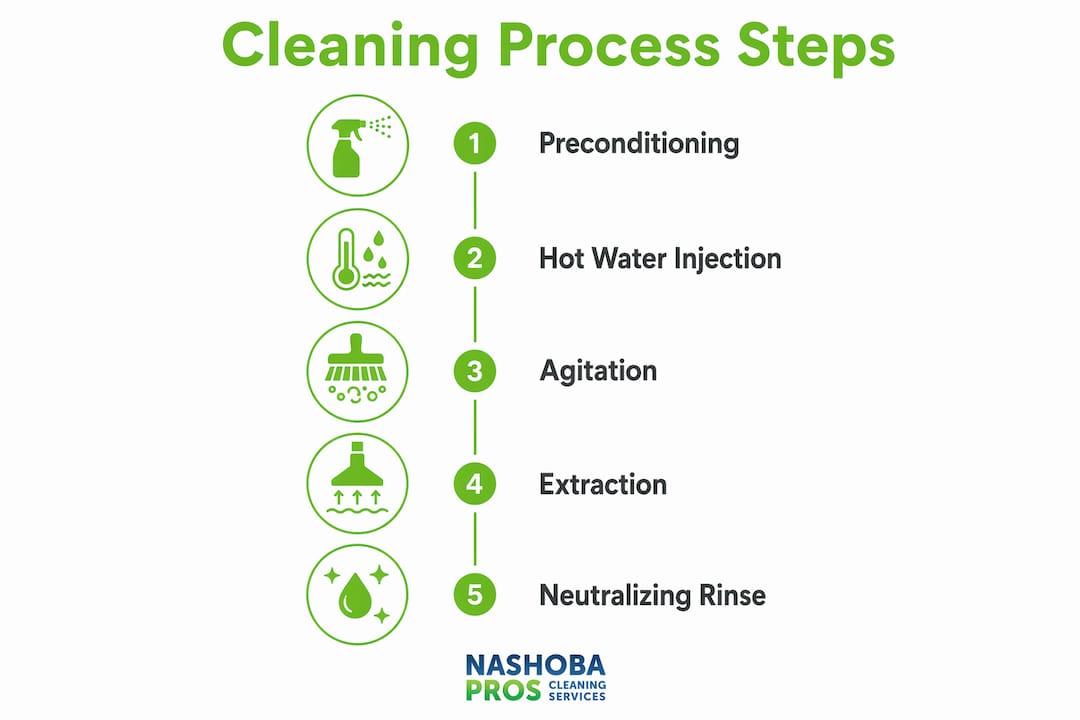
The process works by first applying a pre-conditioning solution that breaks down oils and ground-in soil. Then heated water is injected deep into the carpet pile. A recovery tank and powerful vacuum extract the water along with everything dissolved in it, including dust mites, pet dander, old detergent residue, and bacteria. A final neutralizing rinse removes any remaining cleaning agent from the fibers.
This is not the same as carpet shampooing, dry cleaning, or bonnet cleaning. Those methods clean the surface. HWE cleans the full depth of the carpet pile and, in many cases, the backing underneath.
How does hot water extraction carpet cleaning work?
The multi-step HWE process follows a specific sequence. Each step builds on the last, and skipping any one of them reduces the final result.
- Pre-vacuuming. Dry soil is removed first. Wet cleaning over dry soil turns it into mud, which is harder to extract.
- Pre-conditioning. An eco-safe detergent is applied to the carpet and allowed to dwell for several minutes. This loosens oils, breaks down protein-based stains, and prepares fibers for flushing.
- Hot water injection. Water heated to 120°F–220°F is injected into the carpet at 400–600 PSI. The heat increases the chemical activity of the cleaning agents and loosens soil that cold water cannot shift.
- High-pressure flushing. The wand passes over the carpet in overlapping strokes, flushing contaminants up and out of the pile.
- Vacuum extraction. A recovery system removes 95% or more of injected moisture along with all dissolved contaminants. Truck-mounted systems produce stronger suction than portable units, which is why professional results differ from rental machine results.
- Neutralizing rinse. A fresh-water rinse removes residual detergent from the fibers.
The equipment type matters significantly. Truck-mounted extractors maintain consistent water temperature and suction power throughout the job. Portable units can lose heat and suction as the job progresses. For large homes or heavily soiled carpets, a truck-mounted system is the better choice.
Pro Tip: The neutralizing rinse in step 6 is the step most DIY machines and budget services skip. Without it, detergent residue stays in the fibers and acts like a magnet for new dirt. Your carpet will look dirty again within days. Always ask your cleaning company whether they include a finishing rinse.
The pre-treatment step is equally critical. A properly applied pre-conditioner can mean the difference between 80% soil removal and 98% soil removal on the same carpet.
Hot water extraction vs. other carpet cleaning methods
HWE provides superior soil removal of up to 98%, compared to 70–80% for shampooing and bonnet cleaning. That gap is not a minor difference. It means shampooing leaves roughly one-fifth of the embedded soil behind, where it continues to break down fibers and feed bacteria.
Here is how the most common carpet cleaning techniques compare:
| Method | Cleaning Depth | Drying Time | Residue Risk | Best Use Case |
|---|---|---|---|---|
| Hot Water Extraction | Deep (full pile) | 2–6 hours | Low (with rinse) | Most residential carpets |
| Shampooing | Surface to mid-pile | 8–24+ hours | High | Light soil, older carpets |
| Dry Cleaning | Surface only | Under 1 hour | Moderate | Delicate fibers, quick refresh |
| Bonnet Cleaning | Surface only | 1–2 hours | Moderate | Commercial maintenance |
| Steam Vapor | Surface to mid-pile | 2–4 hours | Low | Hard surfaces, not carpets |
A few points from this table deserve attention:
- Shampooing leaves detergent in the fibers. That residue attracts soil, so shampooed carpets often look dirtier faster than before cleaning.
- Dry cleaning uses chemical compounds or very low moisture. It works for delicate rugs but does not flush out allergens or bacteria the way HWE does.
- “Steam cleaning” as a service label almost always refers to HWE. True steam vapor cleaning uses near-boiling vapor and is better suited to hard surfaces than carpet.
For homes with pets or allergy sufferers, HWE is the superior choice because it physically removes contaminants rather than redistributing them. You can compare the full breakdown of cleaning method differences to see which approach fits your specific carpet type.
How long does carpet take to dry after hot water extraction?
Professional HWE with proper equipment and ventilation dries carpets in 2–6 hours. That is a significant improvement over shampooing, which can leave carpets damp for 24 hours or more. The difference comes down to extraction power and the finishing rinse.
Several factors affect how quickly your carpet dries after cleaning:
- Equipment quality. Truck-mounted systems extract more moisture per pass than portable units. Less water left in the carpet means faster drying.
- Carpet thickness and pile height. Thick, plush carpets hold more water and take longer to dry than low-pile or Berber styles.
- Ventilation. Open windows and running ceiling fans cut drying time noticeably. A closed, humid room can double it.
- Humidity and season. Cleaning on a dry, warm day in spring or fall produces faster results than cleaning during a humid summer.
- Saturation level. Over-wetting from too many slow passes with the wand leaves more water behind. Experienced technicians use the right number of strokes and avoid over-saturating.
Insufficient ventilation or over-saturation can extend drying to 24 hours or more and create conditions for mold growth in the carpet backing. This is the most common risk with DIY extraction machines, which lack the suction power to remove enough moisture in a single pass.
Pro Tip: Schedule your carpet cleaning for a morning appointment on a day with low humidity. Run your HVAC fan on continuous mode and open windows on opposite sides of the room to create cross-ventilation. You will cut drying time by 30–50% compared to a closed room with no airflow.
Is hot water extraction safe for all carpet types?
HWE is safe for the vast majority of residential carpets, including nylon, polyester, olefin, and most wool blends, when performed by a trained professional. The key variables are water temperature, dwell time, and pH of the cleaning agents used.
Synthetic fibers like nylon and polyester handle the heat and pressure of HWE without damage. Wool requires lower water temperatures and pH-neutral cleaning agents, but professional technicians adjust their equipment and chemistry accordingly. Shaw Industries and Mohawk both require HWE to maintain carpet warranties, which tells you everything about how the industry views this method.
A few situations where alternative methods are recommended:
- Hand-knotted oriental rugs. These require specialized plant-based cleaning and should not be cleaned in place with HWE. Nashobapros handles hand-knotted rug cleaning as a separate service.
- Sisal, jute, or seagrass rugs. Natural plant-fiber rugs shrink and distort when wet. Dry cleaning is the correct method.
- Heavily deteriorated carpet backing. If the backing is already separating, HWE can accelerate the damage.
For standard residential carpet, professional HWE outperforms surface vacuuming for allergen control by extracting dust mites, bacteria, and fine particulates that a vacuum cannot reach. The IICRC recommends professional HWE every 12–18 months for most households, and more frequently for homes with pets, children, or allergy sufferers. You can find specific guidance on how often to schedule cleaning based on your household’s needs.
Key takeaways
Hot water extraction is the most effective residential carpet cleaning method because it physically removes soil, allergens, and bacteria from the full depth of the carpet pile, not just the surface.
| Point | Details |
|---|---|
| HWE removes deep contaminants | Pressurized hot water at 120°F–220°F extracts over 90% of embedded soil, bacteria, and allergens. |
| “Steam cleaning” is a misnomer | HWE uses liquid water under pressure, not steam vapor; understanding this helps you evaluate services accurately. |
| Drying takes 2–6 hours professionally | Proper equipment and ventilation keep drying times short; poor airflow can extend dampness and risk mold. |
| Neutralizing rinse prevents re-soiling | Skipping the final rinse leaves detergent residue that attracts dirt and shortens the clean’s lifespan. |
| Most carpets are HWE-compatible | Synthetic and wool carpets handle HWE safely; natural fiber rugs like sisal or jute require dry methods. |
What 30 years of carpet cleaning taught me about HWE
The single biggest mistake homeowners make is treating “steam cleaning” and hot water extraction as interchangeable terms. They are not, and that confusion costs people money. I have seen homeowners book a “steam cleaning” service expecting a deep clean and receive a bonnet buff instead. The carpet looked fine for two weeks, then looked worse than before. The surface was clean. The base was not.
The second thing I have learned is that the finishing rinse separates a good job from a great one. Most rental machines do not include a neutralizing rinse cycle. Many budget services skip it to save time. But that residue left in the fibers is exactly what makes a carpet feel stiff and attract dirt within days of cleaning. When you are evaluating a carpet cleaning company, ask them directly: “Do you include a fresh-water finishing rinse?” If they hesitate or say no, that tells you something important.
The third insight is about frequency. Most homeowners wait until the carpet looks dirty before scheduling a cleaning. By that point, the soil has been grinding against the fibers for months, causing wear you cannot reverse. Cleaning on a regular schedule, every 12–18 months for most households, preserves the fiber structure and extends the carpet’s life by years. That is not a sales pitch. It is basic fiber science.
My honest recommendation: prioritize professional HWE over any DIY method for anything beyond routine spot treatment. The equipment gap between a professional truck-mounted system and a rental machine is significant. The results reflect that difference every time.
— Jim
Get a free quote from Nashobapros
Nashobapros has been cleaning carpets in Westford, MA and the surrounding Nashoba Valley communities for over 30 years using professional hot water extraction equipment. Every job includes pre-conditioning, hot water injection, full extraction, and a neutralizing rinse. No shortcuts.

If you have pets, allergy sufferers, or carpets that have not been professionally cleaned in over a year, now is the right time to schedule. You can review professional cleaning frequency recommendations to figure out the right schedule for your home. Nashobapros also serves homeowners in Maynard, MA with the same 100% satisfaction guarantee. Every product used is pet-safe and family-safe. Call or book online to get a free quote, and most jobs can be scheduled within 24 hours.
FAQ
What is the difference between HWE and steam cleaning?
Hot water extraction uses pressurized liquid water at 120°F–220°F to flush and extract soil from carpet fibers. True steam cleaning uses vapor and is better suited to hard surfaces. Most companies that advertise “steam cleaning” are actually performing hot water extraction.
How long does carpet stay wet after hot water extraction?
With professional truck-mounted equipment and proper ventilation, carpets dry in 2–6 hours. Poor airflow or over-saturation can extend drying to 24 hours and increase the risk of mold growth in the backing.
Does hot water extraction damage carpet fibers?
No, when performed correctly. HWE is safe for nylon, polyester, olefin, and most wool carpets. Shaw and Mohawk require it to maintain carpet warranties. Natural fiber rugs like sisal or jute are the exception and need dry cleaning methods instead.
How often should carpets be professionally cleaned with HWE?
The IICRC recommends professional HWE every 12–18 months for most households. Homes with pets, children, or allergy sufferers benefit from cleaning every 6–12 months to control allergen and bacteria buildup.
Why does carpet get dirty faster after some cleanings?
Detergent residue left in the fibers from skipped finishing rinses attracts new soil quickly. A proper neutralizing rinse after extraction removes that residue and keeps carpets cleaner for longer after each professional service.