

How to Care for a Wool Rug Professionally in 2026
Professional care for a wool rug means applying a structured routine of gentle maintenance, precise cleaning chemistry, and controlled drying to protect natural fibers and preserve color integrity over decades. Wool is not forgiving of shortcuts. Steam cleaners, alkaline detergents, and aggressive scrubbing all cause irreversible damage. To care for wool rug professionally, you need to understand what wool tolerates and what it does not. Experts at Ahmadi Rug, Kapetto, and Martha Stewart all point to the same core principle: wool responds to chemistry and moisture management, not just mechanical cleaning.
How to care for a wool rug professionally at home
The best way to care for wool rugs between professional visits starts with consistent, low-impact maintenance. These steps do not require special equipment, but they do require the right technique.
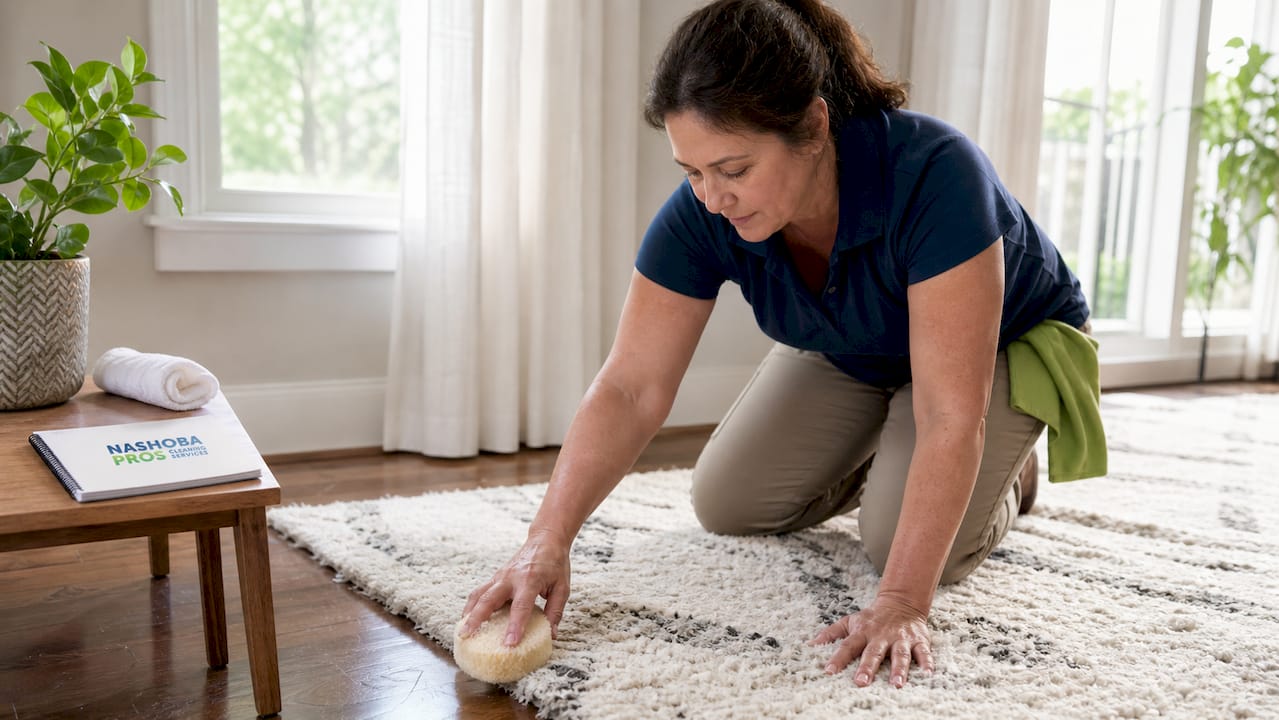
Vacuuming is the single most important routine task. Vacuum weekly in normal-traffic areas and twice weekly in high-traffic zones, always using suction-only mode. Never use a beater bar or rotating brush on wool. Move the vacuum in the direction of the pile to avoid lifting and stressing fibers. Every 3–4 months, flip the rug and vacuum the underside to clear embedded grit that works its way down and cuts fibers from below. Most homeowners skip this step entirely, and it shows in premature fiber wear.
Here are the core wool rug maintenance tips every homeowner should follow:
- Rotate the rug every 6 months. Foot traffic and sunlight hit the same spots repeatedly. Rotating distributes wear evenly and prevents one section from fading faster than the rest.
- Use a quality rug pad. Felt pads under hand-knotted rugs cushion step pressure, reduce soil accumulation, and prevent slipping. Replace pads every 5–7 years or when they compress flat.
- Limit direct sun exposure. Sunlight helps sanitize wool and reduce microbial growth, but prolonged uneven UV exposure causes patchy fading. Rotate before you notice color differences, not after.
- Spot clean spills immediately. Wool has a natural protective coating that gives you a brief window before fibers absorb a stain. Blot spills within 30 seconds using a clean cloth, then treat with a diluted, pH-neutral wool wash. Never scrub.
Pro Tip: Never use baking soda, white vinegar, or dish soap on wool. These products disrupt the fiber’s natural pH balance and can cause permanent dullness or color shift.
How do professionals deep clean wool rugs safely?
Professional wool rug cleaning is more about managing moisture and pH than simply removing dirt. Professionals match solution chemistry and water temperature precisely to wool’s natural properties. This is where DIY cleaning consistently fails.
Here is how a qualified specialist approaches a deep clean:
- Dry soil extraction first. Professionals use mechanical dusting machines to extract embedded dry soil from the rug’s foundation before any water touches it. This step removes pounds of grit that vacuuming cannot reach. Skipping it means washing soil deeper into the pile.
- Dye stability testing. Before washing, technicians test each color zone for dye stability. Pre-testing dyes prevents color bleeding during the wash cycle. Antique and hand-knotted rugs are especially vulnerable to dye transfer.
- Hand washing in cold water. The rug is fully submerged and washed using a solution with a pH around 5.5, which is slightly acidic and matched to wool’s natural chemistry. Cold water prevents fiber swelling and shrinkage.
- Thorough rinsing. Professionals rinse until the runoff pH is neutral. Detergent residue left in fibers attracts new soil rapidly, meaning a poorly rinsed rug re-soils faster than one that was never cleaned. This is one of the most overlooked steps in the entire process.
- No steam, no alkaline products. Steam cleaners and alkaline detergents cause shrinkage, color bleeding, and fiber distortion in wool. Any professional who uses a steam wand on a wool rug is using the wrong tool for the job.
“Wool cleaning is more about managing moisture and pH than just soil removal. Professionals match solution chemistry and temperature precisely.” — Kapetto Design
For a closer look at how this process applies to hand-knotted pieces specifically, the hand-knotted rug cleaning guide from Nashobapros covers the full process in detail.
What drying procedures do professionals use, and why?
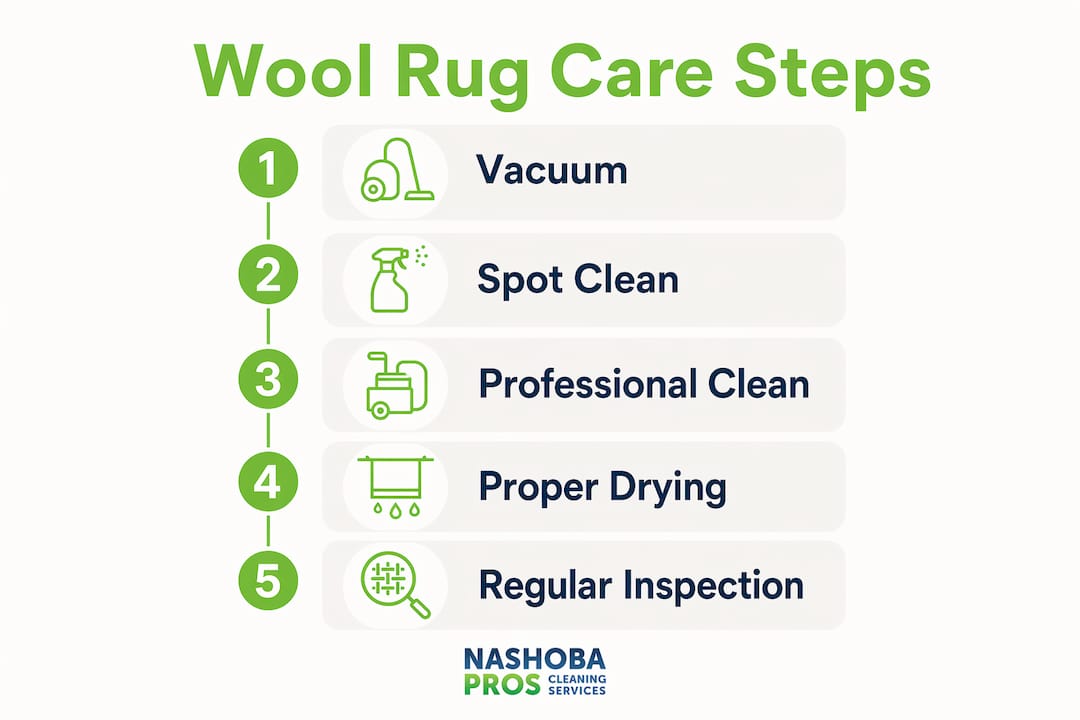
The drying phase carries the highest risk of damage in the entire professional cleaning process. Wool absorbs a significant amount of water, and improper drying causes shrinkage, felting, mildew, and permanent distortion of the rug’s foundation.
Professionals follow strict drying protocols:
- Lay flat, never hang. Hanging a wet wool rug causes the weight of the water to stretch and distort the foundation. Flat drying on a clean, ventilated surface keeps the structure intact.
- No direct heat or forced hot air. Hair dryers, space heaters, and direct sunlight all accelerate surface drying while leaving the foundation wet. That moisture imbalance causes the rug to buckle and warp.
- Allow 3–5 days for heavy rugs. Hand-knotted wool rugs may take 3–5 days to dry completely. Professionals check foundation dryness, not just the surface pile. A rug that feels dry on top can still hold significant moisture at its base.
- Moisture measurement before moving. Experienced cleaners use moisture meters to confirm the foundation is fully dry before rolling or returning the rug. Moving a rug too soon traps moisture and creates mildew within days.
The risks of cutting corners here are real. A rug that shrinks even slightly will no longer lay flat, and felting, where wool fibers mat together permanently, cannot be reversed. Mildew damage often requires partial restoration or full replacement of affected sections.
Pro Tip: If your rug smells musty after a cleaning, the foundation was not fully dried before it was returned. Contact the cleaner immediately. Mildew spreads quickly in wool.
When should you schedule professional wool rug cleaning?
Cleaning frequency depends on how the rug is used. Professional deep cleaning every 1–3 years is the standard recommendation for most homes. High-traffic areas and homes with pets or young children need more frequent service.
| Situation | Recommended Frequency |
|---|---|
| Low-traffic room, no pets | Every 2–3 years |
| Moderate household traffic | Every 1–2 years |
| Pets or young children present | Every 12 months |
| Antique or high-value rug | Every 1–2 years with specialist only |
| Visible odor, staining, or allergen concerns | Immediately, regardless of schedule |
Choosing the right professional matters as much as the schedule. General carpet cleaning services and dry cleaners are not equipped for wool. You need a specialist who understands fiber chemistry, uses pH-neutral wool-safe solutions, and has a controlled drying environment. Ask directly whether they hand-wash rugs off-site or clean them in place. In-place cleaning with a truck-mount machine is not appropriate for fine wool rugs.
Pro Tip: Ask any prospective cleaner whether they test dye stability before washing. If they do not know what that means, find someone else.
Signs that a professional clean is overdue include a flat, matted pile that does not respond to vacuuming, a persistent musty or pet odor, visible staining that spot treatment has not resolved, and increased allergy symptoms in household members. For guidance on preparing your home before a professional visit, a few simple steps make the process faster and more effective.
Key takeaways
Professional wool rug care requires routine vacuuming, pH-controlled deep cleaning, and precise flat drying to protect fibers and extend rug life by decades.
| Point | Details |
|---|---|
| Vacuum correctly and often | Use suction-only mode weekly, moving in pile direction, and vacuum the underside every 3–4 months. |
| Match chemistry to wool | Professional cleaning requires a pH around 5.5 and cold water to prevent shrinkage and color loss. |
| Rinse completely | Detergent residue left in fibers attracts new soil fast; professionals rinse until runoff is pH-neutral. |
| Dry flat for 3–5 days | Heavy wool rugs need full foundation drying before moving to prevent mildew, warping, and felting. |
| Schedule by use, not habit | Clean every 1–3 years for standard homes; increase frequency for pets, children, or high-traffic areas. |
What 30 years of wool rug care has taught me
The most common mistake I see homeowners make is treating a wool rug like a synthetic carpet. They rent a steam cleaner, use whatever detergent is under the sink, and wonder why the rug looks worse afterward. Wool is a protein fiber. It behaves more like hair than like nylon. Heat and alkaline chemicals break it down at a structural level, and that damage does not show up immediately. It shows up six months later when the pile starts to look dull, matted, or uneven.
The second mistake is waiting too long between professional cleanings. Homeowners often tell me the rug “doesn’t look dirty,” but visible soil is only part of the problem. Dry grit embedded in the foundation acts like sandpaper with every footstep. By the time the rug looks worn, the fiber damage is already done. Preventative cleaning is always cheaper than restoration.
What I have found actually works is a simple combination: vacuum consistently, treat spills fast, rotate twice a year, and bring in a qualified specialist every one to two years depending on use. That routine keeps a quality wool rug looking sharp for generations. I have seen rugs from the 1940s in better condition than rugs from the 1990s, and the difference is always care, not age.
If you have a rug worth keeping, investing in professional care is the single highest-return decision you can make for it.
— Jim
How Nashobapros handles professional wool rug care
Nashobapros has been cleaning wool rugs in Westford, MA and the surrounding Nashoba Valley area for over 30 years. Every product used is pet-safe and family-safe, and the team specializes in delicate and antique pieces that general carpet cleaners should not touch.

The process includes mechanical dry soil extraction, hand washing with pH-neutral wool-safe solutions, dye stability testing, and controlled flat drying to protect the rug’s foundation. Nashobapros serves homeowners across Maynard, Beverly, and Cambridge, with flexible scheduling and a 100% satisfaction guarantee. Most jobs can be booked quickly, so your rug gets the expert attention it needs without a long wait.
FAQ
How often should wool rugs be professionally cleaned?
Most wool rugs need professional cleaning every 1–3 years. Homes with pets, children, or high foot traffic should schedule service every 12 months.
Can you use a steam cleaner on a wool rug?
No. Steam cleaners use heat and often alkaline solutions that cause wool fibers to shrink, felt, and lose color. Only cold water and pH-neutral wool-safe products are appropriate.
What happens if wool rugs are not dried properly after cleaning?
Improper drying causes shrinkage, permanent fiber matting, warping of the foundation, and mildew growth. Heavy hand-knotted rugs can take 3–5 days to dry fully when laid flat in a ventilated space.
How do i treat a spill on a wool rug before calling a professional?
Blot the spill within 30 seconds using a clean cloth, working from the outside edge inward. Apply a small amount of diluted, pH-neutral wool wash and blot again. Never scrub, and avoid vinegar, baking soda, or dish soap.
What should i look for when choosing a wool rug cleaning specialist?
Look for a cleaner who hand-washes rugs off-site, tests dye stability before washing, uses pH-neutral solutions, and has a controlled drying environment. General carpet cleaning services are not equipped for fine wool rugs.