

Why Carpets Smell After Cleaning: What’s Really Going On
You cleaned your carpet, expected it to smell fresh, and instead got hit with something musty, sour, or just plain wrong. You’re not alone, and you didn’t necessarily do anything wrong. Understanding why carpets smell after cleaning comes down to three main culprits: trapped moisture, leftover cleaning residue, and deep contaminants like pet urine that get stirred up during the process. Once you know what’s actually causing the odor, fixing it becomes straightforward. This article breaks down each cause and gives you real solutions you can act on today.
Table of Contents
- Key Takeaways
- Why carpets smell after cleaning: the moisture problem
- How soap residue creates carpet cleaning smell issues
- Pet urine and the hidden source of foul odor carpets
- Practical solutions for removing smells from carpets
- Diagnosing your specific carpet odor
- My honest take on carpet odors after cleaning
- Get lasting results with Nashoba Pros
- FAQ
Key Takeaways
| Point | Details |
|---|---|
| Moisture is the main cause | Wet carpet padding traps dampness that breeds mildew and bacteria, creating musty odors. |
| Residue makes it worse | Too much detergent left in fibers holds moisture longer and causes sour, lingering smells. |
| Pet urine reactivates with water | Uric acid crystals in old pet stains release odor again when exposed to cleaning moisture. |
| Drying speed matters most | Fans, ventilation, and dehumidifiers cut drying time and prevent odor from developing. |
| Enzyme cleaners beat masking agents | Products that digest organic matter remove pet odors at the source rather than covering them up. |
Why carpets smell after cleaning: the moisture problem
The most common reason for bad smell after carpet cleaning is moisture that doesn’t fully escape. When you clean a carpet, water penetrates far deeper than the surface fibers. It soaks into the backing and the padding underneath, and that padding can hold water for a long time, especially in rooms with limited airflow or cooler temperatures.
Here’s what most people don’t realize: even when the carpet surface feels dry to the touch, the padding beneath can still be saturated. As that hidden moisture slowly works its way back up through the fibers during drying, it reactivates salts and residues that were already sitting in the carpet, intensifying odors that weren’t noticeable before.
Bacteria and mildew thrive in damp, warm environments. A wet carpet pad is essentially a perfect incubator. The musty smell from mildew can actually strengthen as the room heats up, which is why you might notice the odor getting worse in the afternoon when sunlight warms the floor.
Signs that moisture is your problem:
- The carpet smells musty or earthy, not chemical
- The odor appeared or worsened 24 to 48 hours after cleaning
- The room feels humid or the carpet stayed damp longer than expected
- You notice the smell is strongest near the floor or in corners with less airflow
Pro Tip: Run your hand along the carpet backing near a wall or baseboard. If it feels even slightly cool and damp hours after cleaning, the padding is still wet. That’s your window to act with fans and dehumidifiers before mildew sets in.
Rooms with poor ventilation, basements, and spaces with wall-to-wall carpet over concrete are especially vulnerable. Concrete doesn’t breathe, so moisture has nowhere to go except back up through the carpet. Limited airflow and cold rooms significantly increase drying time and the risk of mold-related odors developing before the carpet fully dries.
How soap residue creates carpet cleaning smell issues
Detergent left behind in carpet fibers is a sneaky and underappreciated cause of carpet cleaning odors. It happens when too much product is used, when high-foam formulas are applied, or when the rinse step is skipped or rushed. The result is a sticky film coating the fibers that you can sometimes feel underfoot.
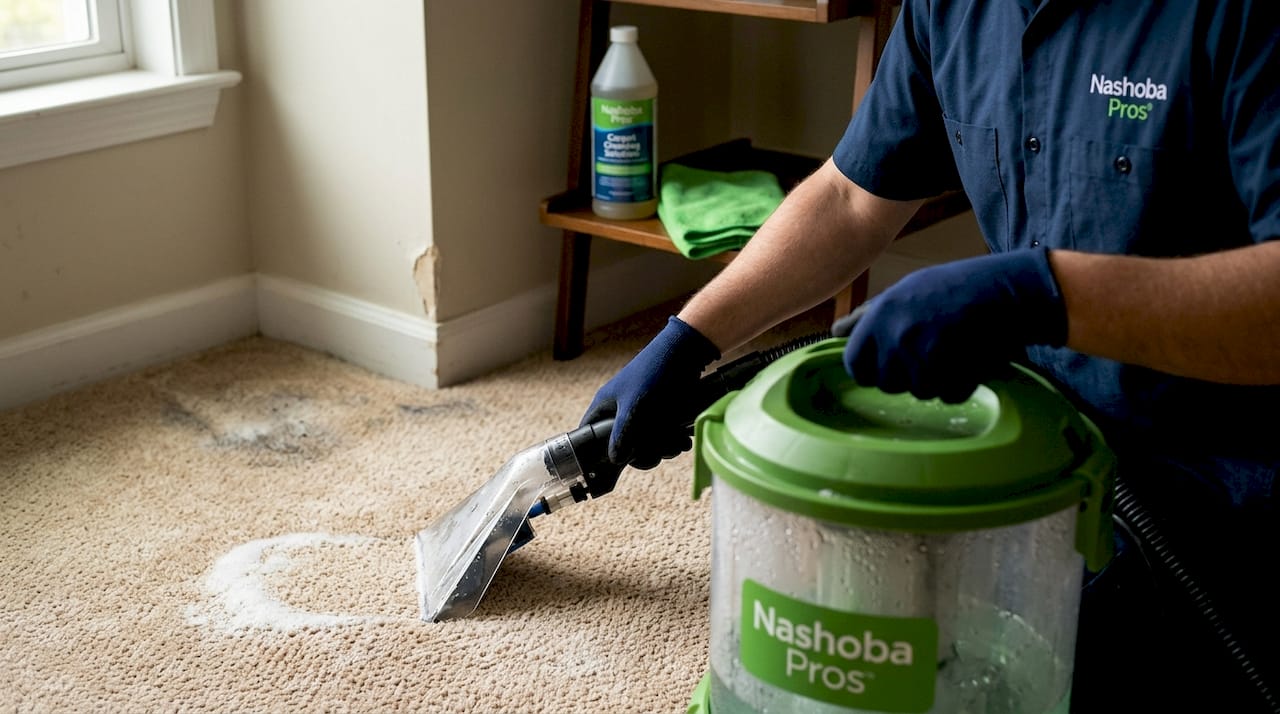
That residue creates two problems at once. First, soap residue holds water in fibers and padding longer, slowing evaporation and extending the window for microbial growth. Second, the sticky coating attracts dirt and debris from foot traffic, so your carpet looks dingy and smells stale again within days of cleaning.
Symptoms of a residue problem are pretty specific:
- The carpet feels stiff, crunchy, or tacky after drying
- There’s a sour or slightly chemical odor that wasn’t there before
- The carpet looks dull or re-soils faster than usual
- You used a store-bought foam cleaner or rented a machine with heavy detergent
The fix involves rinsing the carpet with plain water to dilute and extract the leftover product. A wet-dry vacuum or carpet extractor run over the area with clean water only can pull out a surprising amount of residue. If the residue chemically binds dirt and impedes evaporation, a single rinse pass may not be enough. Two or three passes with clean water are sometimes necessary before the carpet stops feeling tacky.
Pro Tip: When using any carpet cleaning product at home, use half the recommended amount. Most formulas are concentrated enough that cutting the dose still cleans effectively, and you’ll have far less residue to deal with afterward.
Pet urine and the hidden source of foul odor carpets
Pet urine is in its own category when it comes to carpet cleaning smell issues, and it’s the one that trips up the most homeowners. You might have cleaned a spot months ago and thought it was handled. Then you wet the carpet during a full cleaning, and suddenly that old smell is back and stronger than ever.
This happens because of uric acid crystals. When urine dries, it leaves behind crystallized residue in the fibers, the padding, and sometimes even the subfloor beneath. Those crystals are odorless when dry. But the moment moisture touches them, they rehydrate and reactivate the odor, releasing the compounds that cause that sharp, unmistakable smell.
Here’s what makes pet urine especially difficult to treat:
- It goes deeper than you think. Cat urine in particular penetrates deep into carpet fibers, padding, and the floor underneath, making surface-level cleaning almost useless for older stains.
- Steam cleaning can make it worse. Heat from steam cleaning can bond urine compounds more firmly to carpet fibers, locking in the odor rather than removing it. Low-heat extraction methods are preferred for pet-affected areas.
- Standard cleaners don’t break down uric acid. Regular carpet shampoos clean protein and dirt but leave uric acid crystals intact. The smell returns every time the carpet gets wet.
- The location isn’t always obvious. Old urine spots may have spread wider than the visible stain, so treating only the discolored area often misses the edges where crystals are concentrated.
Pro Tip: Use a UV blacklight in a darkened room to locate old urine spots before cleaning. Dried urine glows under UV light, revealing exactly where to apply enzyme treatment. This step alone saves a lot of guesswork.
The right tool for pet odor is an enzyme cleaner. Enzymes break down uric acid crystals, proteins, and bacteria at the molecular level, eliminating the odor source rather than covering it up. You apply the product, let it dwell long enough to work (often 15 to 30 minutes), and then extract. For deep contamination in the padding or subfloor, professional treatment is usually the only option that fully resolves the problem.
Practical solutions for removing smells from carpets
Now that you know the causes, here’s how to address them. These steps work whether you’re dealing with a fresh cleaning or trying to fix a smell that’s been lingering for days.
- Maximize airflow immediately after cleaning. Open windows, run ceiling fans, and point box fans directly at the carpet. The goal is to move air across the surface and pull moisture out as fast as possible.
- Run a dehumidifier in the room. This is especially important in basements or during humid months. A dehumidifier pulls moisture from the air, which accelerates evaporation from the carpet and padding.
- Use baking soda for temporary odor control. Baking soda neutralizes acidic odor molecules and absorbs surface moisture. Sprinkle it generously, let it sit for several hours, and vacuum thoroughly. This won’t fix a deep moisture or pet urine problem, but it helps manage odors between cleanings.
- Rinse out cleaning residue with plain water. If you suspect leftover detergent, run a pass with clean water and extract thoroughly.
- Apply enzyme cleaner to any pet-affected areas before general cleaning. Treating urine spots first, before wetting the rest of the carpet, prevents the cleaning moisture from spreading activated odor compounds across a wider area.
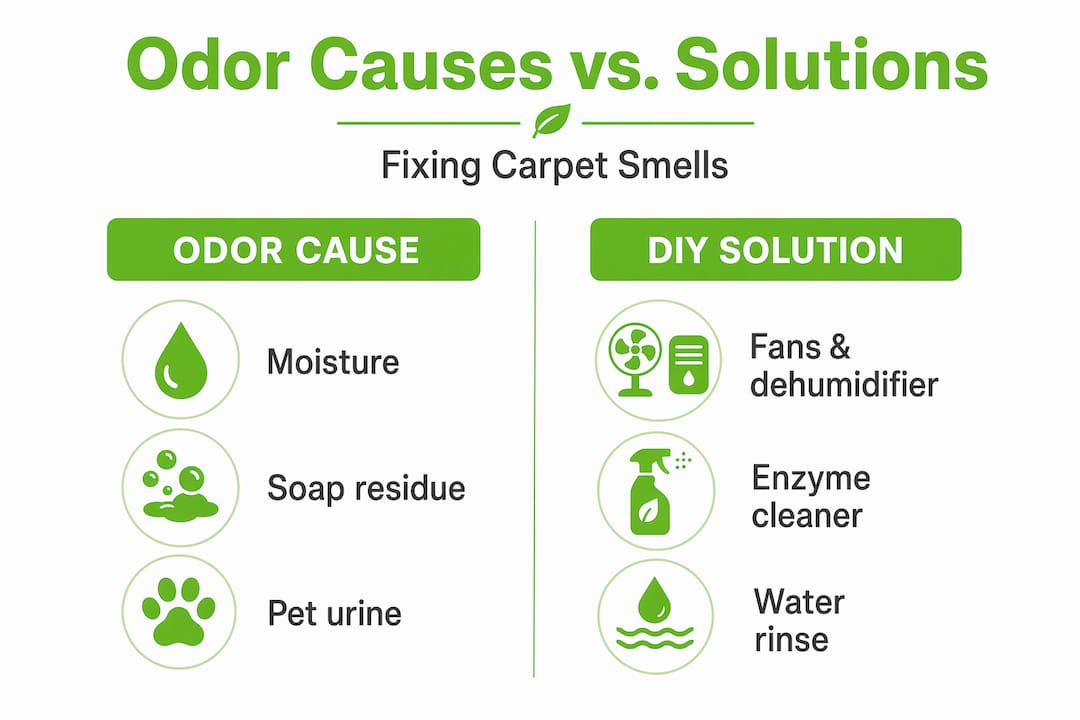
Here’s a quick comparison of odor solutions by cause:
| Odor Cause | DIY Solution | When to Call a Pro |
|---|---|---|
| Moisture and mildew | Fans, dehumidifier, baking soda | Padding is saturated or mold is visible |
| Soap residue | Rinse with clean water, re-extract | Residue is extensive or carpet re-soils quickly |
| Pet urine | Enzyme cleaner, UV light to locate spots | Deep padding or subfloor contamination |
Pro Tip: Avoid walking on carpet while it’s still damp. Foot traffic compresses wet fibers and pushes moisture deeper into the padding, which extends drying time and worsens odor risk.
Diagnosing your specific carpet odor
Not all post-cleaning smells are the same, and identifying which type you’re dealing with helps you choose the right fix faster.
Signs pointing to a moisture problem:
- Musty, earthy smell that gets stronger as the room warms
- Odor appeared 24 to 72 hours after cleaning, not immediately
- Carpet stayed damp longer than 6 to 8 hours after cleaning
- The smell is general and spread across the whole room
Signs pointing to a residue issue:
- Sour or slightly chemical smell
- Carpet feels stiff or tacky after drying
- Re-soiling happened faster than usual after cleaning
- You used a foam-based or high-detergent product
Signs pointing to pet urine contamination:
- Sharp, ammonia-like smell that returned after cleaning
- Smell is concentrated in specific spots rather than the whole room
- You have or had pets in the home
- Odors appearing 1 to 3 days after cleaning indicate ongoing moisture reactivating residue or urine crystals in the padding
When the smell persists beyond a week despite your best efforts, or when you notice discoloration, allergy symptoms, or visible mold, those are signals that the problem has moved beyond what surface treatments can fix. At that point, professional extraction, padding replacement, or subfloor treatment may be necessary.
My honest take on carpet odors after cleaning
I’ve talked with a lot of homeowners over the years who felt embarrassed or frustrated when their carpet smelled worse after cleaning than before. They assumed something went wrong. In my experience, that reaction is almost always misplaced.
Carpet odor after cleaning is not a sign of failure. More often, it’s a sign that the cleaning process exposed something that was already there, whether that’s years of accumulated moisture in the padding, pet residues that had dried and gone unnoticed, or soap from a previous DIY cleaning that never fully rinsed out. The cleaning didn’t create the problem. It revealed it.
What I’ve found is that the homeowners who get the best long-term results are the ones who treat drying as seriously as the cleaning itself. Getting water out of a carpet fast is just as important as getting dirt out. Most odor problems I’ve seen could have been prevented with better airflow in the first few hours after cleaning.
The other thing I’d tell anyone dealing with pet odors: remedies that mask smells don’t solve the underlying problem. I’ve seen homeowners go through three or four rounds of store-bought sprays before finally using an enzyme cleaner and getting real results. Start with the right tool and you save yourself weeks of frustration.
Act early. A damp carpet that smells slightly off today can become a mold problem next week. The window to fix it cheaply and easily is short.
— Jim
Get lasting results with Nashoba Pros
If you’ve tried the DIY steps and the odor keeps coming back, the problem is likely deeper than surface cleaning can reach. That’s where Nashoba Pros comes in.

Nashoba Pros has been solving carpet cleaning odors for homeowners in Westford, MA and the surrounding Nashoba Valley area for over 30 years. We use professional-grade extraction equipment that removes far more moisture than rental machines, which means your carpet dries faster and smells better. For pet-related problems, our pet odor and stain removal service uses enzyme treatments that actually eliminate uric acid at the source, not just cover it up. Every product we use is pet-safe and family-safe. If you want to understand the full scope of what professional cleaning can do for your home, our carpet cleaning guide is a great place to start. Call us or book online today. Most jobs can be scheduled quickly.
FAQ
Why does my carpet smell worse after cleaning?
Cleaning adds moisture that reactivates odors already trapped in the padding, including mildew, urine crystals, and soap residue. The smell often peaks 24 to 48 hours after cleaning as the carpet dries from the bottom up.
How long should carpet smell after cleaning?
A mild, damp smell should clear within 6 to 12 hours with good ventilation. If the odor persists beyond 24 to 48 hours, moisture is still trapped in the padding or there’s a deeper contamination issue like pet urine or soap residue.
Can pet urine smell come back after carpet cleaning?
Yes. Uric acid crystals left in carpet fibers and padding rehydrate when exposed to cleaning moisture, releasing odor again. Enzyme cleaners are required to break down these crystals and permanently remove the smell.
Does baking soda actually help with carpet odors?
Baking soda neutralizes acidic odor molecules and absorbs surface moisture, making it useful for temporary odor control between deep cleans. It does not remove the underlying source of the smell, so it works best as a supplement to proper cleaning.
When should I call a professional for carpet odor?
Call a professional when odors persist beyond a week, when you notice visible mold or discoloration, or when pet urine has soaked into the padding or subfloor. Surface treatments won’t reach those layers, and professional extraction or padding replacement is usually the only effective solution.