

Upholstery Cleaning Best Practices for Homeowners
Upholstery cleaning best practices are defined as a structured set of fabric-specific methods, routine maintenance habits, and scheduled professional treatments that protect furniture appearance and extend its usable life. Skipping even one step, like ignoring a fabric cleaning code or letting a spill sit, can cause permanent damage that no amount of scrubbing will fix. This guide covers the full spectrum: how to read cleaning codes, which methods work for which fabrics, how to handle stains correctly, and when to call in a professional. Whether you own a linen sectional, a velvet accent chair, or a leather sofa, the right approach starts with knowing your material.
1. Upholstery cleaning best practices start with fabric codes
Every upholstered piece of furniture carries a manufacturer cleaning code, and that code is the single most important piece of information before you touch it with any product. The standard cleaning codes are W, S, WS, and X. Using the wrong method based on the wrong code is how you end up with a shrunken cushion cover or a sofa with a permanent bleached ring.
Here is what each code means in practice:
- W (Water-based): Safe for water-based cleaners and steam. Most synthetic fabrics like polyester and nylon fall here.
- S (Solvent-based): Use dry-cleaning solvents only. Water causes dye bleeding and shrinkage on fabrics like rayon and some wools.
- WS (Water or Solvent): Either method works. This gives you the most flexibility.
- X (Vacuum only): No liquid of any kind. Brushing and vacuuming are the only safe options.
Incorrect cleaning methods cause permanent damage including dye bleeding and shrinkage, which no professional can reverse after the fact. The code tag is usually found under a cushion or on the furniture’s frame near the base.
Pro Tip: Before applying any cleaner, test it on an inconspicuous area like the back panel or underside of a cushion. Apply a small amount, wait 10 minutes, and check for color change or texture shift before proceeding.
2. Weekly vacuuming is the foundation of upholstery care
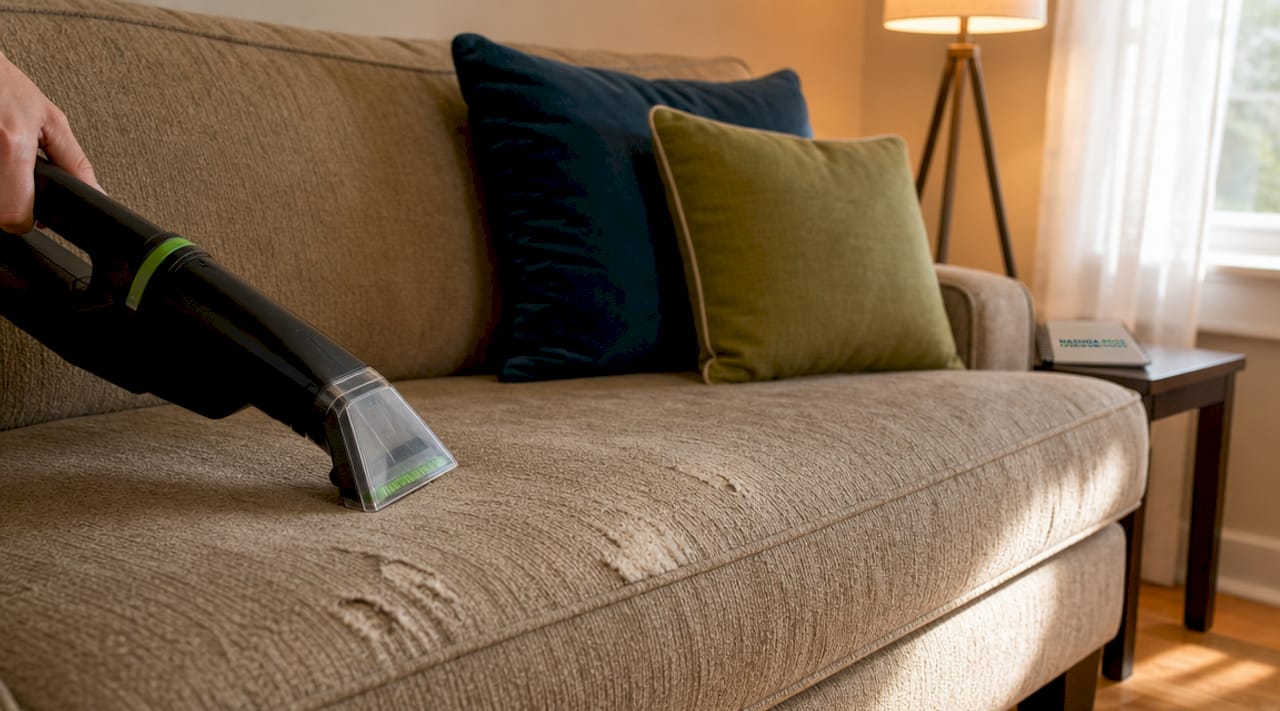
Vacuuming is not optional maintenance. It is the single most effective way to prevent abrasive soil from grinding into fabric fibers and accelerating wear. Weekly vacuuming prevents dirt buildup that, left unchecked, acts like sandpaper on upholstery weave with every use.
Use an upholstery attachment with a soft brush head. Work methodically across cushion surfaces, then flip and vacuum the underside. Pay special attention to crevices between cushions and along the base seam, where crumbs, pet hair, and fine dust concentrate. For velvet or delicate woven fabrics, use the lowest suction setting to avoid pulling at the pile.
Cleaning success depends more on fabric weave density and dye stability than on any particular product brand. That means the physical act of regular vacuuming, which removes abrasive particles before they work into the weave, does more for longevity than any spray-on treatment.
3. Spot clean spills immediately and correctly
Speed is the most critical variable in stain removal. A spill that gets blotted within 60 seconds has a dramatically better outcome than one addressed 20 minutes later. The liquid has not yet bonded with the fiber, and the stain has not begun to set.
Blot immediately and work from the perimeter toward the center to avoid spreading the stain outward. Never rub. Rubbing pushes the substance deeper into the fiber and can distort the weave permanently. Use a clean white cloth or paper towel with no dye transfer risk.
The cleaning agent you reach for depends on the stain type and your fabric code:
- Water-based stains (coffee, juice, wine): Use a diluted dish soap solution on W or WS fabrics.
- Oil-based stains (grease, butter, makeup): Apply a dry-cleaning solvent on S or WS fabrics; baking soda to absorb before treatment on W fabrics.
- Protein stains (blood, urine, egg): Use an enzymatic cleaner. Enzymatic cleaners break down organic compounds at the molecular level rather than just masking them.
For leather, use only a damp cloth for fresh spills. Avoid soaking the surface, and follow up with a pH-neutral leather cleaner once the area is dry.
4. Schedule professional deep cleaning every 6 to 12 months
DIY maintenance handles the surface. Professional cleaning handles what you cannot see: embedded allergens, bacteria, and deep-set soils that accumulate in the padding and backing over time. Professional upholstery cleaning uses fabric-specific pre-treatments and equipment that consumer products cannot replicate, including high-temperature extraction and industrial suction.
For fabric upholstery, deep cleaning every 6 to 12 months is the industry standard. Households with pets, children, or allergy sufferers should lean toward the 6-month end of that range. Leather furniture requires professional attention every 3 to 6 months, since leather is a porous material that absorbs body oils and environmental dust even when it looks clean.
Pro Tip: Before a professional service visit, vacuum thoroughly and identify any stains or problem areas to point out. A quick upholstery cleaning checklist before service helps the technician prioritize and treat the right areas first.
5. Apply leather-specific care practices consistently
Leather furniture requires a separate set of rules from fabric upholstery. The most common mistake homeowners make is treating leather like a hard surface and wiping it down with whatever is nearby. Baby wipes, household cleaners, bleach, and ammonia-based products all strip the leather’s natural oils and cause cracking over time. Use only pH-neutral leather cleaners and condition the surface one to four times per year depending on your climate and how heavily the piece is used.
Conditioning is not the same as cleaning. A leather conditioner is a moisturizer that restores flexibility to the hide. Over-conditioning creates a tacky surface that attracts and holds dirt, which defeats the purpose entirely. Apply conditioner sparingly with a clean soft cloth, never with bare hands, since the oils from your skin transfer unevenly and create blotchy absorption. Remove any excess after the product has absorbed.
For leather stain removal, act fast with a dry cloth, then follow with a dedicated leather cleaner. Never use water alone on oil-based stains on leather. If the stain has set or the leather shows cracking, that is a job for a professional with conditioning tools and color-matched treatments.
6. Understand your cleaning method options before you start
Not all cleaning methods are interchangeable. Choosing the wrong one for your fabric type causes damage that is often irreversible. Here is a direct comparison of the four most common methods:
| Method | Best for | Risk level | Notes |
|---|---|---|---|
| Hot water extraction | W and WS fabrics | Low when done correctly | Industry gold standard per IICRC; removes allergens and deep soils |
| Dry solvent cleaning | S-coded fabrics, delicate fibers | Low with correct solvent | No moisture risk; requires ventilation |
| DIY foam/spray cleaners | Light surface soils, W fabrics | Medium | Limited penetration; risk of residue buildup |
| Steam cleaning | W and WS fabrics only | Medium on delicate materials | Consumer steamers lack the extraction power of professional units |
Over-wetting is one of the most common causes of upholstery failure. When moisture soaks through to the inner padding, drying times extend dramatically and mold can develop inside the cushion where you cannot see it. Professional hot water extraction avoids this by pairing high-pressure application with equally high-recovery suction.
Maintaining pH balance during deep cleaning is especially critical on protein fibers like wool and silk. A slightly acidic final rinse stabilizes dyes and prevents fiber damage that alkaline cleaners cause.
7. Manage indoor humidity and airflow after cleaning
Humidity control is a maintenance step most homeowners skip entirely, and it is one of the most damaging oversights. Running HVAC systems and using fans after cleaning accelerates drying and prevents mildew from forming in the fabric and padding. In humid climates or during summer months, this step is not optional.
Keep indoor humidity between 30% and 50% year-round. Levels above 60% create conditions where mold spores can colonize upholstery fabric, especially in pieces that sit against walls or in low-traffic rooms. A basic hygrometer from any hardware store gives you a real-time reading. If you notice a musty smell from furniture that has not been wet recently, that is a sign of existing mold growth that requires professional remediation, not a DIY spray.
After any wet cleaning method, open windows, run ceiling fans, and avoid placing cushions back on the frame until the fabric is completely dry to the touch on all sides.
8. Build a pre-service checklist before professional cleaning
Arriving prepared for a professional cleaning appointment saves time and produces better results. Technicians who know what they are walking into can bring the right pre-treatment solutions and adjust their equipment settings before they start. Professional cleaners adjust temperature, extraction power, and pre-treatments based on fabric codes and composition, so the more information you provide upfront, the better the outcome.
A practical upholstery cleaning checklist before service should include:
- Locate and note the cleaning code tag for each piece being cleaned
- Identify all visible stains and note how long they have been there
- Vacuum all surfaces to remove loose debris
- Clear the area around furniture for technician access
- Note any fabric sensitivities, pet accidents, or previous DIY treatments applied
- Check for loose seams, worn areas, or fragile decorative elements that need special handling
This preparation takes 15 minutes and meaningfully improves the quality of the service you receive.
Key takeaways
Effective upholstery maintenance requires fabric code identification, consistent routine care, and scheduled professional cleaning to protect both appearance and structural integrity.
| Point | Details |
|---|---|
| Read the fabric code first | W, S, WS, and X codes determine every safe cleaning method for your furniture. |
| Vacuum weekly without exception | Regular vacuuming removes abrasive soil before it damages fabric weave and fiber. |
| Blot spills immediately | Working from the perimeter inward within 60 seconds prevents permanent stain bonding. |
| Condition leather 1 to 4 times yearly | Use pH-neutral products sparingly and never apply conditioner with bare hands. |
| Schedule professional cleaning every 6 to 12 months | Professional hot water extraction removes allergens and deep soils that DIY methods cannot reach. |
What 30 years of cleaning furniture taught me about upholstery care
Most homeowners treat upholstery cleaning as a reactive task. Something spills, or the sofa starts looking gray, and then they act. What I have seen over decades of cleaning furniture in homes across Westford and the Nashoba Valley is that the people whose furniture lasts longest are the ones who treat cleaning as a scheduled habit, not an emergency response.
The single most underrated step is reading the cleaning code tag before doing anything else. I have seen beautiful wool sofas ruined by well-meaning homeowners who grabbed a water-based spray because it was sitting on the counter. The fabric code is not a suggestion. It is the manufacturer telling you exactly what will cause permanent damage.
I also want to push back on the idea that professional cleaning is a luxury. It is not. Consumer-grade tools simply do not generate the temperature or extraction power needed to pull allergens and bacteria out of padding. A sofa that looks clean on the surface can be harboring years of accumulated organic material inside the cushion. That affects air quality in your home, not just the look of your furniture.
The other habit I wish more people had is conditioning leather on a schedule rather than waiting until it looks dry. By the time leather shows visible cracking, the damage is already done. Conditioning twice a year in a moderate climate keeps the hide flexible and extends the life of the piece by years.
My honest advice: spend five minutes locating the cleaning code tags on every upholstered piece in your home today. Write them down. That one step will prevent more damage than any cleaning product you could buy.
— Jim
How Nashobapros can help you protect your furniture
Nashobapros has been cleaning upholstery in Westford, MA and the surrounding communities for over 30 years. Every technician understands fabric codes, fiber types, and the difference between a piece that needs hot water extraction and one that needs dry solvent treatment.
If your sofa, sectional, or leather furniture is overdue for a deep clean, Nashobapros uses pet-safe and family-safe products on every job, backed by a 100% satisfaction guarantee. From fine upholstery to leather conditioning, the team brings professional-grade equipment and fabric-specific pre-treatments that consumer products cannot match. Schedule your upholstery cleaning in Maynard, MA or anywhere in the Nashoba Valley area. Most jobs can be booked quickly, and a free quote takes minutes.
FAQ
What do upholstery cleaning codes W, S, WS, and X mean?
W means water-based cleaners are safe; S means solvent-based only; WS means either method works; X means vacuum only with no liquid. Using the wrong method causes permanent damage including dye bleeding and shrinkage.
How often should I have upholstery professionally cleaned?
Fabric upholstery should be professionally cleaned every 6 to 12 months, and leather every 3 to 6 months. Households with pets or allergy sufferers should clean more frequently.
Can I use steam cleaning on all upholstery fabrics?
Steam cleaning is only safe on W and WS coded fabrics. Delicate materials like silk, rayon, and X-coded fabrics can be permanently damaged by heat and moisture from steam.
What is the correct way to remove a fresh spill from upholstery?
Blot the spill immediately with a clean white cloth, working from the outer edge toward the center to avoid spreading. Never rub, and use a cleaning agent matched to your fabric code and stain type.
How do I care for leather furniture between professional cleanings?
Wipe leather with a dry or lightly damp cloth for routine maintenance, and apply a pH-neutral conditioner one to four times per year. Avoid household cleaners, baby wipes, and ammonia-based products, which dry out and crack the hide over time.