

Household Carpet Stains: What They Are and How to Remove Them
What types of household stains can carpet remove, and how?
Carpet stains fall into five main chemical categories: water-soluble, protein-based, oil/grease-based, tannin-based, and dye/pigment stains. Knowing which category you’re dealing with before you reach for a cleaner is the single most important factor in whether the stain comes out or gets permanently set. Incorrect treatment can permanently set stains into fibers, turning a recoverable spill into a permanent problem. Knowing which category you’re dealing with before you reach for a cleaner is the single most important factor in whether the stain comes out or gets permanently set. Incorrect treatment can permanently set stains into fibers, turning a recoverable spill into a permanent problem.
Here’s a quick breakdown of each category and its first-response approach:
- Water-soluble: Coffee, juice, soda, mud. Respond to cold or room-temperature water and mild detergent.
- Oil-based: Cooking grease, makeup, butter. Require a solvent or surfactant since water alone won’t touch them.
- Protein-based: Blood, vomit, pet urine. Must be treated with cold water and enzyme cleaners. Heat sets these permanently.
- Tannin-based: Red wine, tea, coffee left to dry. Acidic plant-based dyes that bind fast and need a mild acidic neutralizer.
- Adhesive: Wax, gum, latex paint residue. Freeze first, then scrape, then treat residue with solvent.
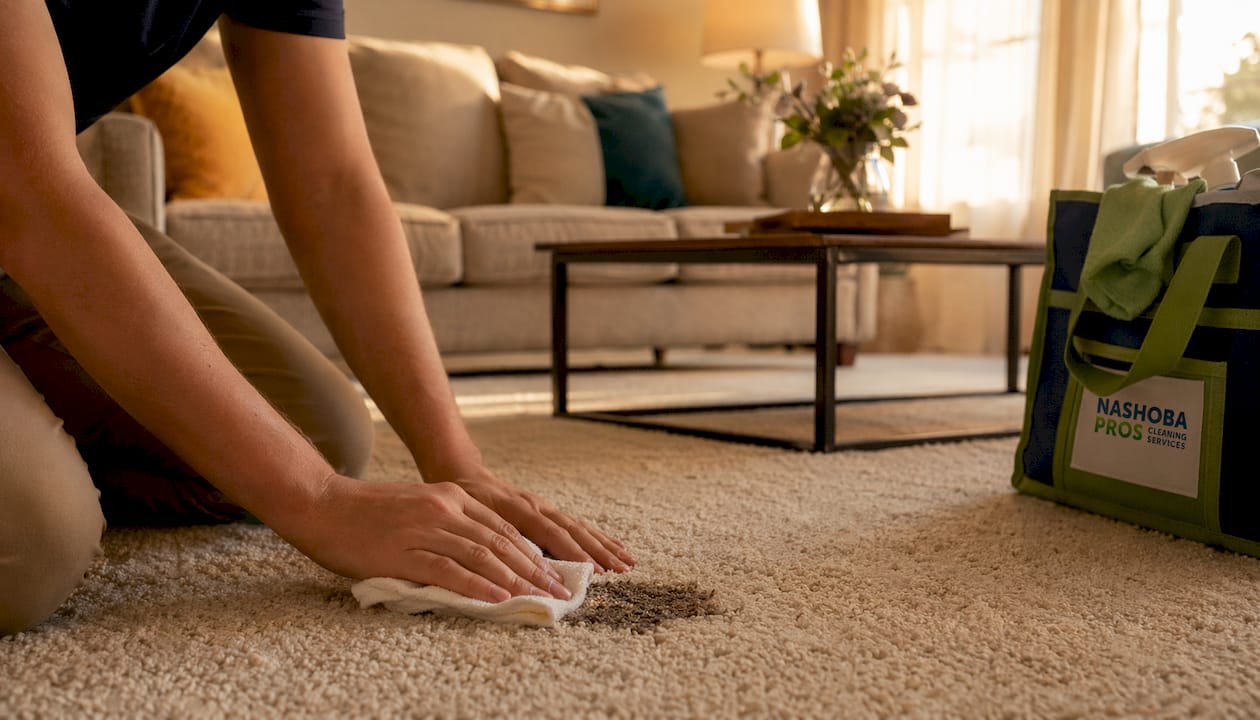
The universal first step for any liquid spill is to blot immediately with a clean white cloth, working from the outer edge toward the center. Never rub — rubbing spreads the stain and damages carpet fibers.
Pro Tip: Act within the first few minutes. The longer a spill sits, the higher the chance it crosses from a removable spot into a chemically bonded stain.
How to identify and remove water-soluble carpet stains
Water-soluble stains are the most common type in any home, and they’re also the most forgiving if you catch them quickly. Coffee, juice, soda, washable ink, mud, and most food spills all fall into this group. Because they dissolve in water, cold or room-temperature water plus the right cleaner will lift most of them before they set.
Common water-soluble stains include:
- Coffee and tea (light spills before drying)
- Fruit juice and soda
- Washable ink and most food colorings
- Mud and dirt (let dry completely before vacuuming)
- Latex paint while still wet
The critical rule here is temperature. Cold water keeps these stains mobile so they can be blotted out. Hot water can drive them deeper into the fiber and, for any stain with a protein component, will set it permanently. Blot with a dry white cloth, apply a small amount of a CRI Seal of Approval certified cleaning solution, and work from the outside in. Repeat as needed rather than soaking the area.
One mistake that causes recurring dark spots: leaving detergent residue in the carpet. Rinse thoroughly with clean water after treatment, because detergent residue attracts new soil rapidly once it dries.
How to treat oil-based stains that water alone won’t touch
Oil and water don’t mix, which is exactly why water-based cleaners fail on grease, butter, cooking oil, lipstick, and most cosmetics. These substances cling to carpet fibers and repel moisture, so applying water first can actually push the oil deeper into the backing.
Typical oil-based stains you’ll encounter:
- Cooking oil, grease, and butter
- Makeup, lotion, and lip balm
- Crayon, shoe polish, and salad dressing
- Tar and adhesive residue
The right approach starts with blotting up as much excess as possible, then covering the area with baking soda or cornstarch for about an hour to absorb surface oil before vacuuming. After that, apply a solvent-based or emulsifying cleaner. Non-volatile solvents work well for oil and grease but evaporate slowly and can leave their own residue, so always follow up by rinsing with a volatile solvent or using a dry absorbent compound to pull out what’s left. Pre-test any solvent in a hidden area first to confirm it won’t affect the dye or fiber.
Oil-based stains also tend to attract more dirt over time if any residue remains, making the treated area look darker than the surrounding carpet. Thorough residue removal after treatment prevents that cycle.
Why protein-based stains demand cold water and enzyme cleaners
Protein stains are the ones most homeowners get wrong, and the mistake is almost always heat. Blood, vomit, pet urine, egg, and dairy all contain organic compounds that bond tightly to carpet fibers when exposed to warmth. Hot water applied to an untreated protein stain essentially cooks the protein into the fiber, making it permanent.
Protein stains to watch for:
- Blood (fresh or dried)
- Vomit and feces
- Pet urine
- Egg and dairy products
Always start with cold water. Blot firmly, working from the outside edge inward, and never rub. Once excess moisture is removed, apply an enzyme-based cleaner and allow it to dwell for the time specified on the label. Enzymes need time to break down the organic compounds before you extract them.
Pro Tip: After blotting, place a stack of white absorbent cloths weighted down over the treated area for several hours. This draws residual moisture and stain material up from the backing rather than letting it wick back to the surface as the carpet dries.
A common mistake is layering multiple cleaning products without rinsing between them. Multiple cleaners applied without rinsing create sticky residues that cause rapid resoiling and make the stain appear to return.
How to identify and remove tannin-based stains like red wine and tea
Tannin stains come from plant-based compounds that act like dyes. Red wine, tea, coffee that has dried, cola, and berry juices all fall here. Once tannins attach to carpet fibers, they can leave visible discoloration even after an initial cleaning attempt, especially on nylon, which has a natural affinity for acid dyes.
Common tannin stains:
- Red wine
- Tea and coffee (once dried or concentrated)
- Cola and fruit juice
- Beer and certain plant-based beverages
Pro Tip: Speed is everything with tannin stains. The pigment in red wine binds to fibers within minutes, so blotting immediately with a dry cloth before applying any cleaner gives you a real advantage.
Tannin stains respond to a mildly acidic treatment approach. A diluted white vinegar solution (one part vinegar to one part water) can help neutralize the tannin before it polymerizes on the fiber. Apply, blot, and rinse thoroughly. For stubborn cases, a purpose-built tannin remover or a buffered hydrogen peroxide solution works, but test on a hidden area first since peroxide can affect color on some carpets. Never use hot water on coffee or tea stains. Heat sets the tannin permanently, the same way it does with proteins.
How to remove wax, gum, and adhesive stains from carpet fibers
Wax, gum, and adhesive residues behave differently from liquid stains. They’re solid or semi-solid, and the instinct to rub or pick at them is exactly wrong. Warming or rubbing spreads these substances deeper into the fiber pile.
Typical adhesive-type stains:
- Candle wax
- Chewing gum
- Latex paint residue (dried)
- Sticker adhesive and tape residue
The right first move is to freeze the substance solid using ice cubes in a plastic bag held against the area for several minutes. Once hardened, use a dull-edged tool like a butter knife or plastic scraper to break and lift the material away from the fibers. Work carefully to avoid pulling or cutting the pile.
After the bulk is removed, a solvent-based cleaner handles the remaining adhesive residue. Apply to a cloth rather than directly to the carpet, blot gently, and rinse. For dried latex paint, speed matters: wet latex paint blots out easily with cold water, but once it dries it forms a plastic film bonded to the fibers, and at that point professional intervention is usually the better call.
Managing pet stains with the right chemistry
Pet stains are among the hardest to fully remove because they combine two distinct chemical problems: protein from urine and organic matter, plus uric acid crystals that standard cleaners don’t break down. That’s why the smell often returns on humid days even after the visible stain appears gone. Many household remedies like vinegar and baking soda treat the surface odor without reaching the uric acid crystals embedded deeper in the fiber and backing.
Key steps for pet stain treatment:
- Blot up as much liquid as possible immediately with dry white cloths.
- Rinse with cold water and blot again before applying any cleaner.
- Apply an enzyme-based pet stain remover formulated to break down both protein and uric acid.
- Allow adequate dwell time per product instructions, then extract thoroughly.
- Place weighted absorbent cloths over the area during drying to prevent wicking.
Pro Tip: Use a UV black light in a darkened room to find pet urine spots that aren’t visible in normal light. Urine fluoresces under UV, revealing the full extent of the contamination, which is often larger than the visible stain.
Old or repeated pet accidents that have soaked through to the carpet pad are a different situation entirely. Surface enzyme treatment won’t reach that depth reliably, and the odor will keep returning until the sub-surface contamination is addressed.

Professional insights on common mistakes in carpet stain removal
The most damaging mistakes in stain removal come from misidentifying the stain type and then applying the wrong chemistry. A protein stain treated with hot water, or a tannin stain left untreated for days, can become permanent in ways that no amount of DIY effort will fix. Sequential chemistry, the professional practice of tackling a complex stain phase by phase, exists precisely because many real-world spills combine multiple stain types. Tomato sauce, for example, contains water-soluble sugars, protein, and oil, each requiring a different treatment step.
A few professional-grade practices worth adopting at home:
Rinse between products. Layering multiple cleaning agents without rinsing creates sticky residue that attracts soil and causes the stain to reappear. A solution of one cup white vinegar to one cup water works well to clear heavy detergent residue between applications.
Address wicking proactively. Stain wicking occurs when moisture pulls residual soil from the carpet backing up to the fiber surface during drying. Placing a weighted stack of white absorbent cloths over the treated area for 6–8 hours after cleaning draws those contaminants out before they resurface.
Pre-test every cleaner. Apply a small amount to a hidden area, press a white cloth against it for ten seconds, and check for color transfer or fiber change before treating the visible stain.
How to identify the type of carpet stain correctly
Correct identification before you apply any cleaner saves the carpet. The best method combines three cues: location, appearance, and smell. A stain in the dining room is almost certainly food-related. One near the front door could be tracked-in grease or mud. Entry points and pet areas each suggest their own likely culprits.
Appearance tells you a lot. Organic stains tend to look dull and may be slightly sticky to the touch, often with a brownish cast. Synthetic stains, like ink or certain dyes, appear shinier. A spot with visible texture on the fiber surface is a spot (something deposited on the outside of the fiber). A stain with no texture but a color change is a true stain, meaning the dye has bonded to the inside of the fiber.
When appearance isn’t enough, wet the area lightly, blot with a white cloth, and smell the cloth. Protein stains have a distinct organic odor. Urine has a sharp ammonia note. This approach isn’t glamorous, but it’s how professionals confirm what they’re dealing with before committing to a treatment chemistry.
Does carpet fiber type change how you remove stains?
Yes, significantly. The fiber your carpet is made from affects which cleaners are safe, how aggressively you can treat it, and which stains it’s most vulnerable to in the first place.
Nylon is the most common residential fiber and generally the most cleanable. It responds well to a wide range of cleaning agents but has a natural affinity for acid dyes, which means colored fruit drinks and red wine can stain it quickly. Stain-blocking treatments help, but they wear off over time.
Olefin (polypropylene) repels acid dyes, so red juice tends to clean up easily. The trade-off is that olefin has an affinity for oil, making cooking grease and tar particularly stubborn. It’s chemically tolerant, giving you more flexibility with cleaning products.
Polyester behaves similarly to olefin with oily soils but is less prone to food and beverage staining. Mustard is a notable exception due to a chemical attraction between turmeric and polyester fibers.
Wool is the most sensitive. It requires pH-neutral or mildly acidic cleaners, and oxidizing agents like hydrogen peroxide above 3% can strip its color. Hot water and alkaline cleaners can cause shrinkage or fiber damage. For area rugs and wool carpets, professional cleaning is almost always the safer choice.
Understanding how carpet construction affects cleaning helps you avoid treatments that work fine on synthetic fibers but damage natural ones. When in doubt about your fiber type, check the manufacturer’s label or ask a professional before applying any solvent or oxidizing agent.
When should you call a professional instead of handling it yourself?
DIY stain removal works well for fresh, small stains when you’ve correctly identified the type and acted quickly. The calculation changes in several situations.
Call a professional when:
- The stain has been there more than 24–48 hours and initial home treatment hasn’t worked.
- You’ve already applied multiple products and the stain is still visible or keeps returning.
- The stain covers a large area or has soaked through to the carpet pad.
- You’re dealing with old or repeated pet accidents with persistent odor.
- The carpet is wool, silk, or another delicate natural fiber.
- Dried oil-based paint, ink, or chemical-based marks are involved.
CRI Seal of Approval-certified service providers are trained to handle persistent and multi-component stains with equipment and chemistry that isn’t available at the consumer level. Hot-water extraction, for example, reaches temperatures and pressures that pull contaminants from the backing in ways that home machines can’t replicate. For how often professional cleaning fits into a regular maintenance schedule, the fiber type, foot traffic, and presence of pets all factor into the answer.
The other reason to call early: attempting aggressive DIY treatment on a stain that needs professional care often makes the professional’s job harder, or in some cases impossible. Knowing when to stop is part of good stain management. You can also apply the same careful approach to other surfaces in your home; the principles behind cleaning interior doors and trim follow similar logic about matching the cleaner to the surface material.
Nashobapros handles the stains that won’t come out on their own
When the stain has been there too long, the smell keeps coming back, or you’ve tried everything and the carpet still looks wrong, that’s the situation Nashobapros was built for. For over 30 years, the team has been handling exactly these jobs for homeowners across Westford, MA and the surrounding Nashoba Valley communities, including the ones where previous DIY attempts made things more complicated.

Nashobapros uses pet-safe, family-safe products and brings professional-grade equipment that reaches the backing and pad, not just the surface fibers. That’s the difference between a stain that disappears and one that wicks back up two days later. The service covers carpet cleaning in Ayer, MA and the wider region, with most jobs schedulable quickly. If pet odor is the issue, the dedicated pet odor and stain removal service addresses the full chemistry, not just the visible stain. Get a free quote by calling or booking online.
Key Takeaways
Correctly identifying a carpet stain’s chemical category before treating it is the single most reliable way to remove it without causing permanent damage.
| Point | Details |
|---|---|
| Five stain categories | Water-soluble, protein-based, oil/grease-based, tannin-based, and dye/pigment stains each require different treatment chemistry. |
| Heat is the biggest risk | Never use hot water on protein stains; heat permanently bonds organic compounds to carpet fibers. |
| Blot, never rub | Always blot from the outer edge inward to avoid spreading the stain or distorting carpet pile. |
| Rinse between products | Layering cleaners without rinsing creates sticky residue that attracts new soil and causes stains to reappear. |
| Nashobapros for stubborn stains | Nashobapros provides professional carpet cleaning and pet odor removal across Westford, MA and the Nashoba Valley area. |