

Water Pressure in Carpet Cleaning: What Homeowners Need to Know
Water pressure in carpet cleaning is defined as the pounds per square inch (PSI) at which water or cleaning solution is injected into carpet fibers to loosen and break up embedded soil. The role of water pressure in carpet cleaning goes far beyond simply spraying water onto a surface. The industry standard method, hot water extraction (sometimes called “steam cleaning,” though that term is a misnomer per ANSI/IICRC S100), relies on pressurized water to penetrate fiber bundles and suspend dirt for removal. What most homeowners don’t realize is that pressure alone never determines results. The balance between injection pressure and vacuum lift is what separates a truly clean, fast-drying carpet from one that stays damp for days.
What are the optimal water pressure ranges for carpet cleaning?
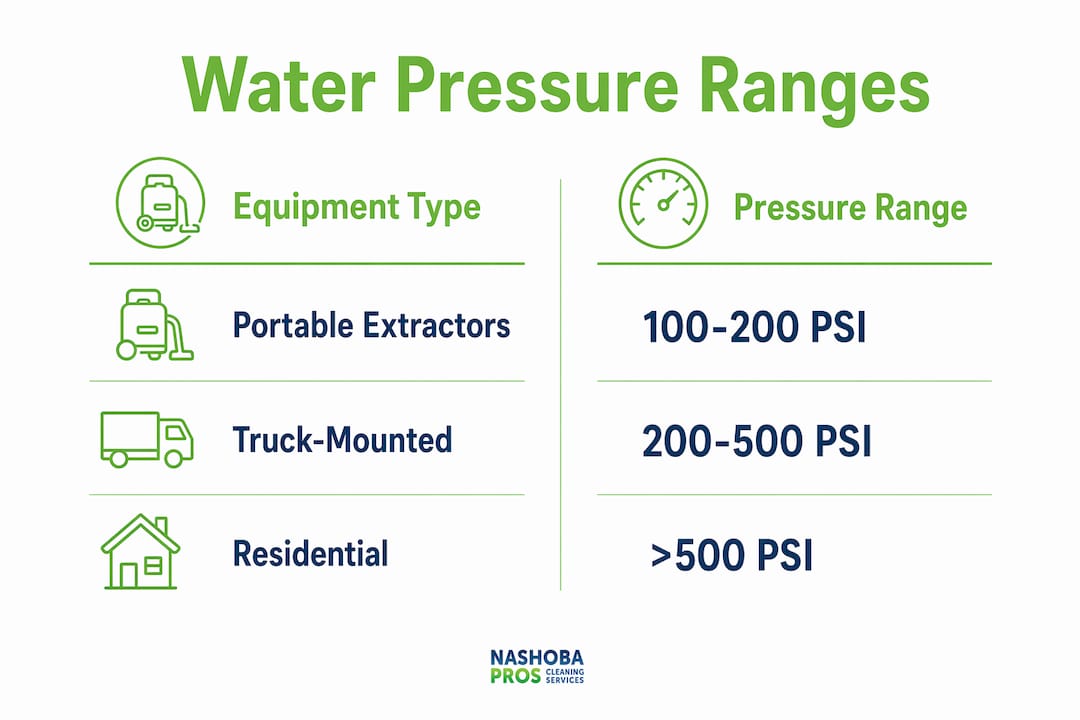
Professional carpet cleaning operates within defined PSI ranges that vary by equipment type and setting. Residential hot water extraction uses 200–500 PSI, with 200 PSI recognized as the industry minimum per IICRC S100. Truck-mounted systems typically run at 400–500 PSI, while portable machines range from 100–500 PSI depending on the model and configuration.
The difference between those two equipment categories matters more than most homeowners expect. Truck-mounted units heat water to 180–230°F and deliver significantly higher vacuum lift than portable extractors. That combination of heat and pressure is what makes truck-mounted systems the preferred choice for heavily soiled residential and commercial carpets.
The table below summarizes typical pressure ranges and their applications.
| Pressure Range | Equipment Type | Best Application |
|---|---|---|
| 100–200 PSI | Entry-level portable extractors | Light soil, delicate fibers |
| 200–400 PSI | Mid-range portable or truck-mount | Standard residential cleaning |
| 400–500 PSI | Truck-mounted systems | Heavy soil, high-traffic areas |
| 500+ PSI | Commercial truck-mounts | Commercial carpets, deep extraction |
Major carpet manufacturers including Shaw, Mohawk, and Stainmaster mandate hot water extraction with water at least 180°F once every 12–18 months for warranty compliance. That requirement exists because lower-pressure or low-heat methods simply don’t penetrate fiber bundles deeply enough to remove the soil that causes premature wear.
Pro Tip: Ask any professional cleaner what PSI their equipment runs at before booking. A legitimate technician will answer without hesitation. If they can’t tell you, that’s a signal worth paying attention to.
How does water pressure interact with vacuum lift and other factors?
Higher pressure is only one half of effective cleaning. Vacuum lift is the other half, and ignoring it is the most common reason carpets come out wetter than they should. Vacuum lift, measured in inches of water lift, determines how powerfully the machine pulls moisture back out of the carpet after injection.
Professionals think in terms of a “water budget.” The goal is to inject enough water to suspend and carry soil, then recover nearly all of it before moving on. When that budget is out of balance, problems follow quickly.
- Portable extractors provide 90–130 inches of water lift.
- Truck-mounted systems deliver 180–250+ inches of water lift.
- High PSI without matching vacuum lift causes oversaturation, pushing drying times to 8–12+ hours.
- Extended drying times create conditions for microbial growth and odor development.
- Proper stroke discipline, one wet pass followed by two dry passes, is the primary control mechanism for moisture recovery.
Stroke discipline is the part of carpet cleaning that rarely gets discussed with homeowners, but it drives results more than any single PSI setting. Skipping dry passes is the top cause of long drying times and re-soiling after cleaning. A wet pass injects solution and lifts soil. Dry passes pull the remaining moisture out of the pile before it can wick back down into the backing.
The practical implication is straightforward. A technician running 500 PSI with poor stroke discipline will leave your carpet wetter and dirtier than a technician running 300 PSI with proper technique. Equipment specs matter, but they don’t replace skill.
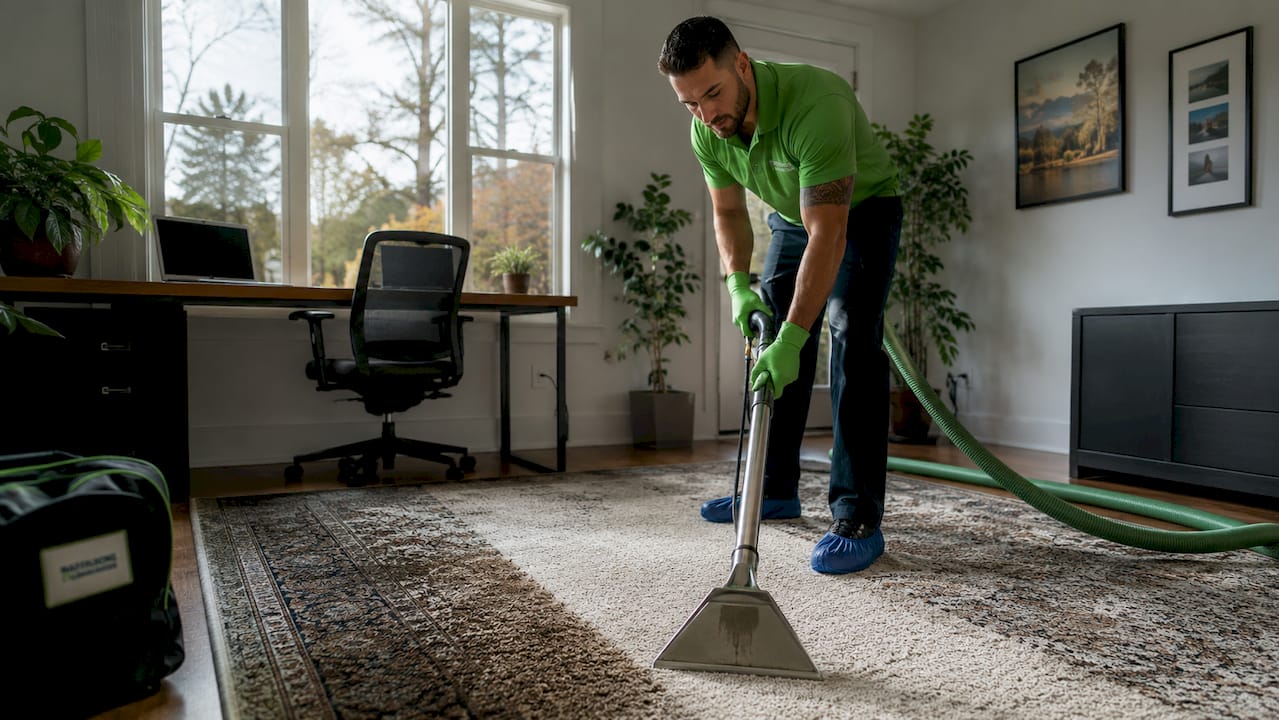
Pro Tip: After a professional cleaning, ask the technician to confirm they performed dry passes. A carpet that feels barely damp to the touch within an hour is a sign the water budget was managed correctly.
How does water pressure affect different carpet types?
Not every carpet handles the same PSI the same way. Pressure must be lowered for delicate wool or natural fiber carpets to prevent fiber distortion and backing damage. Synthetic fibers like nylon and polyester tolerate higher pressure ranges without issue, which is why most residential wall-to-wall carpet cleans well at standard truck-mount settings.
The pile depth and backing construction also factor into the decision. Loop pile carpets, like Berber, can fray or snag if pressure is too aggressive. Cut pile carpets with dense construction handle higher PSI better because the fibers are more stable under pressure.
Here are the pressure-setting best practices by carpet type:
- Wool and natural fiber carpets: Use lower PSI settings, typically 100–200 PSI, with cooler water temperatures to avoid shrinkage and color bleeding.
- Delicate loop pile (Berber): Reduce pressure and use a wider wand head to distribute force evenly across the surface.
- Standard synthetic cut pile: 300–400 PSI is appropriate for routine cleaning with moderate soil.
- Heavily soiled synthetic carpets in high-traffic areas: 400–500 PSI with truck-mount vacuum lift delivers the deepest clean without fiber damage.
- Carpet tiles and commercial glue-down installations: Lower pressure protects adhesive bonds; excessive PSI can lift tiles at the seams.
Technicians adjust PSI based on fiber type and soil severity as a standard part of professional practice. A good technician assesses the carpet before touching the machine. If a cleaner applies the same settings to every job regardless of carpet type, that’s a red flag for potential damage.
Common misconceptions about water pressure and carpet cleaning
The most persistent myth in carpet cleaning is that more PSI always means a deeper, cleaner result. That belief leads homeowners to rent high-pressure machines without understanding that pressure without adequate vacuum creates more problems than it solves.
- Myth: Higher PSI cleans better. Excessive pressure forces soil deeper into the carpet backing rather than suspending it for removal. The result is return staining within days of cleaning.
- Myth: Wetter is cleaner. Over-wetting is a direct consequence of mismatched pressure and vacuum. Excess moisture promotes mold growth and weakens fiber structure over time.
- Myth: Drying time doesn’t matter. Carpets that stay wet for more than 24 hours face a real risk of microbial growth and odor. The goal is dry in under 6 hours.
- Myth: Rental machines match professional results. Consumer-grade extractors run at the low end of the PSI range and provide a fraction of the vacuum lift that truck-mounted equipment delivers.
- Myth: Pressure is the main variable. Stroke discipline, water temperature, dwell time, and pre-treatment chemistry all contribute to the final result. PSI is one input in a larger system.
The practical risk of over-pressure is real. Excessive pressure damages delicate fibers and extends drying time, which compounds into odor problems and accelerated wear. Homeowners who push rental machines to maximum settings on wool or loop pile carpets often discover the damage only after the carpet dries.
Practical tips for homeowners when hiring a carpet cleaner
Knowing how water pressure affects carpet cleaning gives you better questions to ask before a technician sets foot in your home. You don’t need to become an expert in PSI. You need to know enough to verify that the person you hire does.
- Ask about equipment type. Truck-mounted systems outperform portable extractors on vacuum lift, which directly affects drying time and soil removal.
- Confirm pressure settings match your carpet type. If you have wool area rugs or Berber carpet, tell the technician before they start. A professional will adjust settings accordingly.
- Request dry passes. Ask the technician to confirm they follow a wet-pass-then-dry-pass protocol. This single practice has the largest impact on how quickly your carpet dries.
- Watch for signs of over-saturation. If the carpet feels soaking wet after cleaning or takes more than 12 hours to dry, the water budget was not managed correctly.
- Check manufacturer recommendations. Shaw, Mohawk, and Stainmaster all publish cleaning guidelines. Matching the cleaning method to those specs also protects your warranty.
For homeowners who want to understand the full picture of how cleaning methods compare, the difference between hot water extraction and lower-pressure alternatives comes down to soil suspension and moisture recovery. Pressure creates the force to break soil free. Vacuum lift removes it. Both have to work together.
Key Takeaways
Water pressure in carpet cleaning only delivers results when matched with sufficient vacuum lift and proper stroke discipline.
| Point | Details |
|---|---|
| PSI ranges by equipment | Residential cleaning runs 200–500 PSI; truck-mounts reach 400–500 PSI for best results. |
| Vacuum lift is equally critical | Truck-mounts deliver 180–250+ inches of water lift, far exceeding portable extractors. |
| Stroke discipline drives drying time | One wet pass followed by two dry passes is the standard for fast drying and clean results. |
| Carpet type determines safe pressure | Wool and natural fibers require lower PSI; heavily soiled synthetics tolerate higher settings. |
| More pressure is not always better | Excessive PSI forces soil into backing, extends drying time, and risks microbial growth. |
What 30 years of carpet cleaning taught me about pressure
Most homeowners focus on PSI when they think about carpet cleaning quality. I understand why. It’s a concrete number, easy to compare, and sounds authoritative. But in my experience, the technician’s technique matters more than the spec sheet on the machine.
I’ve seen truck-mounted equipment at 500 PSI leave carpets soaking wet because the operator skipped dry passes. I’ve also seen a skilled technician with a mid-range portable extractor produce a clean, fast-drying result because they managed the water budget carefully. The equipment sets the ceiling. The technique determines where you actually land.
The other thing I’d push back on is the idea that homeowners can replicate professional results with rental machines. Consumer extractors simply don’t generate the vacuum lift needed to recover the water they inject. That gap is why carpets cleaned with rental equipment often smell musty within a few days. It’s not the soap. It’s the moisture left behind.
If you’re hiring a professional, the questions about PSI and dry passes are worth asking. A technician who can explain their process clearly is one who actually follows it. That conversation takes two minutes and tells you a lot about what you’re paying for.
— Jim
Nashobapros brings the right pressure and technique to every job
Nashobapros has served homeowners in Westford, MA and the surrounding Nashoba Valley area for over 30 years. Every carpet cleaning job uses truck-mounted equipment calibrated to IICRC S100 standards, with PSI and vacuum lift settings matched to your specific carpet type and soil level.
Technicians at Nashobapros follow strict stroke discipline on every job, including dry passes after each wet pass, so your carpets dry faster and stay cleaner longer. If you’re ready to schedule a professional carpet cleaning or want to know how often your carpets need service, Nashobapros offers free quotes with no runaround. Most jobs in the Westford area can be scheduled quickly, and every job is backed by a 100% satisfaction guarantee.
FAQ
What PSI is used in professional carpet cleaning?
Professional carpet cleaning uses 200–500 PSI for residential settings, with truck-mounted systems operating at 400–500 PSI. The IICRC S100 standard sets 200 PSI as the recognized minimum for effective hot water extraction.
Why does my carpet take so long to dry after cleaning?
Long drying times result from high injection pressure without matching vacuum lift, or from skipping dry passes during cleaning. Carpets cleaned with proper stroke discipline and truck-mounted vacuum lift should dry in under 6 hours under normal conditions.
Can high water pressure damage my carpet?
Excessive PSI can force soil deeper into the carpet backing, distort delicate fibers like wool, and weaken backing adhesives. Technicians adjust pressure based on fiber type and soil severity to avoid these outcomes.
Is “steam cleaning” the same as hot water extraction?
“Steam cleaning” is a common misnomer. The professional method injects hot water, not steam, into carpet fibers under pressure per ANSI/IICRC S100 standards. True steam alone does not provide the pressure or moisture recovery needed for deep cleaning.
What should I ask a carpet cleaner before hiring them?
Ask what PSI their equipment runs at, whether they use truck-mounted or portable extraction, and whether they perform dry passes after wet passes. These three questions reveal whether the technician understands the water budget concept that drives real cleaning results.