

How to Protect Upholstery After Professional Cleaning
Fabric protection is the practice of applying a chemical barrier to upholstery fibers so that spills bead on the surface instead of soaking in. To protect upholstery after professional cleaning, you need to apply a quality fabric protector like Scotchgard, follow a consistent maintenance routine, and avoid the mistakes that strip protection before it has a chance to work. The IICRC, the industry’s leading certification body for cleaning professionals, identifies post-cleaning protection as a core step in extending fabric life. Skip it, and you lose most of the value your cleaning investment just delivered.
What are the best fabric protectors to use after professional cleaning?
Fabric protectors create a hydrophobic barrier around individual fibers, causing liquids to bead up rather than absorb. That window of opportunity gives you time to blot a spill before it becomes a stain. The critical point most homeowners miss: protectors do not make upholstery stain-proof. They buy you time.
Professional-grade vs. retail aerosol sprays
The difference between professional and retail protectors comes down to coverage and bonding. Professional-grade protectors require uniform high-pressure spray application to achieve 100% fabric coverage. Retail aerosol cans like standard Scotchgard spray produce uneven coverage because the pressure and spray pattern are inconsistent. Uneven coverage means uneven protection, and the gaps are where stains happen.
3M Scotchgard is the most recognized consumer brand. Guardsman Fabric Defense and Fiber ProTector are professional-grade options that technicians apply with commercial equipment. For fine or delicate fabrics, check the manufacturer’s care tag before applying anything. Leather, suede, and untreated silk require specialized products, not general fabric sprays.
| Protector Type | Application Method | Coverage Quality | Best For |
|---|---|---|---|
| Professional-grade (e.g., Fiber ProTector) | High-pressure commercial spray | Uniform, 100% coverage | All fabric types post-cleaning |
| Retail aerosol (e.g., Scotchgard spray) | Consumer aerosol can | Uneven, variable | Light-use furniture, DIY touch-ups |
| Leather conditioner/protector | Hand application | Surface-level | Leather and bonded leather |
Fabric types that accept standard protectors: polyester, nylon, cotton blends, microfiber, and most synthetic upholstery.
Fabric types that need specialized products or no protector: untreated silk, velvet, suede, and certain wool blends.
Pro Tip: After a professional applies a fabric protector, keep furniture out of heavy use for at least 24 hours. The protector chemically bonds to fibers during that curing window. Sitting on it too soon breaks the bond before it sets.
How to maintain upholstery and keep protection working longer
Consistent maintenance is what separates furniture that looks great for a decade from furniture that looks worn in two years. Upholstered furniture with regular home maintenance lasts up to 60% longer than furniture cleaned only when visibly dirty. That gap is entirely explained by what happens between professional visits.
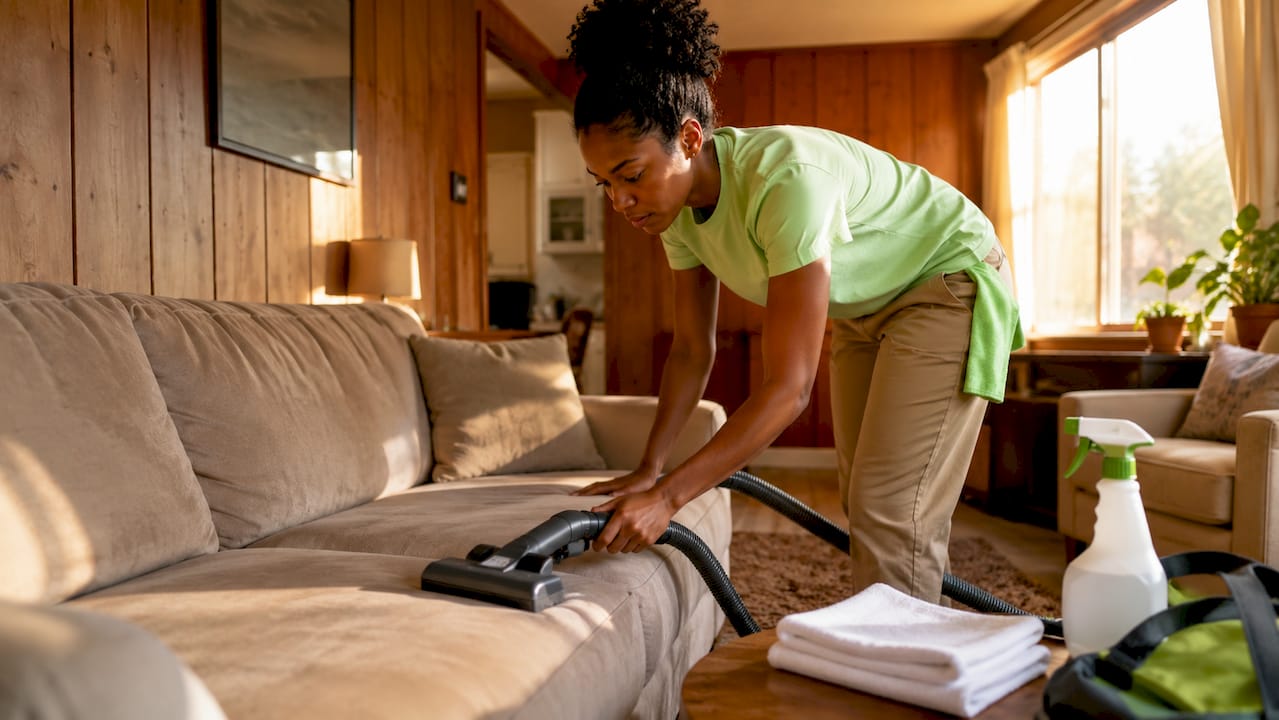
Build a vacuuming schedule that matches your household
Vacuuming is the single most effective thing you can do to extend fabric protector life. Grit and dry soil act like sandpaper against fabric fibers, and they physically abrade the protective coating over time. Regular vacuuming prevents that wear and can extend protector lifespan up to two years.
The right frequency depends on your household:
- No pets, low traffic: Vacuum upholstery once per week using an upholstery attachment.
- One pet or moderate traffic: Vacuum twice per week to remove pet hair and dander before it works into the fibers.
- Multiple pets or high-traffic rooms: Vacuum three times per week. Dander and grit accumulate fast in these conditions.
- Weekly wipe-down: Use a clean, dry microfiber cloth to remove surface dust from cushion seams and armrests.
- Rotate cushions monthly: Even wear distribution prevents one section from degrading faster than the rest.
Weekly maintenance routines reduce emergency stain treatments by 73%. That number reflects over 8,000 service visits reviewed in late 2025. Consistent light care prevents the buildup that turns into a crisis.
Handle spills the right way
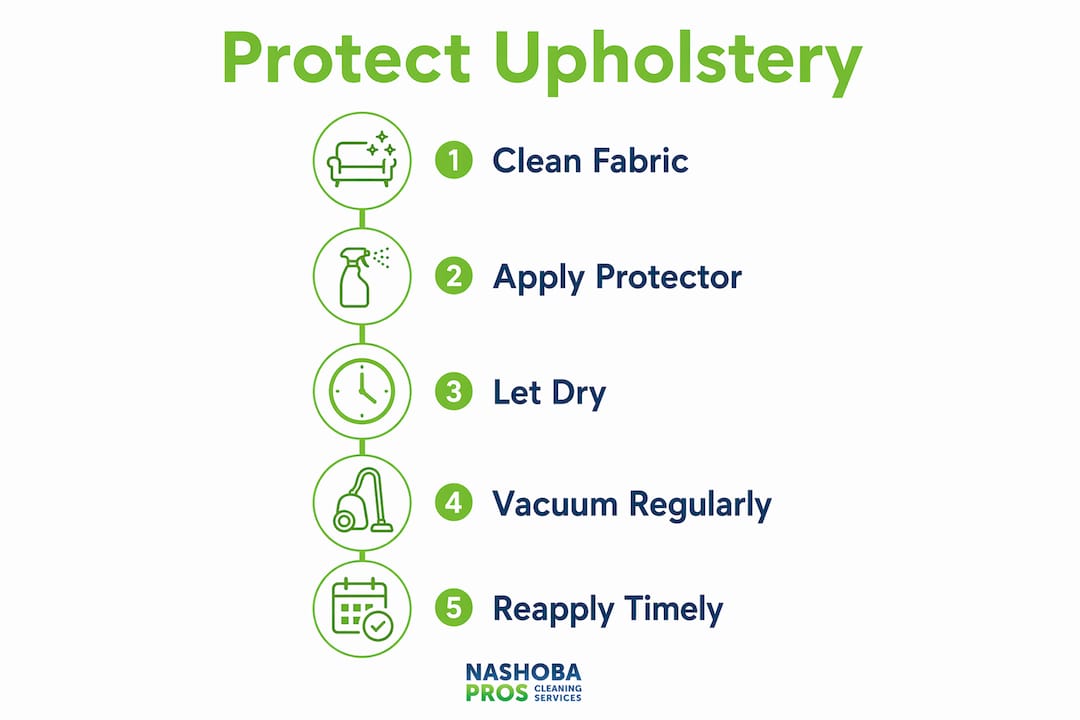
The rule is simple: blot, never rub. Rubbing a spill forces the contaminant deeper into the fabric and physically damages the protective barrier, creating permanent shadows. Press a clean white cloth firmly onto the spill and lift straight up. Repeat with a fresh section of cloth until no more liquid transfers.
Pro Tip: Keep a stack of clean white microfiber cloths near your main seating area. White cloths let you see exactly how much of the spill you are lifting with each blot.
Schedule professional cleanings every 6–9 months
Professionals recommend deep cleaning every 6–9 months to maintain fabric integrity without residue buildup. This interval also gives you a natural reapplication point for fabric protector. Waiting longer allows soil to bond to fibers at a level that home vacuuming cannot address. You can learn more about the full process in Nashobapros’s guide on how professional cleaning works.
What mistakes reduce upholstery protection effectiveness?
Most protection failures trace back to a handful of avoidable errors. Knowing them in advance saves you from undoing the work your professional cleaning just accomplished.
- Applying protector over dirty or damp fabric. Applying protector over soiled or damp upholstery locks contaminants into the fibers, causing staining and odors that no amount of future cleaning fully removes. Always apply to clean, fully dry fabric.
- Using generic grocery store sprays. Generic household cleaning agents interact poorly with protectors and delicate fabrics. Products not tested for upholstery compatibility can strip existing protection or leave residue that attracts more dirt.
- Rubbing spills instead of blotting. This is the most common mistake and the most damaging. Rubbing spreads the stain laterally and drives it past the protective layer into the base fibers.
- Ignoring cure time. Sitting on freshly treated furniture before the 24-hour cure window closes breaks the chemical bond the protector needs to form. The result is patchy, weak protection.
- Placing furniture in direct sunlight. UV exposure degrades fabric fibers and breaks down protector chemistry faster than normal use. Reposition furniture or use window film to reduce UV impact.
“Fabric protectors are not a substitute for maintenance. They are a tool that makes maintenance easier. Treat them as a head start, not a finish line.”
How do you know when it’s time to reapply fabric protector?
The water bead test is the standard method homeowners use to check protection status. Drip a few drops of plain water onto the upholstery surface. If the water beads up and sits on top of the fabric, the protection is still active. If the water absorbs immediately or spreads into the fabric, the protector has worn off and reapplication is needed.
Run this test every six months as a standard check. Mark it on your calendar so it does not get skipped.
How long does fabric protection last?
Protection typically lasts 12–18 months under normal household conditions. Several factors shorten that window:
- High foot traffic and daily use. Furniture used by multiple people every day wears through protection faster than a guest room chair.
- Pets. Pet claws physically abrade the protective coating. Combined with dander and oils, protection degrades noticeably faster in pet households.
- Frequent spot cleaning with harsh products. Each application of a non-pH-neutral cleaner strips a layer of protection.
- UV exposure. Direct sunlight accelerates breakdown of both fabric fibers and protector chemistry.
Pro Tip: Always have a professional reapply fabric protector rather than layering a retail spray over worn protection. Professionals apply at the correct pressure and volume for your specific fabric type. DIY reapplication over degraded protection rarely achieves full coverage.
For guidance on which fabrics accept which protectors, Nashobapros has a detailed breakdown of upholstery fabric types and how protection varies by material.
Key Takeaways
Protecting upholstery after professional cleaning requires a quality fabric protector, a consistent vacuuming schedule, and prompt spill response to extend fabric life and reduce future cleaning costs.
| Point | Details |
|---|---|
| Apply protector to clean, dry fabric | Never apply over soiled or damp upholstery — contaminants get locked in permanently. |
| Allow 24 hours of cure time | Keep furniture out of heavy use so the protector bonds fully to the fibers. |
| Vacuum on a schedule | Once weekly minimum; twice or three times with pets or high traffic to prevent grit wear. |
| Blot spills, never rub | Rubbing forces contaminants past the protective layer and causes permanent staining. |
| Retest and reapply every 12–18 months | Use the water bead test every six months; schedule professional reapplication when water absorbs. |
What 30 years of upholstery work taught me about protection
Most homeowners think fabric protection means their sofa is now stain-proof. That single misconception causes more disappointment than anything else I see after a professional cleaning job. Protection creates a window. It gives you 30 seconds to a few minutes to respond to a spill before it becomes a problem. What you do in that window is what actually determines the outcome.
The other thing I have watched consistently is that homeowners who vacuum on a schedule almost never call us for emergency stain removal. The ones who wait until the furniture looks dirty are the ones dealing with set-in soil that requires aggressive cleaning. Aggressive cleaning is harder on fabric. It shortens the life of the furniture and the protection. The whole cycle gets more expensive.
My honest recommendation: treat the day your furniture comes back from professional cleaning as the starting point of a maintenance habit, not the end of a problem. Apply protection the same day if the fabric is fully dry. Set a phone reminder to run the water bead test in six months. Keep white microfiber cloths accessible. These are small actions that compound into years of extra furniture life.
One more thing worth saying: not every fabric needs the same protector, and not every protector is applied correctly by every technician. Ask specifically what product is being used and whether it is compatible with your fabric type before the job starts. A good technician will answer that question without hesitation.
— Jim
Nashobapros protects your upholstery the right way
Nashobapros has served Westford, MA and the surrounding Nashoba Valley communities for over 30 years. Every upholstery cleaning job includes a full fabric assessment so the right protector goes on the right material.

After cleaning, Nashobapros applies professional-grade fabric protectors using commercial equipment for complete, even coverage. Every product used is pet-safe and family-safe. If you want your furniture to stay cleaner longer and hold up to daily life, the upholstery cleaning and protection service at Nashobapros is the place to start. Call or book online for a free quote. Most jobs can be scheduled quickly.
FAQ
What does fabric protector actually do to upholstery?
Fabric protector creates a hydrophobic barrier around upholstery fibers so spills bead on the surface instead of absorbing. It does not make fabric stain-proof, but it gives you time to blot a spill before it sets.
How soon after professional cleaning can protector be applied?
The fabric must be completely dry before protector is applied. Applying it over damp upholstery traps moisture and contaminants in the fibers, which causes odors and staining.
How often should upholstery be professionally cleaned?
Professionals recommend deep cleaning every 6–9 months to maintain fabric integrity and prevent soil from bonding permanently to fibers. High-traffic or pet households may need more frequent visits.
Can I use a retail spray like Scotchgard instead of a professional application?
Retail sprays like Scotchgard provide uneven coverage compared to professional high-pressure application. They work as a light touch-up but do not replace professional application for full fabric protection.
How do I know if my upholstery protection has worn off?
Drip a few drops of water onto the fabric. If the water beads up, protection is still active. If it absorbs immediately, the protector has worn off and reapplication is needed.