

What Is Carpet Protector Treatment for Homeowners?
Carpet protector treatment is a topical coating applied to carpet fibers that creates an invisible barrier, repelling spills and preventing soil from embedding deep into the pile. Professionally known as fiber protector or carpet protectant, this treatment makes carpets significantly easier to clean and extends their usable life. It is especially valuable for wool rugs, high-traffic hallways, and synthetic carpets in family homes. Understanding what carpet protector treatment does, and what it cannot do, helps you make smarter decisions about your carpet care routine.
How does carpet protector treatment work?
Carpet protector treatment works by lowering the surface energy of each fiber. When surface energy drops, liquids and oils cannot spread and absorb immediately. Instead, spills bead up on top of the carpet, giving you time to blot them before they stain.
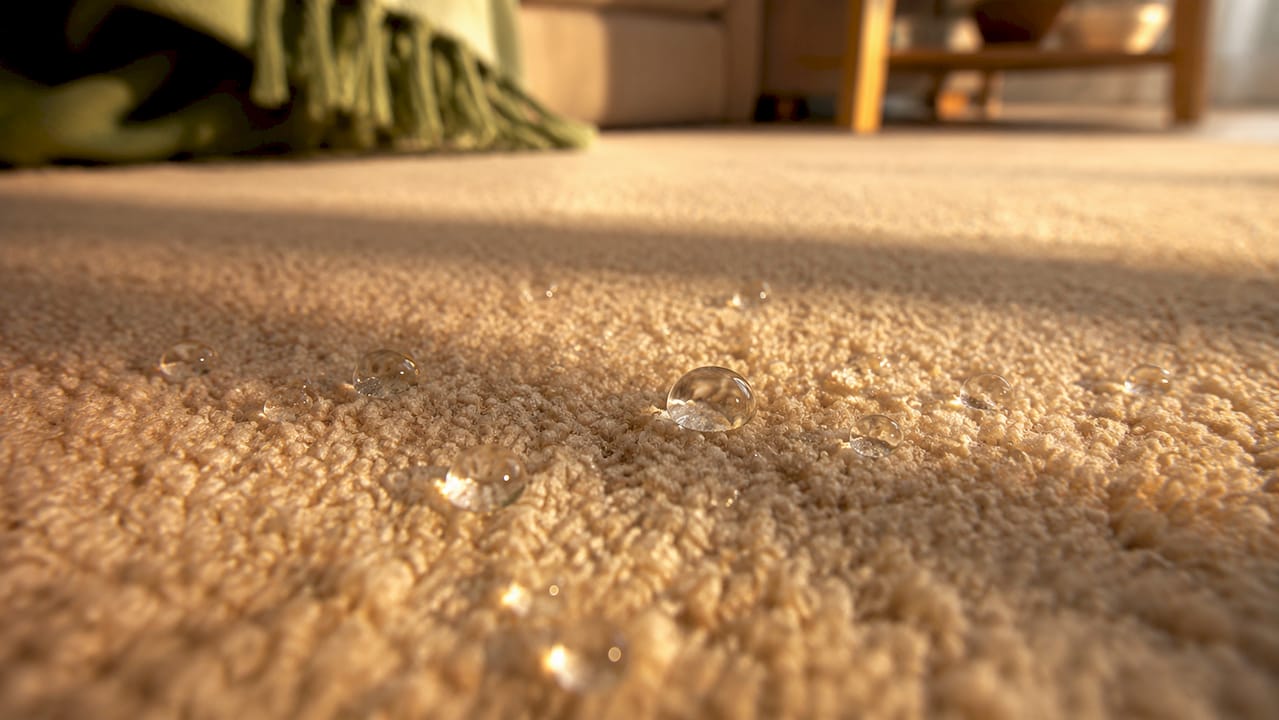
The barrier also keeps dry soil from bonding tightly to fibers. Loose soil stays near the surface rather than grinding into the pile. That means your vacuum pulls out far more dirt per pass. Protectant treatment makes vacuuming up to 50% more effective at removing dry soil, which directly reduces the abrasive wear that shortens carpet life.
Two main chemistries power carpet protectants today:
- Fluoropolymer-based protectants (such as traditional Scotchgard formulas) alter surface energy to repel both water-based and oil-based spills. They also act as acid dye blockers, which is especially useful for nylon carpets where dye staining is a real risk.
- Fluorine-free protectants use silicone or modified acrylic chemistry. They meet tighter environmental regulations and are increasingly the professional standard. They require slightly higher application rates to match the performance of fluoropolymer formulas, but modern versions perform well in real-world conditions.
Timing matters as much as chemistry. Protector bonds most effectively when applied immediately after professional extraction cleaning, while fibers are open and slightly damp. Applying it to dry or soiled carpet reduces penetration and leaves uneven coverage.
Pro Tip: Ask your cleaning technician to apply protectant during the same visit as your deep clean. You get better bonding, and you avoid paying for a second mobilization.
What are the main benefits of carpet protector treatment for homeowners?
The practical benefits of carpet protector treatment go well beyond spill resistance. Here are the most meaningful advantages for homeowners:
- More time to respond to spills. Because liquids bead on the surface instead of soaking in, you have a longer window to blot a spill before it sets. That extra time is the difference between a clean carpet and a permanent stain.
- Better vacuuming results. Dry soil stays on top of protected fibers rather than embedding in the pile. Your regular vacuuming removes more debris per session, keeping carpets looking cleaner between professional visits.
- Slower fiber deterioration. Soil particles act like sandpaper on carpet fibers every time someone walks across them. Protectant reduces how much soil bonds to fibers, which directly slows this abrasive wear. Wool rugs and high-traffic synthetic carpets benefit most from this protection.
- No change to look or feel. Protector does not alter carpet texture or appearance when a professional applies it correctly and allows it to dry fully. You get the protection without any stiffness or residue.
- Safer chemistry for your family. Modern fluorine-free formulas comply with California’s PFAS restrictions and are designed to be safe for children and pets. The shift away from older fluoropolymer compounds means you get protection without the environmental trade-off.
The single most important thing to understand is that protectant treatment extends the window for cleanup. It does not eliminate staining risk. Prompt action on spills remains non-negotiable.
What types of carpet protector treatments are available?
Carpet protectants fall into two broad categories, and the differences between them matter for both performance and safety.
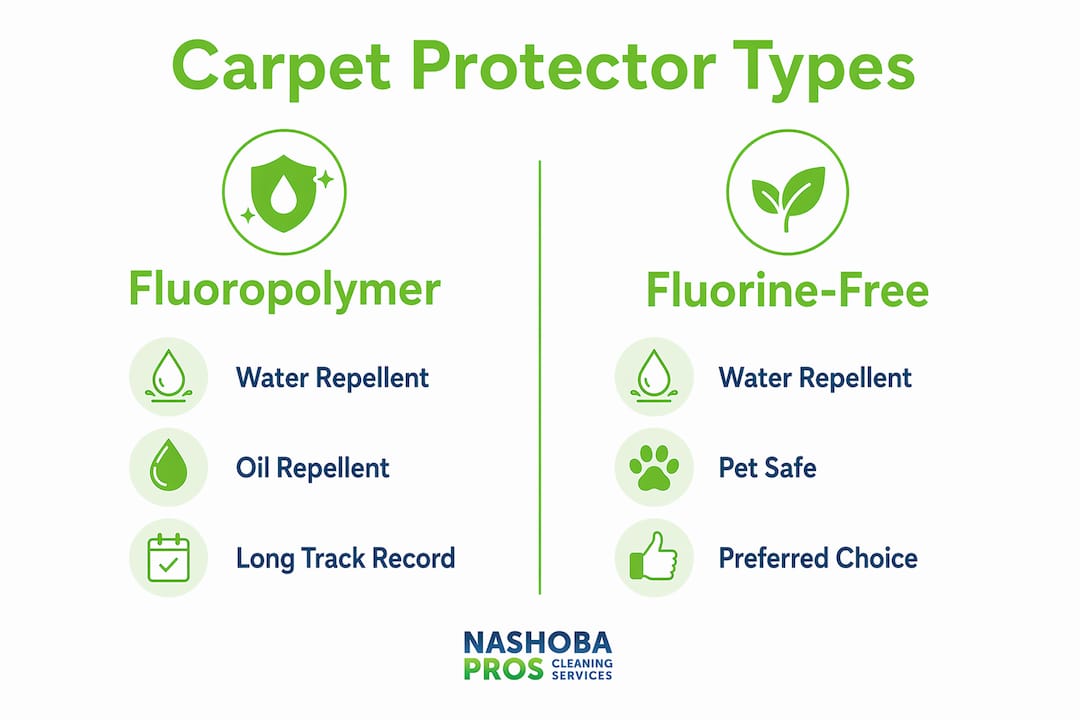
| Feature | Fluoropolymer-based | Fluorine-free |
|---|---|---|
| Repels water-based spills | Yes | Yes |
| Repels oil-based spills | Yes | Varies by formula |
| Acid dye blocking | Yes | Limited |
| PFAS compliance | No | Yes |
| Application rate | Standard | Slightly higher |
| Best for | Nylon, high-traffic synthetic | All fiber types, family homes |
Fluoropolymer protectants have a long track record. They block both water and oil spills effectively and provide acid dye resistance that benefits nylon carpets. However, PFAS compounds in older formulas have drawn regulatory scrutiny, and many professional cleaners have moved away from them.
Fluorine-free formulas using silicone or modified acrylics are now the preferred choice for homeowners who want protection without PFAS exposure. Modern fluorine-free products retain strong performance while meeting current environmental standards. They work well on wool, nylon, polyester, and blended carpets.
Pro Tip: When booking a professional cleaning, ask specifically whether the protectant formula is PFAS-free. A reputable provider will know the answer immediately. If they cannot tell you, that tells you something important about how they operate.
Nashobapros uses pet-safe and family-safe products on every job, which means the protectants applied in your home meet modern safety standards without compromising effectiveness.
How and when should carpet protector treatment be applied?
Timing and application conditions determine how well protectant performs over time. Getting these details right is what separates a treatment that lasts from one that wears off in weeks.
- Apply immediately after professional cleaning. Fibers are open and clean after extraction cleaning, which allows the protectant to coat evenly and bond properly. This is the single most important timing rule.
- Never apply to dry or soiled carpet. Dirt on fibers blocks the protectant from bonding. Dry fibers absorb the product unevenly. Both conditions reduce effectiveness significantly.
- Expect the treatment to wear off. Protectant is a topical coating, not a permanent finish. Foot traffic, vacuuming, and routine cleaning all degrade it gradually. High-traffic zones like hallways and entryways lose protection faster than bedrooms.
- Plan for reapplication every 12–18 months. Most professional cleaners recommend reapplying protectant on the same schedule as your deep cleaning visits. This keeps protection consistent without over-spending.
- Focus reapplication on high-use areas. Professionals often concentrate protectant on hallways, living room traffic lanes, and stairs rather than treating every square foot equally. This approach balances cost and protection where it matters most.
Pairing your protectant application with a scheduled professional carpet cleaning visit is the most cost-effective way to maintain both the treatment and the carpet itself.
What maintenance practices should homeowners follow alongside carpet protector treatment?
Carpet protectant is part of a maintenance system, not a replacement for one. Protector works best as part of a routine that includes regular vacuuming, prompt spill response, and periodic professional cleaning.
- Vacuum at least twice a week in high-traffic areas. Protected fibers hold soil near the surface, so vacuuming removes it before it can work its way deeper. Skipping vacuuming wastes the advantage the protectant gives you.
- Blot spills immediately. Protector delays staining but does not prevent it. Blot from the outside of the spill toward the center using a clean white cloth. Never rub, as rubbing spreads the spill and pushes it deeper into the pile.
- Use entry mats and area rugs at high-traffic points. Mats at exterior doors catch grit and moisture before they reach your carpet. This reduces the rate at which protectant wears away in those zones.
- Schedule professional cleaning regularly. Routine professional extraction removes the embedded soil that vacuuming cannot reach. It also gives you the opportunity to reapply protectant on clean fibers. Learning how often carpets need professional cleaning helps you plan this correctly.
Pro Tip: Set a calendar reminder for your next professional cleaning at the same time you book the current one. Most homeowners wait until carpets look dirty, but by then, the protectant has already worn off and soil has been grinding into fibers for months.
Key takeaways
Carpet protector treatment is most effective when applied by a professional immediately after deep cleaning, maintained with regular vacuuming, and reapplied every 12–18 months in high-traffic areas.
| Point | Details |
|---|---|
| How protectant works | It lowers fiber surface energy so spills bead up instead of soaking in immediately. |
| Vacuuming benefit | Protected fibers keep soil near the surface, making vacuuming significantly more effective at removal. |
| Best application timing | Apply immediately after professional extraction cleaning on slightly damp, clean fibers. |
| Reapplication frequency | Plan for reapplication every 12–18 months, focusing on high-traffic zones first. |
| Realistic expectations | Protectant delays staining and reduces wear. It does not make carpets stain-proof. |
What I’ve learned after years of seeing carpet protectant done right and wrong
After three decades of working in homes across Westford and the Nashoba Valley, I have seen carpet protectant applied well and applied badly. The difference in outcomes is striking.
The biggest misunderstanding homeowners have is treating protectant as a one-time fix. They get it applied once, assume the carpet is covered indefinitely, and then wonder why a spill stains two years later. Protectant is a renewable layer of defense, not a permanent finish. The homes where carpets hold up the best are the ones where owners treat protectant as a scheduled maintenance step, not a one-off upgrade.
The second thing I see consistently is that the quality of the cleaning underneath the protectant matters enormously. Applying protectant over a carpet that was not fully cleaned is like painting over rust. The product cannot bond properly, and it wears off faster. This is why I always recommend combining protectant application with a thorough professional extraction clean on the same visit.
Modern fluorine-free formulas have genuinely improved. Homeowners sometimes push back on switching away from older fluoropolymer products because they remember how well those worked. The newer chemistry performs comparably in real home conditions, and the safety profile for kids and pets is meaningfully better. That trade-off is worth making.
The homes that get the most out of carpet protectant are the ones where the owner also vacuums consistently and blots spills fast. Protectant gives you more time and more margin for error. It does not give you permission to ignore your carpet.
— Jim
Nashobapros can apply carpet protectant the right way
Nashobapros has been cleaning carpets in Westford, MA and the surrounding communities for over 30 years. Every carpet cleaning visit includes the option to apply a professional-grade, family-safe protectant immediately after extraction, which is exactly when it works best.

If you are not sure how often your carpets need professional attention, the carpet cleaning frequency guide on the Nashobapros website walks you through the right schedule based on your household. All products used are pet-safe and PFAS-conscious, so you get real protection without worrying about what is left behind. Call or book online to schedule your next cleaning with protectant treatment included.
FAQ
What is carpet protector treatment exactly?
Carpet protector treatment is a topical coating applied to carpet fibers that lowers their surface energy, causing spills to bead up rather than absorb immediately. It also prevents dry soil from bonding deeply to fibers, making vacuuming more effective.
How long does carpet protectant last?
Carpet protectant typically lasts 12–18 months under normal household conditions. High-traffic areas like hallways wear through the treatment faster and may need reapplication sooner.
Does carpet protector treatment change how carpet feels?
No. When applied correctly by a professional and allowed to dry fully, protectant does not alter the texture or appearance of your carpet in any noticeable way.
Is carpet protector treatment safe for kids and pets?
Modern fluorine-free protectant formulas are designed to be safe for children and pets. These products comply with current PFAS regulations and replace older fluoropolymer compounds that raised environmental concerns.
Is carpet treatment worth it for every home?
Carpet protectant delivers the most value in homes with children, pets, or high-traffic areas where spills and soil are frequent. For low-traffic rooms or carpets nearing replacement, the cost-benefit is less clear. Wool rugs and quality synthetic carpets in active households benefit most.