

Upholstery Fabric Types Professionally Cleaned: A Homeowner’s Guide
Common upholstery fabric types cleaned professionally include natural fibers like cotton, linen, and wool; synthetics such as polyester and microfiber; delicate materials like velvet and silk; and leather. Each fabric reacts differently to water, solvents, and heat, which is why professional upholstery cleaning relies on industry-standard care codes (W, S, WS, and X) to match the right method to the right material. Getting this wrong causes shrinkage, spotting, or permanent color loss. Getting it right extends your furniture’s life by years.
1. Common upholstery fabric types cleaned professionally: an overview
Professionals begin every job with fabric identification and pre-treatment tailored to the care code, rejecting any one-size-fits-all approach. The care tag sewn into your cushion or frame is the starting point. Code W means water-based cleaning is safe. Code S means solvent-only. Code WS permits both. Code X means vacuum only, no liquids at all. Using the wrong liquid on an S or X coded fabric causes spotting, shrinkage, or permanent damage. Knowing your code before calling a cleaner saves you from an expensive mistake.
2. Natural fabrics: cotton, linen, and wool
Natural fibers are popular for their look and breathability, but they require careful moisture control during professional cleaning.
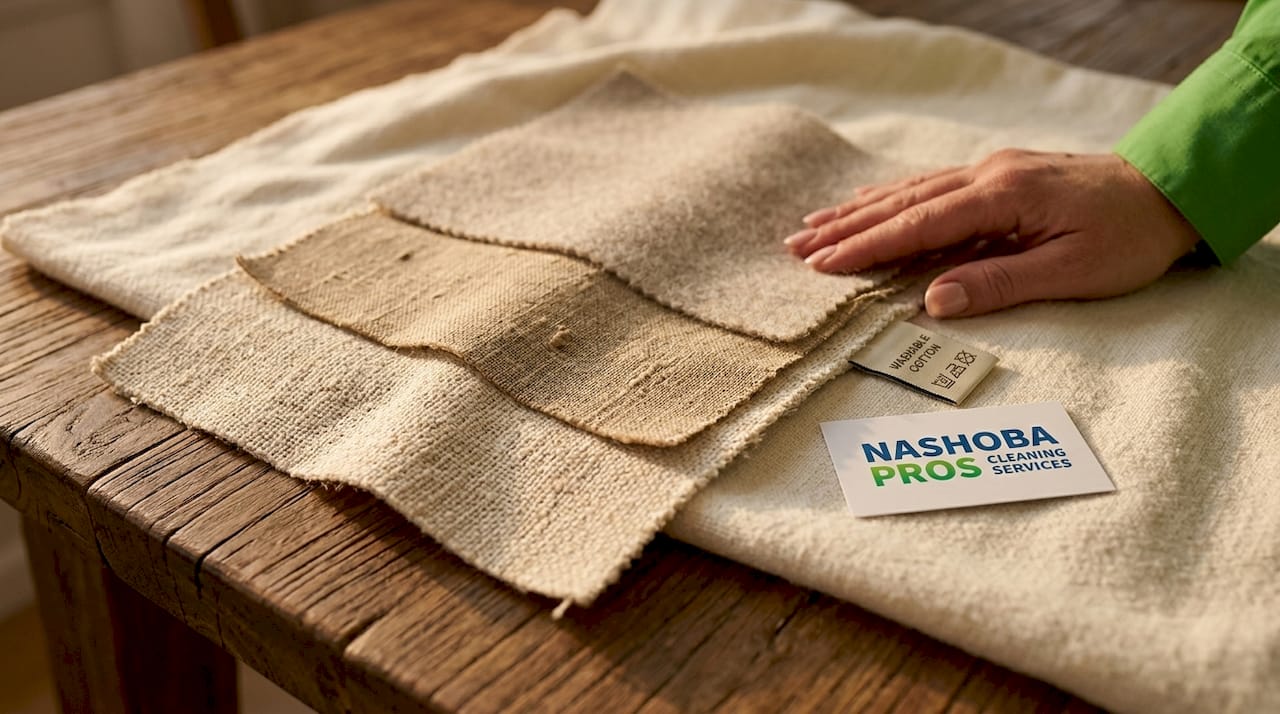
Cotton carries a W or WS code in most cases. Water-based cleaning works, but cotton is stain-prone and absorbs liquids fast. Professionals blot rather than rub, working from the outside of a stain inward to prevent spreading. Natural fibers need cautious moisture control; over-wetting cotton leads to watermarks and mildew in the cushion core.
Linen has an elegant texture but is more delicate than cotton. Professionals prefer minimal moisture methods, often using low-moisture foam or dry-compound cleaning to lift soil without saturating the weave. Linen wrinkles and distorts easily when wet, so controlled application is non-negotiable.
Wool is the most sensitive of the three. Alkaline cleaners cause wool fibers to felt and shrink, so professionals use pH-neutral or mild solvent-based solutions. Wool typically carries an S or WS code. Aggressive scrubbing breaks the fiber structure, so pros use soft brushes and light passes.
Pro Tip: Check the care tag on every cushion, not just the sofa frame. Cushion covers and the base fabric sometimes carry different codes.
Key risks for natural fabrics:
- Over-wetting leads to mildew and drying problems inside foam cores
- Rubbing spreads stains and damages fiber structure
- Alkaline cleaners destroy wool fibers permanently
- Heat from steam can shrink cotton and linen if dwell time is not controlled
3. Synthetic fabrics: polyester, microfiber, and nylon
Synthetics are the most forgiving category for professional cleaning, but they still have specific requirements.
- Polyester resists stains and moisture better than natural fabrics. Water-based cleaning is safe and preferred. Hot water extraction, the same method used in professional carpet cleaning, works well on polyester upholstery with a WS code.
- Microfiber traps oils and fine particles deep in its weave. Microfiber often needs solvent cleaning to remove cosmetic stains like makeup or body oil that water-based methods leave behind. Water-based solutions handle general soil effectively, but solvent-based products outperform them on grease.
- Nylon is durable and colorfast, tolerating both water and solvent cleaning. Professionals test colorfastness on a hidden area before full treatment regardless of code, since dye lots vary by manufacturer.
- Acrylic mimics wool’s appearance but handles moisture far better. Water-based extraction is standard. Acrylic rarely shrinks, making it one of the easiest synthetic fabrics to clean professionally.
Steam cleaning is safe only on fabrics with water-compatible codes, and professionals control dwell time and moisture extraction carefully to prevent mildew. Over-wetting foam cores is the most common error, even with synthetics. Pros work in sections and use strong suction immediately after applying moisture.
Pro Tip: If your microfiber sofa has a W code but water leaves rings, ask your cleaner about a solvent-based pre-treatment before extraction. It makes a visible difference on oil-based stains.
4. Delicate and specialty fabrics: velvet, silk, and vintage textiles
These fabrics require professional expertise. DIY attempts almost always cause damage.
Velvet is the most misunderstood upholstery fabric. Water-based cleaning flattens the pile and leaves visible watermarks. Silk upholstery is not safe for wet cleaning and demands solvent or professional dry cleaning. The same principle applies to velvet: solvent cleaning preserves the pile direction and prevents marks. Velvet carries an S code in most cases.
Silk is the most fragile upholstery fabric in common use. It carries an S or X code almost universally. Any moisture causes water staining, and mechanical agitation breaks silk fibers. Professional dry cleaning or solvent-only spot treatment is the only safe approach.
Antique and vintage textiles present the greatest risk. Fibers weaken with age, dyes become unstable, and backing materials may dissolve with certain solvents. A professional evaluation before any cleaning is mandatory. Many antique pieces carry an X code by default, meaning vacuuming with a low-suction upholstery attachment is the only safe maintenance.
Common homeowner mistakes with delicate fabrics:
- Applying water to velvet or silk and rubbing to remove a stain
- Using store-bought foam cleaners on S-coded fabrics
- Skipping the care tag and assuming all fabric cleans the same way
- Using steam on vintage textiles without professional guidance
5. Leather and faux leather upholstery care
Leather is not a fabric, but it is one of the most common upholstery materials professionals clean, and it has its own set of rules.
Leather cleaning requires mild solvent or specialized leather products and conditioning after every cleaning to prevent drying and cracking. Excess water causes leather to stiffen, crack, and lose its natural oils over time. Professionals never use alkaline detergents or steam directly on leather.
Faux leather (also called PU leather or bonded leather) tolerates moisture better than genuine leather, but abrasive cleaning tools scratch and peel the surface coating. Professionals use soft cloths and pH-neutral solutions. Faux leather does not require conditioning, but it does need gentle handling to preserve the surface layer.
Routine care tips for both types:
- Wipe spills immediately with a dry cloth; never let liquid sit
- Condition genuine leather every 6 to 12 months to maintain suppleness
- Avoid direct sunlight, which dries and fades both leather and faux leather
- Schedule professional cleaning every 12 to 18 months for leather in regular use
Pro Tip: After professional leather cleaning, apply a quality leather conditioner within 24 hours while the pores are still open. It absorbs better and protects longer.
6. Upholstery cleaning codes and methods compared
Matching cleaning method to upholstery code is the single most critical factor in avoiding damage and achieving effective results. The table below summarizes how to choose the right upholstery cleaning method by fabric type.
| Code | Meaning | Example fabrics | Professional method |
|---|---|---|---|
| W | Water-based cleaning only | Cotton, polyester, nylon | Hot water extraction, low-moisture foam |
| S | Solvent-based cleaning only | Wool, velvet, silk | Dry solvent cleaning, dry compound |
| WS | Water or solvent, either safe | Linen, microfiber, acrylic | Extraction or solvent depending on stain type |
| X | Vacuum only, no liquids | Antique textiles, some velvets | Low-suction vacuuming, professional evaluation |
Ignoring these codes is the most common reason homeowners damage furniture during DIY cleaning. A W-coded polyester sofa handles hot water extraction without issue. The same method on an S-coded wool chair causes immediate shrinkage. The code is not a suggestion. It is the manufacturer’s tested guidance for that specific fabric construction.
Key takeaways
Professional upholstery cleaning depends on identifying fabric type and matching the correct cleaning method to the care code, because no single method works safely across all materials.
| Point | Details |
|---|---|
| Care codes drive method selection | Codes W, S, WS, and X determine whether water, solvent, or vacuum-only cleaning applies. |
| Natural fibers need moisture control | Cotton, linen, and wool require minimal moisture and pH-neutral products to avoid shrinkage or damage. |
| Synthetics tolerate more, but not everything | Polyester and microfiber handle water well, but microfiber often needs solvent treatment for oil-based stains. |
| Delicate fabrics require professional-only care | Velvet, silk, and vintage textiles carry S or X codes and are damaged by DIY water-based attempts. |
| Leather needs conditioning after every cleaning | Skipping conditioner after professional leather cleaning accelerates drying and cracking. |
What 30 years of cleaning upholstery has taught me
Most homeowners damage their furniture before they ever call a professional. They see a stain, grab whatever cleaner is under the sink, and scrub. By the time I arrive, the stain has spread, the fabric is distorted, and the care tag has been cut off. That last part happens more than you would think.
The single most useful habit any homeowner can develop is reading the care tag before touching a stain. I have seen beautiful wool chairs ruined by water and a paper towel. I have seen silk cushions destroyed by foam upholstery spray from a hardware store. Neither of those outcomes was inevitable. Both were caused by skipping one step.
The other mistake I see constantly is waiting too long between professional cleanings. Deep professional cleaning is recommended every 3 to 6 months depending on fabric type and household use. Most homeowners wait years. By that point, embedded soil and allergens have worked into the fiber structure, and DIY attempts spread residue rather than remove it. A sofa that gets professional attention twice a year looks and smells noticeably better than one that gets cleaned once every three years, even if both receive the same daily use.
Fabric protector treatments applied after professional cleaning are worth the cost on natural fiber upholstery. They do not make fabric stain-proof, but they slow absorption enough to give you time to blot a spill before it sets. On cotton and linen especially, that extra few minutes makes a real difference.
— Jim
Ready to protect your upholstery? Nashoba Pros can help
Nashoba Pros has been cleaning upholstery in Westford, MA and the surrounding Nashoba Valley communities for over 30 years. Every job starts with fabric identification and care code verification, so the right method is used on your specific material. No guessing, no generic treatments. The team uses pet-safe and family-safe products on every job, and the work is backed by a 100% satisfaction guarantee. Whether you have a microfiber sectional, a wool accent chair, or a leather sofa that needs conditioning, Nashoba Pros has the equipment and experience to handle it. Explore the professional cleaning guide or book a free quote online today.
FAQ
What are the most common upholstery fabric types?
The most common upholstery fabrics are cotton, linen, wool, polyester, microfiber, velvet, and leather. Each carries a specific care code that determines which professional cleaning method is safe.
How do I know which cleaning method is right for my fabric?
Check the care tag on your furniture for a code: W (water-based), S (solvent-only), WS (either), or X (vacuum only). A professional cleaner uses this code to select the correct treatment and avoid damage.
Can all upholstery fabrics be steam cleaned?
No. Steam cleaning is safe only on fabrics with W or WS codes. Velvet, silk, wool, and X-coded antique textiles are damaged by steam and require solvent or vacuum-only care.
How often should upholstery be professionally cleaned?
Professional cleaning every 3 to 6 months is the standard recommendation for most fabrics in regular household use. Leather requires less frequent cleaning but benefits from conditioning at least once a year.
Is microfiber safe to clean with water?
Microfiber handles water-based cleaning well for general soil, but solvent-based solutions remove cosmetic and oil-based stains more effectively. A professional will often combine both methods depending on the stain type.