

Carpet Fiber Cleaning Requirements: A 2026 Homeowner’s Guide
Each carpet fiber type carries its own cleaning requirements, and using the wrong method or chemical can cause permanent damage. The types of carpet fiber cleaning requirements vary significantly across wool, nylon, polyester, triexta, and olefin, so knowing your fiber before you clean is the single most important step you can take.
Here is a quick-reference overview of what each fiber demands:
- Wool: Acid or near-neutral pH cleaners only, WoolSafe-approved products, fast drying to prevent felting. Chlorine bleach dissolves wool completely.
- Nylon: Tolerates a wider pH range but alkaline cleaners and cationic surfactants can strip acid dye blockers and cause color loss. Stain protector reapplication recommended after every third professional extraction cleaning.
- Polyester: Hydrophobic and oil-attracting. Water-based spotters alone will not remove oily traffic-lane buildup. Requires solvent or emulsifying agents. Bonnet cleaning typically voids the manufacturer’s warranty.
- Triexta (SmartStrand): Similar to polyester but more prone to sticky residue resoiling. Use only water-rinse extraction or dry compound extraction with SOA-approved products and pump pressure at or below 300 psi.
- Olefin: Bleach-resistant and colorfast, but the most heat-sensitive of all synthetic fibers. Friction from heavy furniture can literally burn streaks into the pile. Needs surfactant-heavy presprays designed specifically for oil-loving fibers.
Hot water extraction (HWE) using CRI Seal of Approval certified equipment and solutions is the most recommended professional cleaning method for residential carpet across all fiber types, though the chemistry and temperature settings must be adjusted per fiber.
What are the main carpet fiber types you will encounter?
Most residential carpet in the United States falls into one of five fiber categories. Understanding their physical traits tells you a lot about how they will behave under cleaning stress.
- Wool is a natural protein fiber from sheep fleece. It is soft, resilient, and naturally flame-resistant, which is why you find it in high-end residential installations and occasionally in large commercial spaces like casinos. Its absorbency is high, meaning it holds water and dries slowly.
- Nylon was the dominant residential fiber from the late 1960s through roughly 2010. It is the most resilient synthetic, recovering well from foot traffic and responding well to heat during extraction. Today it remains the fiber of choice for virtually all commercial carpet.
- Polyester has overtaken nylon as the leading residential fiber. It feels soft and plush, costs less, and resists water-based stains well. The trade-off is poor resilience: polyester stays crushed in traffic lanes and attracts oily soils that water alone cannot lift.
- Triexta, sold under the brand name SmartStrand by Mohawk, is a polyester variant with improved resilience and built-in stain resistance. It shares polyester’s oil-loving tendencies and is even more prone to sticky residue buildup after cleaning.
- Olefin (polypropylene) is solution-dyed, making it highly colorfast and bleach-resistant. It is common in Berber loops and outdoor or high-humidity installations. Of all synthetic fibers, olefin is the most sensitive to heat and the least resilient under abrasion.
Pro Tip: In a commercial setting, assume nylon unless you have confirmed otherwise. Residentially, polyester and triexta are now the most likely fibers you will encounter.
Cleaning requirements by carpet fiber type
This is where fiber knowledge pays off. The right chemistry for one fiber can ruin another.
Wool
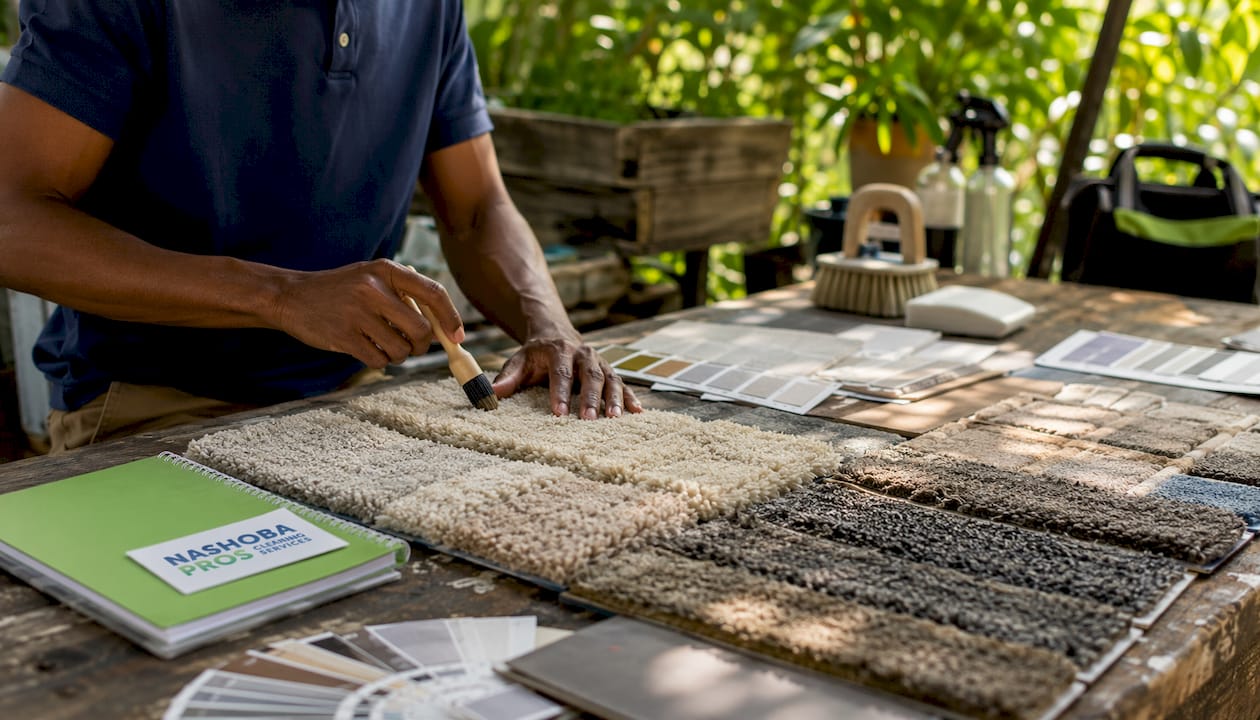
Wool’s cleaning challenge is alkalinity, not just pH. A cleaner can sit within a considered safe pH range and still cause felting if it is unbuffered. Alkalinity management is crucial, so use WoolSafe-approved products and avoid chlorine bleach. After cleaning, accelerate drying with air movers because wool holds moisture long enough to develop mildew or browning if left to dry slowly. For detailed wool-specific protocols, the wool rug care guide from Nashobapros covers the full process.
Nylon
Nylon tolerates more cleaning aggression than most fibers, but its acid dye blocker is the weak point. Strong alkalines, cationic surfactants, and optical brighteners all degrade that blocker, leaving the fiber vulnerable to staining. Use acidic to neutral pH chemistry and finish with an acid-neutralizing rinse. Nylon cleaned on a regular schedule in residential settings restores to near-new condition because the heat from extraction causes the fiber to refluff. Apply a fluorochemical carpet protector at minimum every third extraction cleaning to maintain stain resistance.
Polyester and triexta
Both fibers are hydrophobic and oleophilic, meaning they repel water but hold onto oil. Oily soils trapped in these fibers create what looks like permanent traffic lanes, but the damage is usually reversible with the right solvent or emulsifying prespray. Water-based spotters alone will not do it. For triexta specifically, use only water-rinse extraction or dry compound extraction, keep pump pressure at or below 300 psi, and use SOA-approved products to protect the warranty. Bonnet cleaning on either fiber typically voids manufacturer specifications.
Olefin
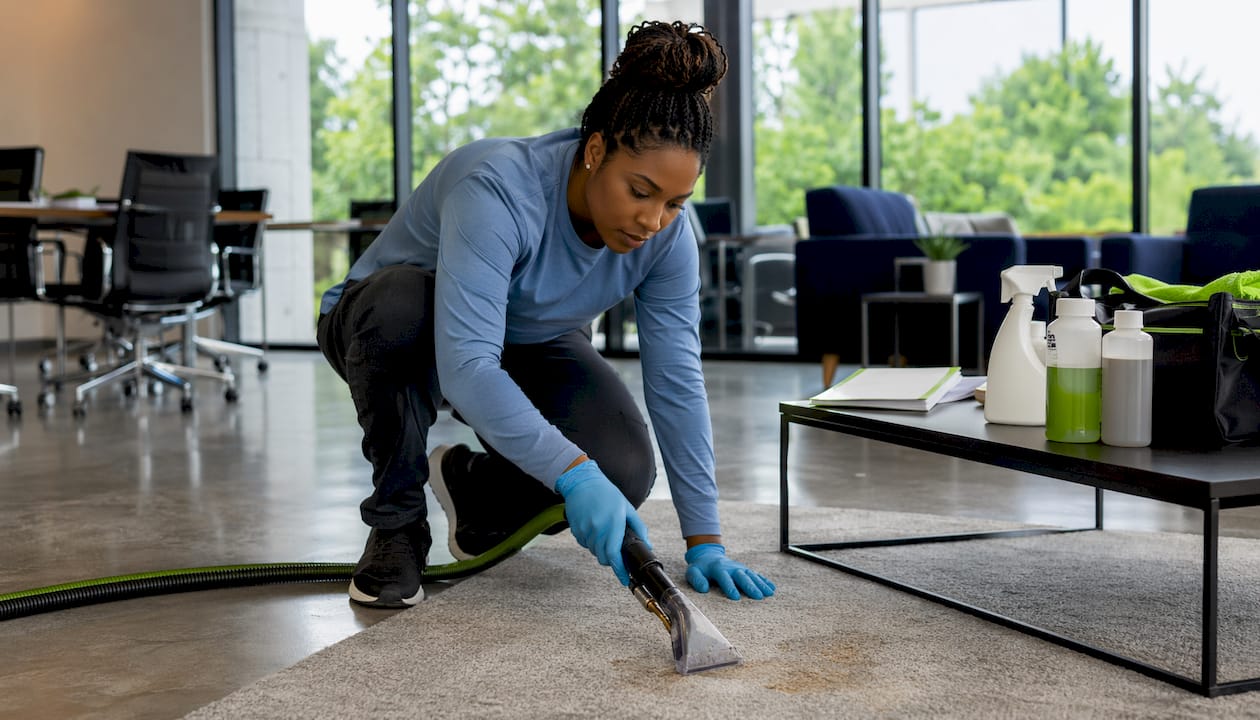
Olefin is bleach-resistant and colorfast, which sounds like a cleaning advantage until you realize it is also the most heat-sensitive fiber in the group. Hot hoses from truck-mounted units can distort olefin pile. Friction from dragging furniture creates burn marks. The fiber also attracts oily soils aggressively, so standard detergents leave it looking gray and dull. Use presprays formulated specifically for olefin, prioritize thorough extraction, and keep equipment temperatures controlled. Bonnet cleaning may void the warranty here too.
| Fiber | Safe pH Range | Preferred Method | Key Vulnerability |
|---|---|---|---|
| Wool | acid or near-neutral pH | HWE with acid rinse, dry compound | Alkalinity, over-wetting, chlorine bleach |
| Nylon | acidic to neutral pH | HWE with acid-neutralizing rinse | Alkaline stripping of dye blocker |
| Polyester | Tolerant | HWE with solvent/emulsifying prespray | Oily soil buildup, poor resilience |
| Triexta | Tolerant | Water-rinse HWE or dry compound (≤300 psi) | Sticky residue resoiling |
| Olefin | Tolerant | HWE with olefin-specific prespray | Heat damage, oily soil attraction |
Pro Tip: Always pretest any cleaning agent in an inconspicuous area before full application, regardless of fiber type. Even CRI-certified products can affect color on sensitive fibers.
How to identify your carpet fiber before you clean
Getting the fiber wrong before you clean is how expensive mistakes happen. Fiber misidentification can lead to chemical burns on wool from high-pH cleaners or texture loss on heat-sensitive synthetics from aggressive agitation. The IICRC S100 standard treats fiber identification as the foundation of safe cleaning, not an optional step.
Here are the practical methods, starting with the most reliable:
- Burn test: Pull a single fiber from a hidden area, such as inside a closet or under furniture. Touch a flame to it and observe the burn behavior, smell, and residue. This is the most definitive field method.
- Nylon: Burns blue at the base, orange at the tip, smells like celery, leaves a hard gray or brown bead.
- Polyester: Orange flame with black smoke, sweet odor, leaves a firm shiny black bead.
- Olefin: Burns quickly and evenly, smells like asphalt or tar, leaves a hard tan bead.
- Wool: Burns slowly, often self-extinguishes, smells like burnt hair, leaves crushable black ash rather than a hard bead.
- Float-sink test: Drop a fiber into water. Nylon sinks because it is hygroscopic. Olefin floats because it is hydrophobic. This test is especially useful when nylon and olefin produce similar burn results.
- Resilience test: Pinch and crush a tuft, then release it. Nylon springs back quickly. Polyester and olefin stay crushed longer.
- Feel test: Wool feels warm and slightly coarse with natural crimp. Olefin feels slightly waxy or plasticky. Polyester feels soft and smooth. Nylon feels resilient and springy.
- Visual context: Olefin is common in Berber loops and indoor-outdoor carpet. Wool shows natural color variation and appears in higher-end rugs. Polyester dominates soft plush residential styles.
- Blend caution: When a burn test gives ambiguous results, treat the carpet as if it contains the most sensitive fiber present. If wool might be in the blend, clean it wool-safe.
Natural vs. synthetic fibers: what actually makes cleaning harder
The cleaning gap between natural and synthetic fibers comes down to two things: chemical sensitivity and soil attraction.
Wool is chemically fragile in ways synthetics simply are not. Alkaline chemistry causes felting, a physical breakdown of the fiber structure that cannot be reversed. Over-wetting causes browning. Chlorine bleach dissolves it entirely. These are not edge cases; they are predictable outcomes when the wrong product hits wool. Synthetic fibers tolerate a much wider range of chemistry, though each has its own weak point.
The soil story flips the comparison. Synthetics like olefin and polyester attract and hold oily soils in ways that wool does not. Wool has natural lanolin that provides some inherent stain resistance. Olefin and polyester, being oleophilic, pull oily soils deep into the fiber where water-based cleaning agents cannot reach them. The result looks like permanent traffic-lane damage but is usually a chemistry problem, not a fiber-wear problem.
- Wool requires controlled moisture, acid-side chemistry, and fast drying. The cleaning window is narrow.
- Nylon tolerates heat and a wider pH range, making it the most forgiving fiber to clean professionally.
- Polyester and triexta need solvent-based or emulsifying presprays to address oily soils. Water alone resoils them faster.
- Olefin needs surfactant-heavy chemistry and careful heat management. Its lack of resilience means abrasion damage shows up quickly and permanently.
- Cleaning frequency matters by fiber. Nylon in a residential setting benefits from professional cleaning every 6 months to a year. Wool and olefin, being more vulnerable to cumulative soil and heat damage, benefit from scheduled professional attention before soiling becomes visible.
What cleaning professionals know about fiber chemistry that most guides skip
The most common source of carpet damage is not aggressive scrubbing or cheap equipment. It is applying the wrong chemistry to the wrong fiber, often with a product that has a CRI Seal of Approval on the label.
The CRI Seal of Approval certifies soil removal performance under standardized test conditions. It does not guarantee safety for every fiber type. Wool and silk require pH-controlled chemistry that falls outside the testing parameters of most general-use CRI-approved products. A technician who relies on the SOA label alone, without checking fiber compatibility, is working with incomplete information.
Expert Doyle Bloss has written extensively on this point: cleaning is as much about chemistry as procedure. Olefin attracts oily soils while nylon attracts water-soluble soils, so a generic detergent applied to both produces poor results and accelerates resoiling on both. The chemistry has to match the soil type, which has to match the fiber type.
The IICRC’s CCT certification program covers exactly this interplay, including pre-inspection, fiber identification, soil load assessment, and cleaning chemistry pH ranges. It is the credential that separates technicians who understand fiber-specific cleaning from those who apply one method to everything.
A few professional-grade practices worth knowing:
- Apply a fluorochemical carpet protector after every third extraction cleaning on nylon, polyester, triexta, and olefin. Even on “stain-resistant” synthetics, protectors reduce oil-based soiling and extend the cleaning interval.
- Never use rotary cleaning equipment on carpet. The CRI 205 residential standard explicitly lists rotary machines as not recommended because horizontal spinning motion distorts pile and causes uneven wear.
- For wool, measure pH directly from the face yarn with a flat-surface pH meter rather than relying on the product label. Acid-dyed wool can bleed even at pH 6.5 with buffered detergents.
- When fiber type is uncertain, default to the gentlest approach: cooler water, near-neutral chemistry, controlled moisture, and thorough extraction. You can always clean more aggressively on a second pass. You cannot undo browning or shrinkage from guessing wrong.
- Carpet construction affects cleaning outcomes as much as fiber type. Pile height, density, and heat-set all influence how aggressively you can clean without causing texture damage.
Key Takeaways
Every carpet fiber type demands a different cleaning approach, and applying the wrong chemistry or method to the wrong fiber causes damage that is often permanent.
| Point | Details |
|---|---|
| Fiber identification comes first | Run a burn test or resilience test before choosing any cleaning method or chemistry. |
| Wool needs alkalinity management | Even buffered cleaners within the pH acid or near-neutral pH range can cause felting if not properly formulated. |
| Polyester and olefin attract oil | Water-based spotters alone leave oily soils behind, creating traffic-lane buildup that needs solvent presprays. |
| CRI approval does not mean fiber-safe | The Seal of Approval certifies soil removal performance, not safety for delicate fibers like wool. |
| Nylon cleans best on a schedule | Residential nylon benefits from professional extraction every 6 months to a year to maintain resilience and appearance. |
Ready for fiber-specific carpet cleaning in the Nashoba Valley area?
Nashobapros has been cleaning carpets in Westford, MA and the surrounding communities for over 30 years. Every job starts with a proper fiber identification and a walk-through inspection, because the right chemistry for your carpet depends entirely on what it is made of. All products are pet-safe and family-safe, and every job is backed by a 100% satisfaction guarantee.
If you are in the Nashoba Valley area and want a free quote, book your cleaning online or give us a call. Most jobs can be scheduled quickly, and you can check how often your carpet needs professional cleaning to plan ahead by fiber type.