

Wet Cleaning Upholstery Explained for Homeowners
Wet cleaning upholstery is defined as a water-based cleaning method that injects a heated solution into fabric fibers and extracts it along with embedded dirt, oils, allergens, and odor-causing residues. The industry-standard technique for this process is hot water extraction, recognized by the IICRC as the most thorough method for fabrics labeled with W or W/S cleaning codes. Unlike surface wiping or vacuuming, wet cleaning reaches deep into the fiber structure where soils accumulate over months of use. Understanding what is wet cleaning upholstery explained correctly means knowing that the method only works safely when matched to the right fabric type and applied with proper equipment.
How does the wet cleaning process work on upholstery?
Wet cleaning follows a structured sequence that separates professional results from DIY attempts. Each step builds on the last, and skipping any one of them raises the risk of damage or mildew.
- Inspection. A technician examines the fabric for cleaning codes, stains, and areas of wear. This step determines which solution concentration and water temperature are safe to use.
- Pre-treatment. A targeted cleaning agent is applied to heavily soiled areas, pet stains, or odor zones. The solution loosens bonds between soils and fibers before the main cleaning begins.
- Agitation. A soft brush or upholstery tool works the pre-treatment into the fabric. This step lifts embedded particles without distorting the weave.
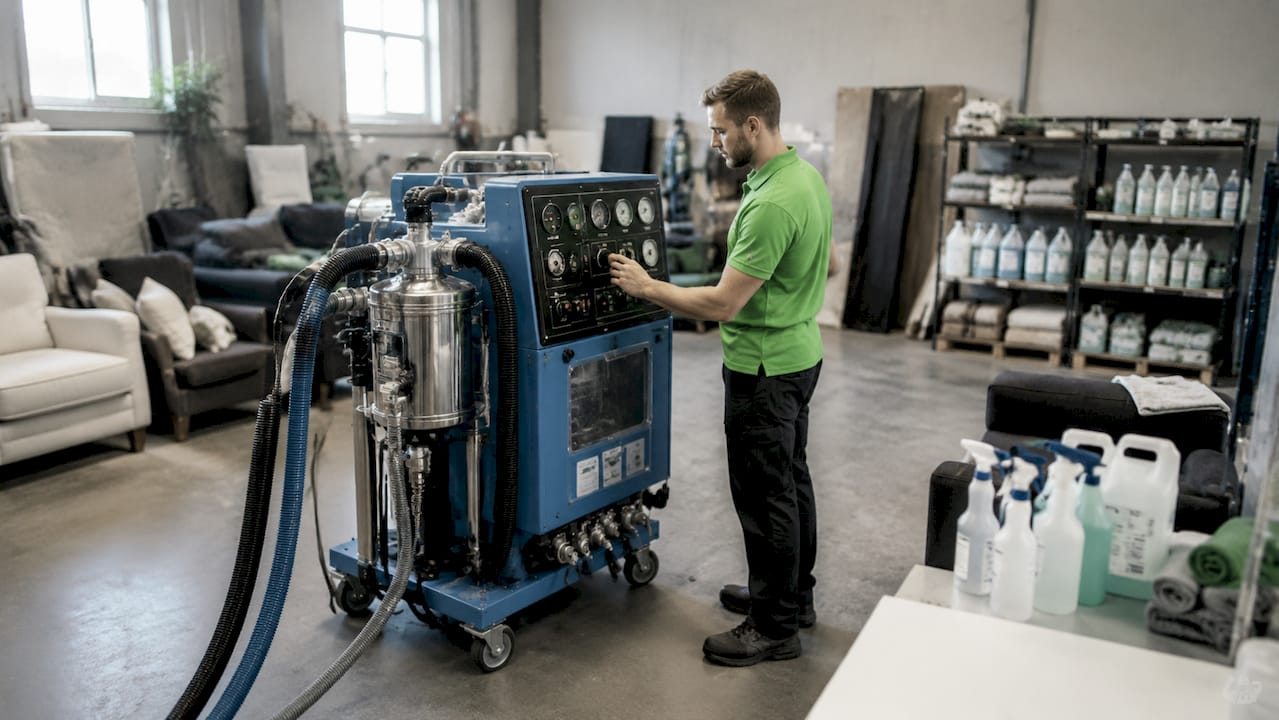
- Hot water extraction. The machine injects a heated cleaning solution and simultaneously vacuums it back out. IICRC-certified extraction uses higher temperatures and stronger suction than any consumer rental unit, which is why professional results differ so noticeably from home attempts.
- Dry strokes. After extraction, the technician makes additional vacuum passes with no solution. This dry stroke phase is the single most effective step for pulling residual moisture out of cushion cores, especially in humid climates where mildew risk is high.
- Final inspection. The technician checks for remaining spots, confirms even drying, and addresses any areas that need a second pass.
Professional equipment reaches temperatures and suction levels that consumer machines cannot match. That gap in performance directly affects drying time. Professional hot water extraction achieves drying times of 2–4 hours, while improper DIY wet cleaning risks mildew because moisture stays trapped in the cushion longer.
Pro Tip: After wet cleaning, open windows and run a ceiling fan or portable fan directed at the furniture. Air circulation cuts drying time significantly and prevents that musty smell from developing in the cushion core.
What upholstery fabrics are suitable for wet cleaning?
Fabric suitability is the single most important factor before any cleaning attempt. Manufacturers attach cleaning codes to upholstery tags, and those codes are not suggestions. They reflect how the fabric and its backing materials respond to moisture and solvents.
Manufacturer cleaning codes divide upholstery into four categories:
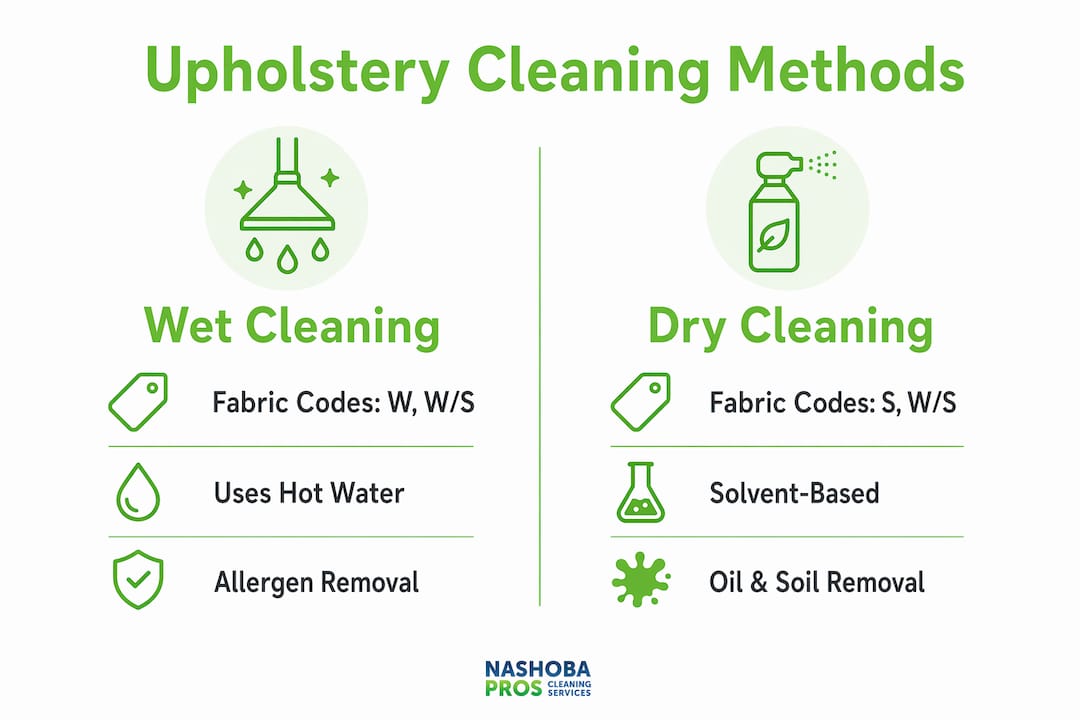
- W (Water-based cleaners only). These fabrics are safe for wet cleaning and hot water extraction. Most synthetic microfibers, polyester blends, and solution-dyed nylons carry a W code.
- W/S (Water or solvent-based cleaners). These fabrics tolerate both methods. A professional can choose the approach best suited to the type of soil present.
- S (Solvent-based cleaners only). Water causes damage on S-coded fabrics. Applying wet cleaning to an S-coded piece risks shrinkage, dye migration, and water rings that do not reverse.
- X (Vacuum or brush only). No liquid cleaner of any kind is safe on X-coded upholstery. Wet cleaning X-coded fabrics risks permanent damage including delamination, where the fabric separates from its backing material.
| Cleaning code | Safe for wet cleaning? | Recommended method |
|---|---|---|
| W | Yes | Hot water extraction |
| W/S | Yes | Water or solvent, based on soil type |
| S | No | Solvent-based dry cleaning only |
| X | No | Vacuuming and light brushing only |
Codes provide a reliable starting point, but they are not the complete picture. Testing a hidden spot before full cleaning is standard practice because mixed-material construction, aged dyes, and manufacturer inconsistencies can cause unexpected reactions even on W-coded pieces. Check the tag under a cushion or along the back seam, apply a small amount of solution, and wait a few minutes before proceeding. You can learn more about reading these labels in this homeowner’s guide to fabric codes.
What are the benefits of wet cleaning upholstery?
Wet cleaning delivers results that surface-level methods simply cannot reach. The benefits go beyond appearance and affect the health of your home environment directly.
- Deep allergen removal. Wet cleaning removes allergens, pet dander, and body oils that vacuuming leaves behind. For households with allergy sufferers or pets, this difference in indoor air quality is measurable and immediate.
- Odor elimination. Odors from food, pets, and perspiration bind to fabric fibers at a molecular level. Hot water extraction breaks those bonds and removes the residue rather than masking it with fragrance.
- Fabric longevity. Accumulated soil acts like sandpaper on fiber strands. Regular wet cleaning removes that abrasive buildup and extends the usable life of your furniture.
- Eco-friendly water use. Modern steam technology uses up to 80% less water than older shampooing methods. That reduction also means faster drying and less risk of over-wetting the cushion fill.
- Faster drying than traditional shampooing. Older rotary shampoo machines left heavy foam residue that required long drying periods. Hot water extraction removes the solution as it cleans, cutting moisture retention dramatically.
The allergen benefit deserves particular attention for families with young children or asthma. Upholstered furniture accumulates biological material over time in ways that are invisible to the eye. Wet cleaning addresses that accumulation at the source.
Is wet cleaning safe for all upholstery, and how does it compare to dry cleaning?
Wet cleaning is not universally safe. The method works well on W and W/S coded fabrics, but it causes real damage on materials that react poorly to moisture. Natural fibers like silk, rayon, and some wools are especially vulnerable. Water can cause these fibers to shrink, stiffen, or bleed dye onto adjacent areas. Applying water-based methods on S or X coded fabrics can cause irreversible damage by interacting with backing materials or adhesives.
Dry cleaning for upholstery uses solvent-based compounds instead of water. The solvent dissolves oils and soils, then evaporates or gets extracted without introducing moisture. This makes dry cleaning the correct choice for delicate natural fibers and any fabric carrying an S code. You can read a detailed breakdown of when to use each approach in this dry cleaning method guide.
| Factor | Wet cleaning | Dry cleaning |
|---|---|---|
| Best fabric codes | W, W/S | S, W/S |
| Allergen removal | Deep extraction | Surface-level |
| Drying time | 2–4 hours (professional) | Minimal, near-immediate |
| Risk on wrong fabric | Shrinkage, dye bleed, water spots | Solvent residue on W-only fabrics |
| Eco-footprint | Low water use with modern equipment | Depends on solvent type |
The safest approach is to match the method to the fabric code and confirm with a hidden spot test before committing to full cleaning. Fabric science dictates method choice, and no cleaning result is worth permanent damage to a piece of furniture you value.
Pro Tip: If your furniture tag is missing or unreadable, treat the piece as S-coded until a professional can assess it. Defaulting to the more cautious method protects you from irreversible mistakes.
Key Takeaways
Wet cleaning upholstery is safe and effective when the fabric carries a W or W/S code, the process follows the full extraction sequence, and drying is managed correctly after cleaning.
| Point | Details |
|---|---|
| Check the cleaning code first | W and W/S codes allow wet cleaning; S and X codes do not. |
| Hot water extraction is the standard | IICRC-recognized extraction delivers the deepest soil and allergen removal. |
| Dry strokes prevent mildew | Vacuum passes after extraction remove residual moisture from cushion cores. |
| Test a hidden spot always | Even W-coded fabrics can react unexpectedly due to mixed materials or aged dyes. |
| Professional equipment outperforms DIY | Higher heat and suction power cut drying time to 2–4 hours and improve results. |
What 30 years of upholstery cleaning taught me about wet cleaning
Most homeowners assume wet cleaning is just scrubbing with soapy water and a sponge. That misunderstanding causes more furniture damage than any other single mistake I see. The real process is controlled, sequential, and equipment-dependent. When someone skips the dry stroke phase or uses a low-powered rental machine, the cushion stays wet for hours. In a Massachusetts summer, that is enough time for mildew to take hold inside the foam core, and by the time you smell it, the damage is done.
The fabric code check is the step I see skipped most often. People look at a beautiful linen sofa and assume it can handle water because it looks durable. Linen is often S-coded. One wet cleaning attempt can leave permanent water rings and a stiff, distorted texture. I have seen it happen to expensive pieces that were otherwise in perfect condition.
My honest recommendation for any upholstery you care about: do not guess. If the tag is missing, if the fabric is a natural fiber, or if the piece has sentimental or financial value, call a professional before touching it with any liquid. The cost of a professional cleaning is a fraction of the cost of reupholstering or replacing a damaged piece. For delicate or specialty fabrics, the fine upholstery cleaning process is a different discipline entirely, and it requires different equipment and chemistry.
Wet cleaning done right leaves furniture genuinely clean, not just surface-fresh. That is the difference between a method applied correctly and one applied carelessly.
— Jim
Nashobapros handles wet cleaning the right way
Nashobapros has served Westford, MA and the surrounding Nashoba Valley communities for over 30 years. The team uses professional-grade hot water extraction equipment calibrated for upholstery, follows the full inspection-to-dry-stroke sequence on every job, and uses only pet-safe and family-safe cleaning solutions.
Every job starts with a fabric code check and a hidden spot test before any solution touches your furniture. If your upholstery needs wet cleaning, dry cleaning, or fine fabric care, Nashobapros has the equipment and experience to match the method to the material. Read through the upholstery cleaning best practices guide to see what a professional service covers, or call to get a free quote. Most jobs in the Westford area can be scheduled quickly.
FAQ
What is wet cleaning upholstery?
Wet cleaning upholstery is a water-based cleaning method that uses hot water extraction to inject a heated solution into fabric fibers and vacuum it back out along with embedded dirt, allergens, and oils. It is the IICRC-recognized standard for upholstery labeled with W or W/S cleaning codes.
How long does upholstery take to dry after wet cleaning?
Professional hot water extraction achieves drying times of 2–4 hours with proper air circulation. DIY machines with lower suction power leave more moisture behind, which extends drying time and raises the risk of mildew in cushion cores.
Is wet cleaning safe for all upholstery fabrics?
Wet cleaning is safe for fabrics coded W or W/S, but it causes damage on S-coded and X-coded upholstery. Applying water to S or X fabrics can cause shrinkage, dye migration, or delamination of the backing material.
How is wet cleaning different from dry cleaning upholstery?
Wet cleaning uses heated water-based solutions extracted by powerful vacuuming, while dry cleaning uses solvent compounds that dissolve soils without introducing moisture. Dry cleaning is the correct method for delicate natural fibers and S-coded fabrics.
Should I test upholstery before wet cleaning?
Always test a hidden spot before applying any cleaning solution, even on W-coded fabrics. Mixed materials, aged dyes, and inconsistent manufacturing can cause unexpected reactions that a small test area will reveal before any damage spreads.