

Types of Professional Carpet Stains Removed: A Homeowner’s Guide
Professional carpet stain removal targets five core categories: water-based, oil-based, protein-based, tannin-based, and dye/pigment-based stains. Each category interacts with carpet fibers in a chemically distinct way, which is why the types of professional carpet stains removed require different treatments, not a single universal solution. Using the wrong method on the wrong stain type can permanently set the stain or damage the fibers. Knowing which category your stain falls into is the first step toward getting your carpet back to its best condition.
1. What are the five types of professional carpet stains?
Professional stain removal targets five distinct stain categories, each requiring tailored chemical agents, including surfactants, enzymatic cleaners, oxidizers, and reducing agents. The five types are:
- Water-based stains: juice, coffee, alcohol, urine, and general food spills
- Oil-based stains: cooking grease, cosmetics, butter, and tar
- Protein-based stains: blood, pet urine, vomit, and egg
- Tannin-based stains: red wine, tea, coffee, and berries
- Dye and pigment-based stains: permanent marker, hair dye, and paint
Each category bonds to carpet fibers through a different chemical mechanism. That is why a cleaner that works on red wine will do nothing for motor oil, and hot water that helps with coffee can permanently ruin a blood stain.
2. Water-based stains: characteristics and removal techniques
Water-based stains are the most common carpet stains homeowners deal with. Because they are water-soluble, early treatment dramatically improves the outcome. Juice, coffee, alcohol, and food spills all fall into this group.
Professionals apply surfactants, which are cleaning agents that break the bond between the stain molecule and the carpet fiber. They then use hot water extraction to pull the dissolved stain out of the pile. The key is acting fast. Stains left over 24–48 hours often bind deeply into the fiber and require advanced equipment to address.
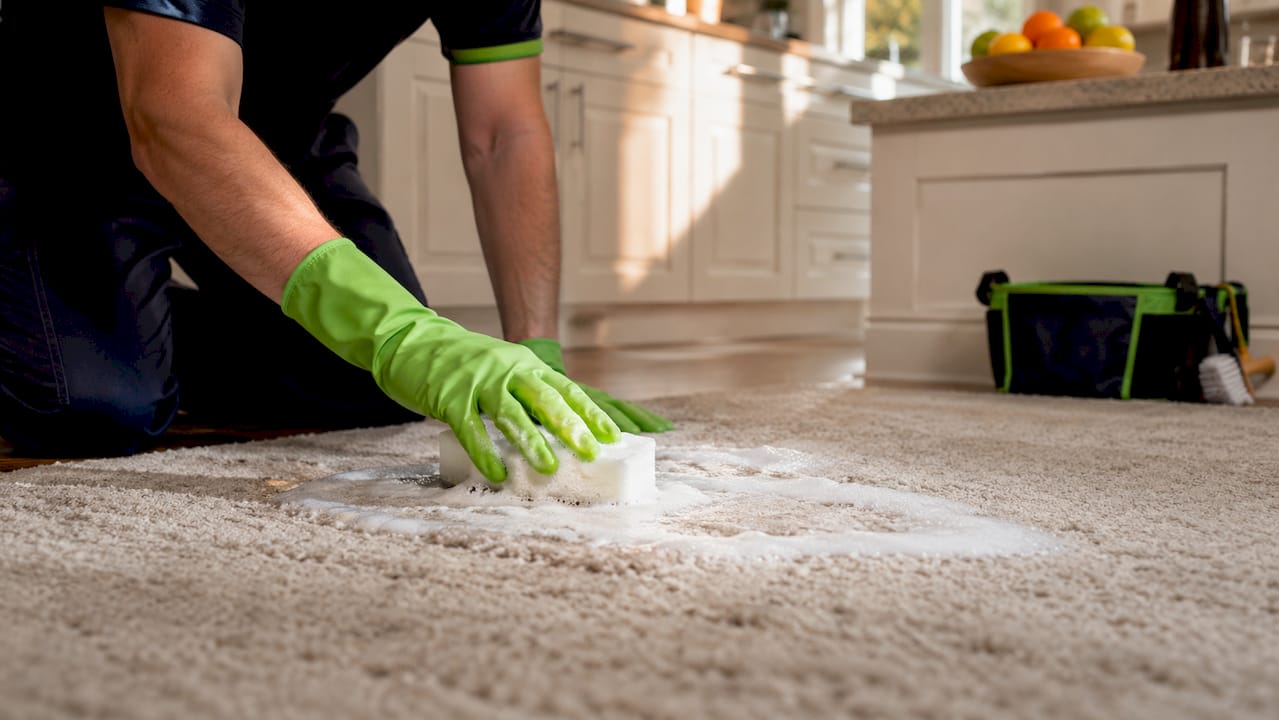
The most common DIY mistake with water-based stains is rubbing. Rubbing a stain reduces professional stain removal success rates by roughly 30–40% because it pushes pigment deeper and breaks carpet fibers. Always blot from the outside edge inward.
Pro Tip: For any fresh water-based spill, blot immediately with a clean white cloth and apply cold water. This simple step removes a significant portion of the stain before a professional even arrives.
3. Oil-based stains: challenges and specialized cleaning solutions
Oil-based stains are among the most stubborn common carpet stains because oil repels water entirely. Cooking grease, butter, cosmetics, and tar all fall into this category. Pouring water on an oil stain does not clean it. It spreads it.
Professionals address oil stains with solvent-based spotting kits or surfactants specifically formulated to emulsify grease. The process typically involves:
- Applying a dry absorbent such as baking soda to lift surface oil before any liquid treatment
- Using a solvent or degreasing surfactant to break down the remaining residue
- Extracting the emulsified oil with professional hot water extraction equipment
- Repeating with light applications rather than one aggressive treatment
Multiple light treatments outperform a single heavy application every time. Aggressive scrubbing with a harsh solvent can strip the carpet’s protective coating and cause color loss. Professional spotting kits are calibrated for greasy residues in a way that household degreasers simply are not.
4. Protein-based stains: why heat worsens them and cold water is crucial
Protein-based stains include blood, pet urine, vomit, and egg. These are the stains where the wrong first response causes the most permanent damage. Heat sets protein stains by coagulating the proteins, which causes them to bond tightly to the carpet fiber. Once that happens, removal becomes extremely difficult.
Common protein-based stains that homeowners mishandle include:
- Blood: Often treated with hot water, which locks the stain in permanently
- Pet urine: Frequently masked with household sprays that leave uric acid crystals behind
- Vomit: Scrubbed aggressively, which spreads the stain and damages fibers
- Egg: Rinsed with warm water, which sets the albumin into the pile
Enzymatic cleaners are the professional standard for protein stains because they contain bacteria that digest uric acid crystals at the source. Standard household cleaners mask odors but leave the crystals intact. Those crystals reactivate during humid weather, causing the stain and smell to return. Alkaline salts from pet urine remain after surface cleaning and cause visible stain reappearance unless fully neutralized.
Pro Tip: For blood or pet urine, apply cold water immediately and blot. Never use a steam cleaner or hot water on a protein stain. Call a professional for pet odor and stain removal if the stain has dried.
5. Tannin-based carpet stains: effective acidic treatments for wine, tea, and berries
Tannin stains come from plant-based sources: red wine, tea, coffee, and berries. Tannins are naturally occurring compounds that react with textile fibers and become increasingly water-resistant the longer they sit untreated. A fresh red wine spill is manageable. A week-old red wine stain is a different problem entirely.
Professionals treat tannin stains with low pH acidic cleaners, typically in the pH 3–4 range. That acidity dissolves the tannin compound and releases it from the fiber. Here is how tannin treatment differs from protein stain treatment:
| Stain type | Treatment pH | Key agent | Heat safe? |
|---|---|---|---|
| Tannin (wine, tea) | pH 3–4 acidic | Acidic spotter | Yes, with care |
| Protein (blood, urine) | Neutral to slightly alkaline | Enzymatic cleaner | No, cold water only |
A common DIY mistake with tannin stains is using an alkaline cleaner, such as baking soda paste. Alkaline solutions can actually intensify tannin stains by altering the chemical bond. White vinegar diluted in water is a reasonable first response for tannin stains because it provides mild acidity, but professional acidic spotters work at a more targeted pH level.
6. Dye and pigment-based stains: complexities and specialist restorative treatments
Dye and pigment-based stains are the most difficult category in professional carpet cleaning. Permanent marker, hair dye, and paint do not just sit on top of the fiber. They chemically bond to it or, in the case of bleach-adjacent products, alter the fiber’s own color permanently.
Common sources and their challenges include:
- Permanent marker: Bonds to synthetic fibers at the molecular level
- Hair dye: Contains oxidative agents that can strip or alter carpet dye
- Latex paint: Easier to treat when wet, nearly impossible when dry
- Nail polish: Acetone-based removers can dissolve certain carpet fibers
Professional spotting kits use oxidizers and reducing agents that chemically alter the stain at the molecular level, suspending pigments for extraction. This goes far beyond what any consumer product can achieve. That said, realistic expectations matter here. Hot water extraction may only achieve 50–70% improvement on stains involving bleach damage or permanent ink because the fiber dye itself has been chemically altered.
Pro Tip: If you have a dye or pigment stain, do not apply acetone, bleach, or hydrogen peroxide without professional guidance. These agents can cause carpet stain bleaching that no cleaning method can reverse.
7. Comparing professional stain removal methods and when to call an expert
Professional carpet cleaning combines chemistry with equipment. No single method works for every stain type. The table below summarizes the standard professional approach for each category.
| Stain type | Common sources | Primary treatment | Expected outcome |
|---|---|---|---|
| Water-based | Juice, coffee, alcohol | Surfactant + hot water extraction | High removal rate if treated early |
| Oil-based | Grease, cosmetics, tar | Solvent spotter + extraction | Good with multiple light treatments |
| Protein-based | Blood, pet urine, vomit | Enzymatic cleaner + cold rinse | Full removal if treated before heat exposure |
| Tannin-based | Red wine, tea, berries | Acidic spotter (pH 3–4) + extraction | Good if treated within 24–48 hours |
| Dye/pigment-based | Ink, hair dye, paint | Oxidizer or reducing agent + extraction | Partial removal; fiber damage possible |
Call a professional when the stain has dried, when DIY attempts have already been made, or when the stain involves pet urine, dye, or anything that has been treated with heat. Post-cleaning rinsing to remove detergent residue is a step many homeowners skip. Leftover cleaning agents attract dirt, causing carpets to look dirtier within weeks. Professionals rinse thoroughly as part of the process. Regular professional carpet cleaning also extends carpet lifespan by preventing the buildup that makes stains harder to remove over time.
Key takeaways
Matching the stain type to the correct chemical treatment is the single most important factor in professional carpet stain removal success.
| Point | Details |
|---|---|
| Five stain categories exist | Water-based, oil-based, protein-based, tannin-based, and dye/pigment-based each need different treatments. |
| Heat damages protein stains | Never apply hot water or steam to blood, pet urine, or vomit. Cold water is the only safe first response. |
| Enzymatic cleaners are essential for pet stains | Standard cleaners leave uric acid crystals that cause odors and stains to return. |
| Tannin stains need acidic treatment | A pH 3–4 acidic spotter dissolves tannins; alkaline cleaners make these stains worse. |
| Dye stains may be partially permanent | Fiber dye damage from ink or bleach limits removal to 50–70% even with professional equipment. |
What 30 years of carpet cleaning has taught me about stains
The biggest mistake I see homeowners make is treating the stain before they know what type it is. Someone grabs a bottle of all-purpose cleaner and scrubs. By the time they call us, they have spread the stain, broken the fibers, and in some cases, heat-set a protein stain with a warm cloth. At that point, we are working against two problems instead of one.
The second thing I have learned is that most people underestimate how much chemistry matters. A tannin stain from red wine and a protein stain from pet urine look similar on a beige carpet. But treating them the same way produces completely different results. Acidic spotters on a protein stain can cause fiber damage. Enzymatic cleaners on a tannin stain do nothing. Getting the chemistry right is not optional.
The most honest thing I can tell you is that not every stain is fully removable. Permanent ink, hair dye, and anything that has been heat-set multiple times may only partially respond to professional treatment. We will always tell you upfront what to expect. What I can guarantee is that calling sooner rather than later gives us the best chance of a complete result. The 24–48 hour window is real. After that, the chemistry works against you.
— Jim
Nashobapros can handle the stains you cannot
Nashobapros has been removing tough carpet stains in Westford, MA and the surrounding Nashoba Valley area for over 30 years. Every stain type covered in this article, from pet urine to red wine to permanent marker, is something the team handles with professional-grade equipment and treatments that are pet-safe and family-safe.

If your carpets have stains that have not responded to DIY attempts, or if you want to know how often to schedule professional cleaning to stay ahead of buildup, Nashobapros offers free quotes with no pressure. The team also provides carpet cleaning in Maynard, MA and surrounding communities. Call or book online today. Most jobs can be scheduled quickly.
FAQ
What are the main types of carpet stains professionals remove?
Professional carpet cleaning addresses five main stain categories: water-based, oil-based, protein-based, tannin-based, and dye/pigment-based. Each requires a different chemical treatment for effective removal.
Can all carpet stains be fully removed by professionals?
Not always. Stains involving bleach damage, permanent ink, or heat-set proteins may only achieve 50–70% improvement because the carpet fiber itself has been chemically altered.
Why should you never use hot water on a blood or pet urine stain?
Heat coagulates proteins in blood and urine, bonding them permanently to carpet fibers. Cold water is the only safe first response for any protein-based stain.
What makes enzymatic cleaners better for pet stains than regular cleaners?
Enzymatic cleaners contain bacteria that digest uric acid crystals at the source. Standard cleaners only mask the odor, leaving crystals that reactivate and cause the stain and smell to return.
When should a homeowner call a professional instead of treating a stain themselves?
Call a professional when the stain has dried, when a DIY attempt has already been made, or when the stain involves pet urine, dye, or ink. Acting within 24–48 hours gives professionals the best chance of full removal.